Category: AI & generative AI

  • What Silicon Valley fears and India has not yet noticed?

    What Silicon Valley fears and India has not yet noticed?

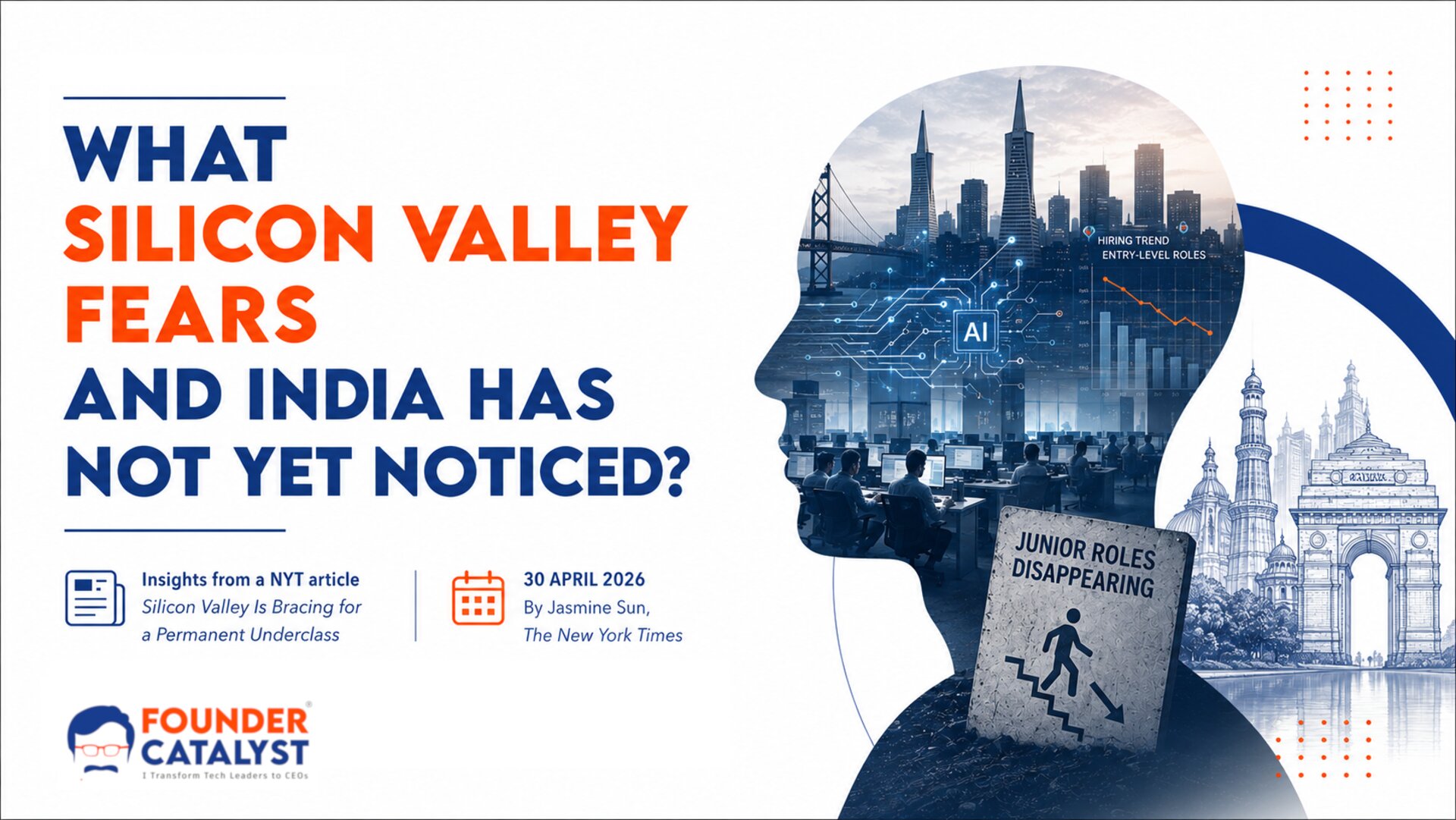
    A piece published in The New York Times on 30 April 2026, written by Jasmine Sun, deserves a careful read. Sun writes about AI and Silicon Valley culture and spent considerable time speaking with researchers, founders, economists and policy experts across the major AI labs. The article is titled “Silicon Valley Is Bracing for a Permanent Underclass.“

    Three ideas from it stay with me:

    1. The people building AI are privately far more worried about job displacement than they say publicly. The gap between what they say on stage and what they say in private is uncomfortably wide.
    2. The disruption is already showing up, not in some future scenario. Hiring is slowing in software engineering and customer service, and junior workers are stunting their own skill development by leaning on AI tools before they have built foundational competence.
    3. The default path, if left unaddressed, concentrates wealth in AI companies and existing capital owners while stranding a large section of the workforce.

    The Oxford economist Carl Benedikt Frey puts it plainly in the article: “most economists acknowledge adjustment problems in the short run, but rarely note that the short run can be a lifetime”.

    Most of the debate in the article is American. But I feel it matters more deeply to Indian businesses, and we are not paying enough attention to it. I am a technology optimist, but even those of us in the forefront of technology cannot predict the next phase and its pace.
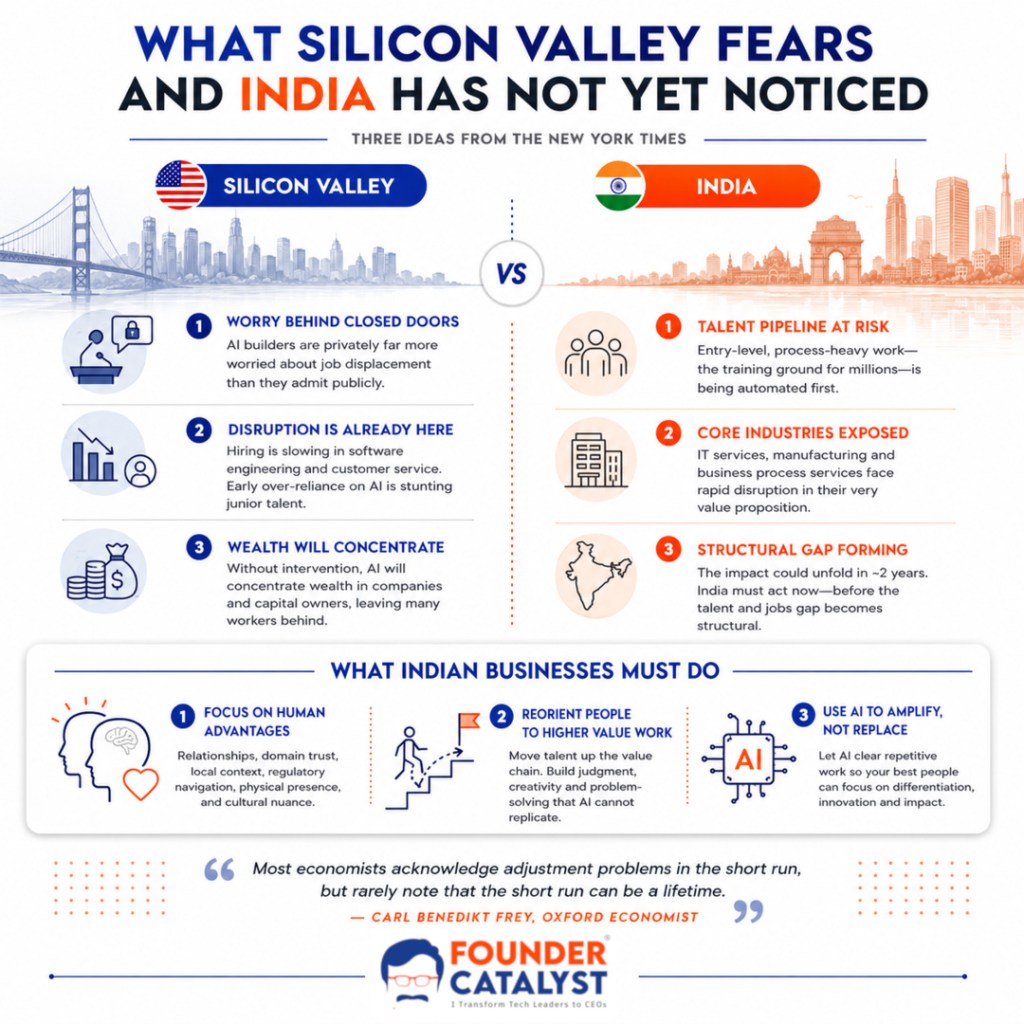
    Infographic comparing Silicon Valley and India: three fears from the New York Times (job displacement worry, disruption already here, wealth concentration) mapped to three risks for India (talent pipeline, core industries exposed, structural gap), with three actions Indian businesses must take

    India’s exposure is specific.

    The IT services industry is built on a model where labour arbitrage is a central value proposition. AI agents are not replacing the most complex work first. They are replacing entry-level, process-heavy, high-volume tasks that have historically been the training ground for an entire generation of Indian technology professionals. Indian IT firms are already seeing this inside their own delivery centres, even if the conversation stays internal.

    For manufacturing, the picture is more layered but no less urgent. India has been counting on a China-plus-one moment to build industrial scale. The article’s observation that AI-driven displacement could happen in two years, compared to the several years it took deindustrialisation to unfold in the West, is worth sitting with. Indian manufacturers investing in scale right now need to ask hard questions about workforce composition five years from now.

    For services businesses, whether legal process outsourcing, accounting, medical transcription, or customer operations, the threat is not hypothetical. The article notes that AI benchmarks are now measuring performance against investment bankers, management consultants, and primary care physicians, with win rates against human professionals crossing eighty percent. Indian firms in these spaces have competed on cost and quality. Both advantages narrow as AI capability improves.

    The question I keep putting to founders and CXOs is this: Does your business have genuine differentiation beyond what an AI agent can replicate at scale? Relationships, domain trust, local context, regulatory navigation, physical presence, and cultural nuance remain human advantages. The companies getting this right are reorienting their people toward that work and using AI to clear everything else that was consuming their best people’s time.

    The article quotes a former deputy director of the US National Economic Council, saying the China shock unfolded over several years, but this could happen in two years. India was both a beneficiary and a casualty of that earlier shock.

    This time, the displacement is happening in office buildings in Chennai, Bengaluru, Hyderabad, and Pune, not in a factory in Ohio. The structural gap forming in India’s talent pipeline is real, and the conversation between businesses, institutions, and policymakers cannot wait and needs to start now.
  • Why a papal letter on AI deserves five minutes of your time

    Why a papal letter on AI deserves five minutes of your time

    Founders and CXOs spend most of their time watching what customers, competitors, and investors think about AI. Fair enough. But occasionally, a voice from outside the industry frames the conversation in a way that cuts through the noise. This week, that voice came from an unlikely place — a holy one.

    Pope Leo XIV released a roughly 200-page encyclical on artificial intelligence, with technical input from Christopher Olah, co-founder of Anthropic. The AI industry will not alter its roadmaps because of this. But the previous five encyclicals — on workers’ rights, Cold War peace, birth control, economic inequality, and the environment — each shaped public discourse in ways that outlasted the news cycle. They framed what mattered before the rest of the world caught up.

    I’ll be honest here, I went in sceptical. A papal letter on AI felt ceremonial at best. The New York Times summary I read changed that.

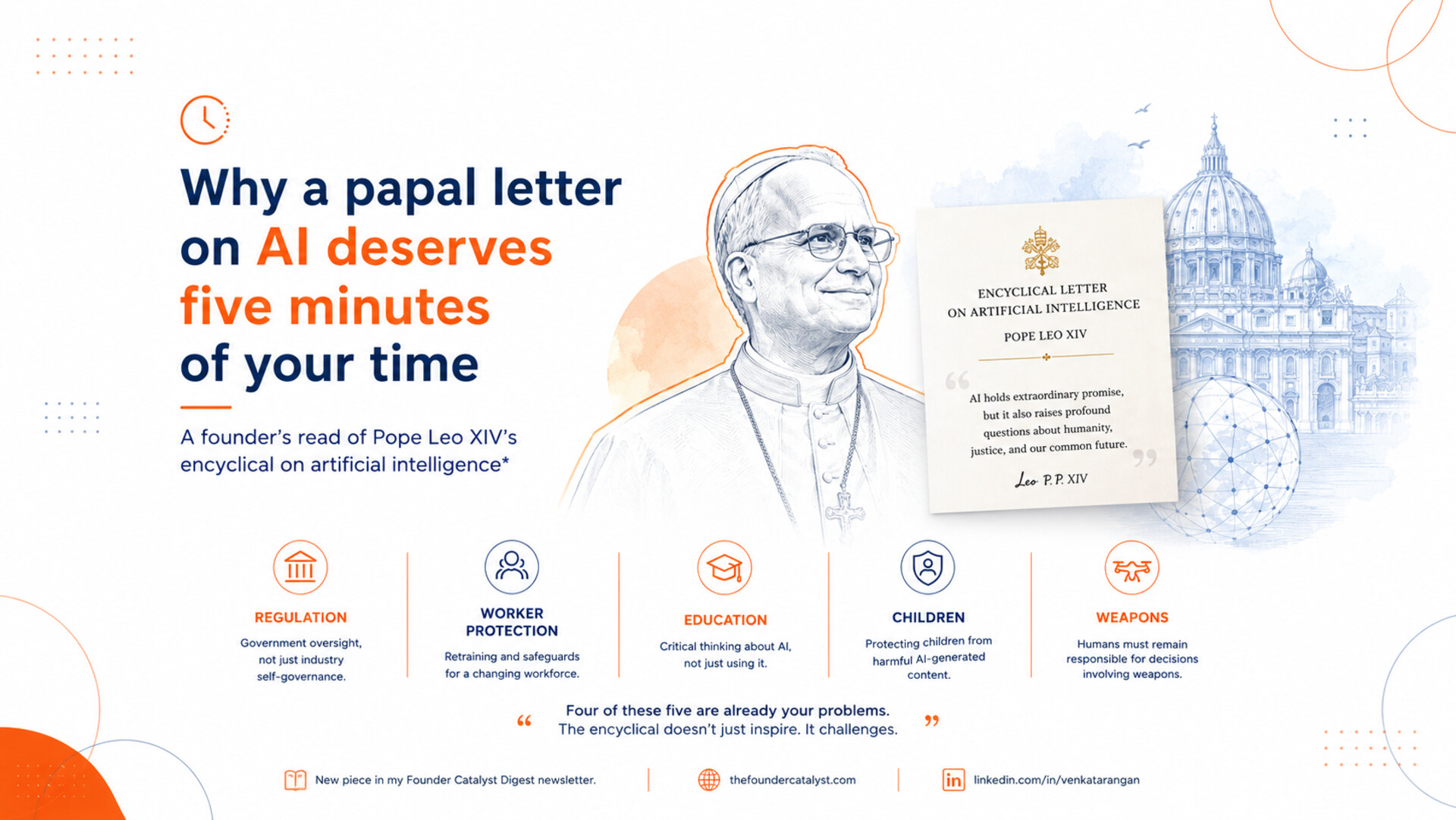
    1. Regulation. Not self-governance by the industry. Actual government regulation of the private companies driving AI development. That distinction matters.

    2. Worker protection. Retraining and safeguards for workers displaced by AI. Already unfolding in IT services, shared services, and process-heavy roles.

    3. Education. Helping students think critically about AI, not just use it. A generation that consumes AI output without understanding its limits is a business risk, not just a social obligation.

    4. Children. Protecting children from AI-generated violent, hypersexualised, or false content. Not a future risk — anyone with a teenager at home already knows this. But there is a business dimension here that leaders underestimate: if the next generation’s trust, emotions, and judgment are shaped by unchecked AI content, brand loyalty and consumer relationships become harder to build. That has real bottom-line consequences well within the decade.

    5. Weapons. Humans must remain responsible for all decisions involving weapons. The encyclical’s argument is direct: autonomous systems make war more feasible and harder to control, which undermines the principle that the use of armed force is a last resort.

    The practical takeaway for business leaders: four of these five are already your problems. Workforce displacement, critical thinking in your teams, child safety in your products, and the governance gap between what AI can do and who is accountable when it goes wrong. The Vatican did not invent these concerns. It just wrote them down in one place.

    Worth your time to read this.

  • People Remember The Sequence

    People Remember The Sequence

    Over 92,000 technology jobs have reportedly been cut globally in the first few months of 2026 alone. Meta, Microsoft, Amazon, Oracle, Salesforce, and several others are restructuring teams while simultaneously increasing spending on AI infrastructure, chips, and AI talent.

    None of this surprises me.

    AI is not another software upgrade cycle. It is a structural shift. Entire layers of work are being compressed, automated, or redistributed. Every founder and CEO knows this privately, even if many are still hesitant to say it publicly.

    What surprised me recently was not the layoffs themselves, but the sequencing around them.

    Meta’s internal memo explaining its restructuring reportedly arrived the same day thousands of employees were already being let go.

    That detail stayed with me.

    Because during moments of uncertainty, employees rarely remember the exact wording of the memo. They remember the order in which things happened.

    The technology industry often speaks about AI strategy as though it sits above everything else. I increasingly think the opposite is true.

    A company’s people strategy shapes its AI strategy.

    Not the reverse.

    This distinction matters because most large organisations today are not merely introducing new tools. They are redesigning trust structures inside companies. Reporting lines are changing. Teams are shrinking. Managerial layers are disappearing. Expectations around productivity are quietly being rewritten.

    And all this is happening while leadership teams themselves are still figuring things out in real time.

    I faced a version of this during the 2008 global financial crisis.

    One of our largest clients in the United States cancelled their engagement almost overnight. More than half our revenue disappeared immediately.

    In The Founder Catalyst book, I wrote about that moment:

    “When I called my team members in the USA, their reports were stark: empty shopping malls and vacant car parks. I knew instantly this wasn’t a temporary blip; it felt like a tectonic shift.”

    I remember returning home and realising we could not afford the luxury of waiting for complete clarity.

    The very next day, I called for a town hall meeting.

    Honestly, I did not yet have all the numbers worked out. But uncertainty grows faster in silence than in bad news.

    We had to let go of nearly a hundred people. At the same time, we stretched ourselves financially to provide severance beyond the statutory requirement, even borrowing heavily to do it.

    “It was painful, undoubtedly, for everyone involved, especially those leaving. We simply had no other choice to ensure the company survived.”

    Nearly two decades later, some of those former colleagues still greet me warmly when we meet or reconnect online.

    That stayed with me more than any balance sheet from any year.

    The AI transition will create extraordinary companies and extraordinary wealth. I have little doubt about that.

    But I also think the companies that emerge strongest from this phase will not merely be the fastest adopters of AI.

    They will be the ones who understand something older and simpler:

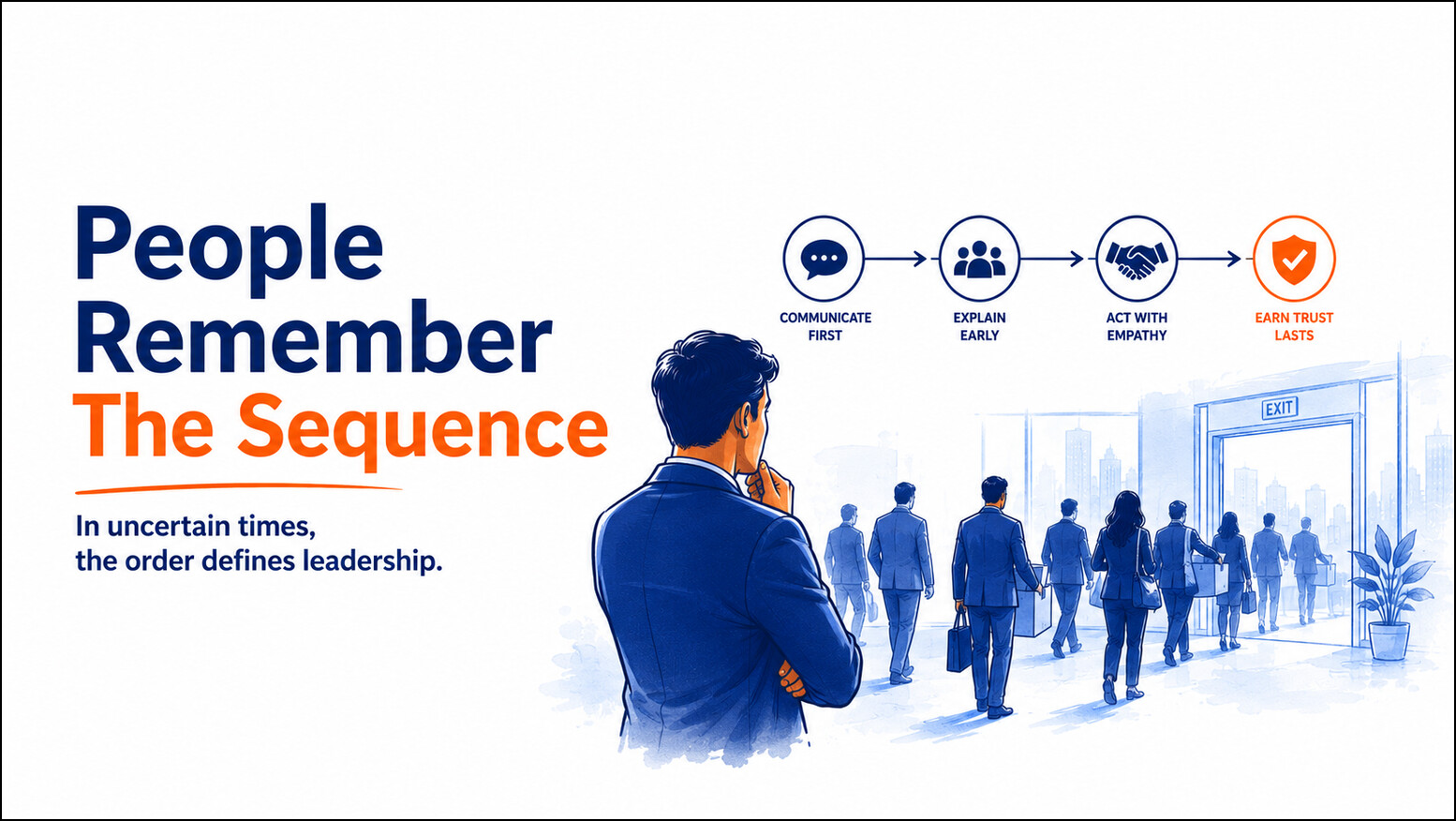
    People remember the sequence in which leaders treated them under pressure.

    Reflection: When restructuring under pressure, what you do first matters as much as what you decide. The order in which you treat people is the signal your organisation will remember long after the financial results are reported.

  • Who controls what AI sees?

    Who controls what AI sees?

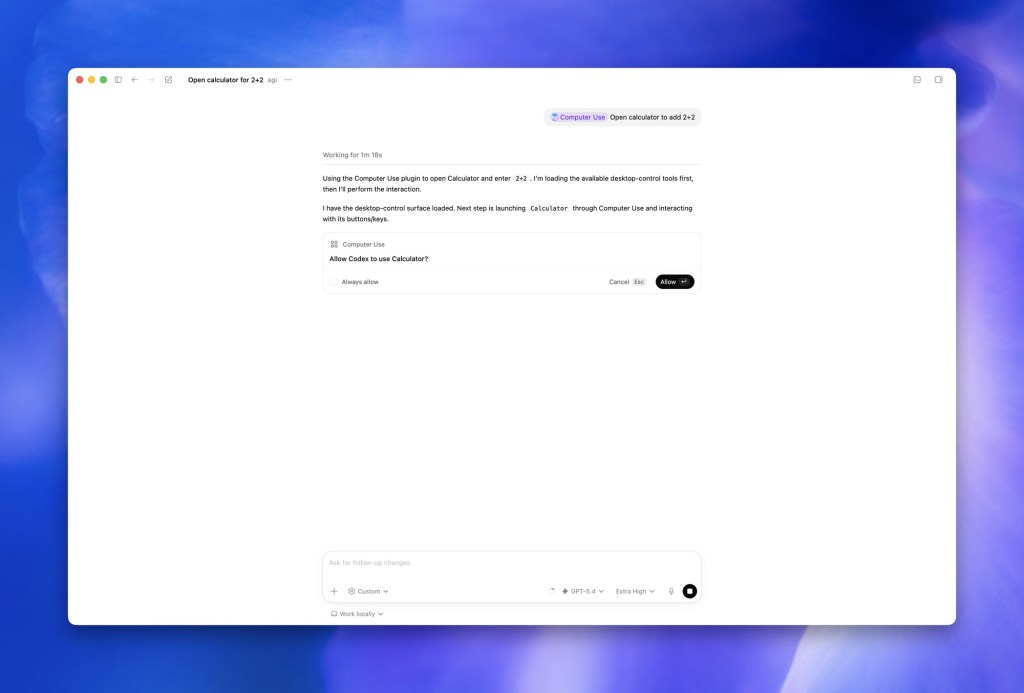
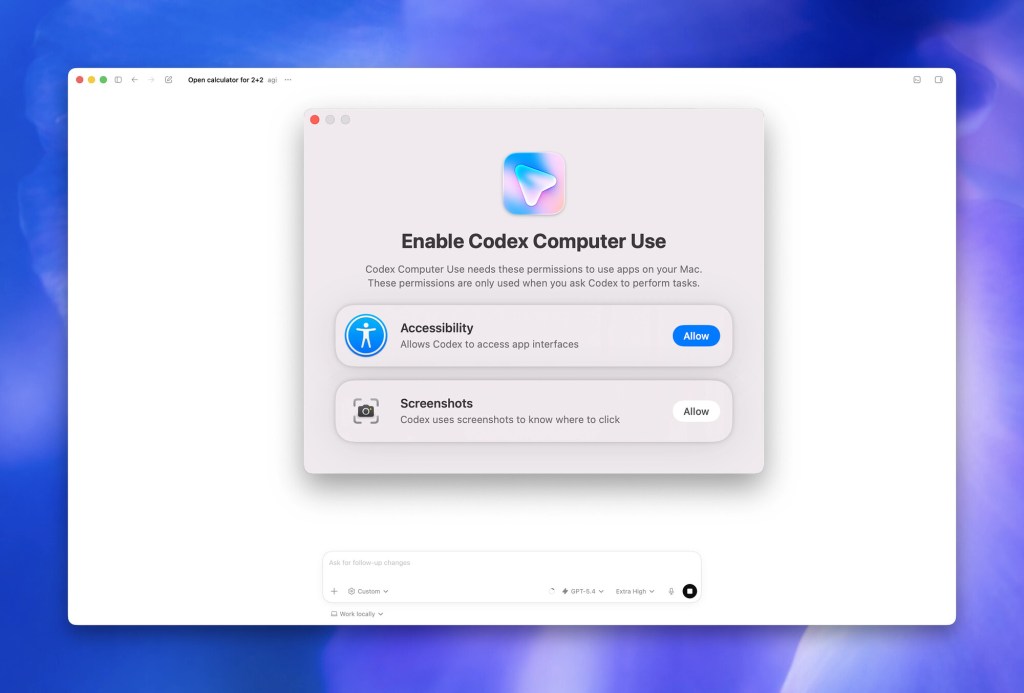
    OpenAI just added “Computer Use in Codex”. It can now see your screen, move a cursor, click, and type across any Mac app — multiple agents running in parallel while you work.

    That’s genuinely impressive. Anthropic’s Cowork does something similar.

    And the companies that own your screen, your apps, and your enterprise software will decide what that’s worth to you.

    But here’s what I keep thinking about.

    This capability depends on macOS letting third-party apps observe your screen and control other apps. Apple has a long history of deciding what gets that kind of access — and restricting it, charging for it, or bundling it into higher-tier subscriptions when it becomes valuable enough. The industry tends to follow Apple’s lead on these things.

    On mobile, I’d be surprised if Google and Apple don’t eventually make this a feature you pay for through their own AI subscriptions, with third-party agents locked out entirely. Enterprise software vendors — SAP, Salesforce, ServiceNow — are watching this closely too. Every one of them has an AI agent story, and every one of them has an incentive to be the only agent that sees inside their platform.

    And then there’s the end user. Two years ago, when Microsoft introduced Windows Recall — which took continuous screenshots of everything on your PC — the backlash was immediate and fierce. People were not ready for an AI that watches everything. That tension hasn’t gone away. It’s just been repackaged as productivity.

    Every app on your Mac now needs to decide: allow AI in, or keep it out.
    
Two permissions. Both controlled by Apple. That's the chokepoint.

    We’ve seen this before. Google Maps was free until millions of apps depended on it — then came the pricing change. Installing apps on a device you own was an open opportunity until App Stores made it a 30% toll booth. The pattern isn’t new: platforms let ecosystems flourish on open access, then monetise the chokepoint once the dependency is deep enough.

    AI agents are heading into the same territory. The question isn’t whether platform owners will act. It’s whether industry bodies build interoperability standards fast enough, and regulators move before the walls are too high — or whether we end up with a dozen AI agents, each locked inside its owner’s fence.

    The pattern always ends the same way. What’s your read?

  • What Korean Bananas Know About AI Rollouts

    What Korean Bananas Know About AI Rollouts

    On sequencing, readiness, and resisting the urge to optimise too soon

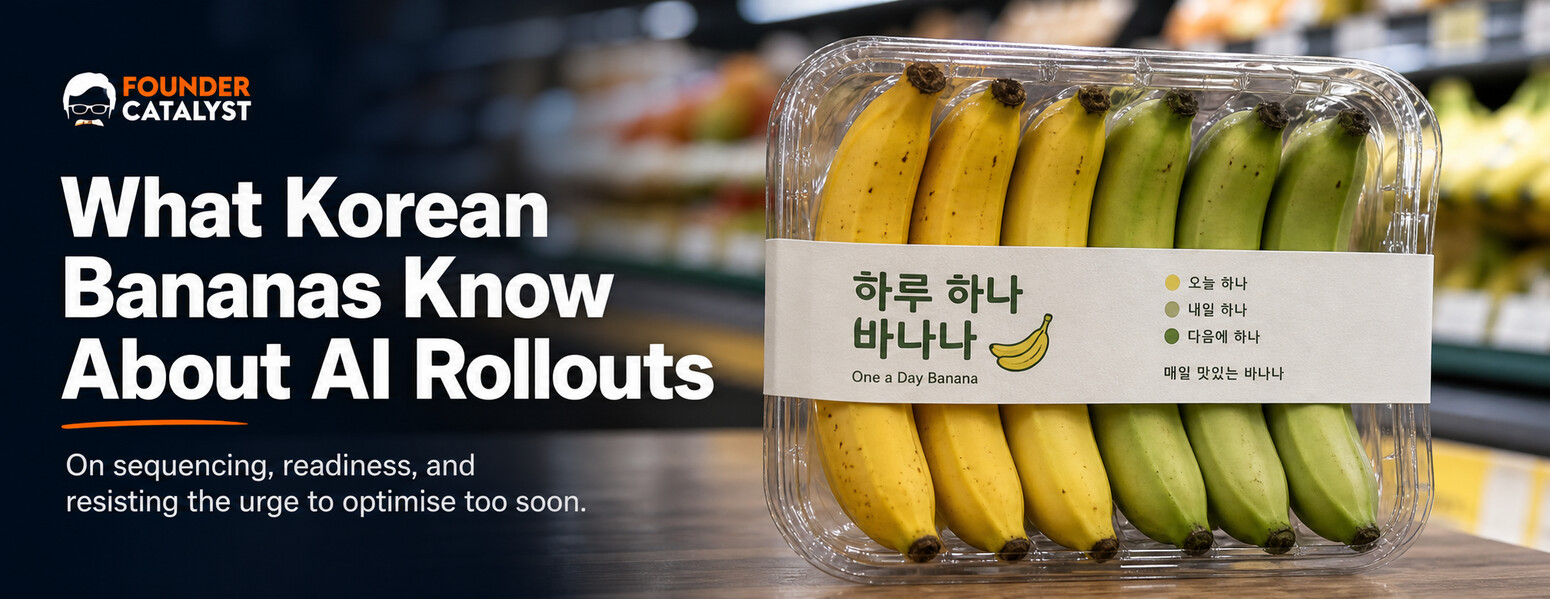
    I first saw the “Haru Hana Banana” pack in a South Korean grocery store. It held 5–7 bananas at different ripeness levels: one yellow and ready now, the next a bit greener for tomorrow, and the others still green for days ahead. No instructions, no app – just simple packaging aligned with how people actually eat bananas. This simple design stuck with me not as a hack, but as a new way to think about sequencing initiatives.

    Most founders and leaders want all their initiatives fully ripe at once.

    They launch every project, hire every role, or deploy every feature together. It feels like momentum – but too often it becomes a mess. The Korean banana pack succeeds by doing the opposite: it staggers readiness to match demand. Whoever designed it chose customer reality over operational convenience.

    In a big company, you might expect a push to standardise and optimise logistics. Instead, the grocery chain sacrificed some simplicity to solve the real problem: avoiding waste and giving customers a fresh banana each day.

    This idea applies beyond fruit.

    When rolling out AI or any new technology in an enterprise, leaders face the same instinct: go big now, or wait until everything is certain. Both extremes fail. Rushing everything risks breakdowns; waiting wastes time and lets others leap ahead. A better question is: What do we ripen today, what do we plant for next quarter, and what do we keep green for now? In practice, the best teams run multiple tracks in parallel. Some pilots are live with real users, some proofs of concept are being tested, and new ideas are still hazy. They’re comfortable with uneven progress.

    Avoid “Big Bang” launches.

    Instead, break work into phases. For example, an AI system can be piloted in one department before rolling out company-wide. A product can launch with a minimal feature set, then add more features after learning from users.

    Don’t wait for perfection. As Agile principles teach, deliver value frequently in short sprints. Each release is like picking the next-ripe banana – it feeds users today and yields insight.

    Match customer usage.

    Design solutions around how people will use them, not how easy they are to build. The banana pack works because people eat one banana a day; the designer aligned the product with that habit. Similarly, if customers will adopt one AI assistant a week, don’t dump a dozen at once.

    Build a balanced pipeline.

    Think in horizons or stages: today’s operations (ripe bananas), tomorrow’s enhancements (tending bananas), and longer-term R&D (green bananas). A common rule is to allocate resources across these stages (for example, 70% on core business, 20% on adjacent growth, 10% on new ideas). This keeps today’s business running while new innovations mature.

    Framework:

    Now (ripe): Move forward on initiatives that are ready and will pay off immediately. Deploy proven AI tools in one team to build confidence. Launch product features that clearly solve current user needs.

    Soon (ripening): Pilot upcoming ideas in controlled settings. Collect data and feedback. For example, run an AI chatbot pilot with a small user group, or A/B test a new feature with select customers.

    Later (green): Research and incubate long-term bets. Keep these unripe for now – think of them as experiments or skunkworks that may take months to mature. They shouldn’t block the main effort, but they shouldn’t be forgotten either.

    Checklist for leaders:

    Are we trying to do everything at once? If so, pause and pick the highest-impact slice first.

    What does success look like at each stage? Set clear metrics for today’s release, tomorrow’s pilot, and so on.

    Have we planned feedback loops? Like banana peels, failures will show us ripe spots. Incorporate learnings quickly.

    Are we optimising for the customer’s journey or for internal convenience? Always put the customer reality first.

  • What AI in the browser means for your business?

    What AI in the browser means for your business?

    I have been trying out AI inference inside the browser for a while now, more out of curiosity than anything else. A debate that surfaced this week made me want to talk about it, because buried inside a browser standards argument is a platform governance question that every business relying on AI will eventually have to answer.

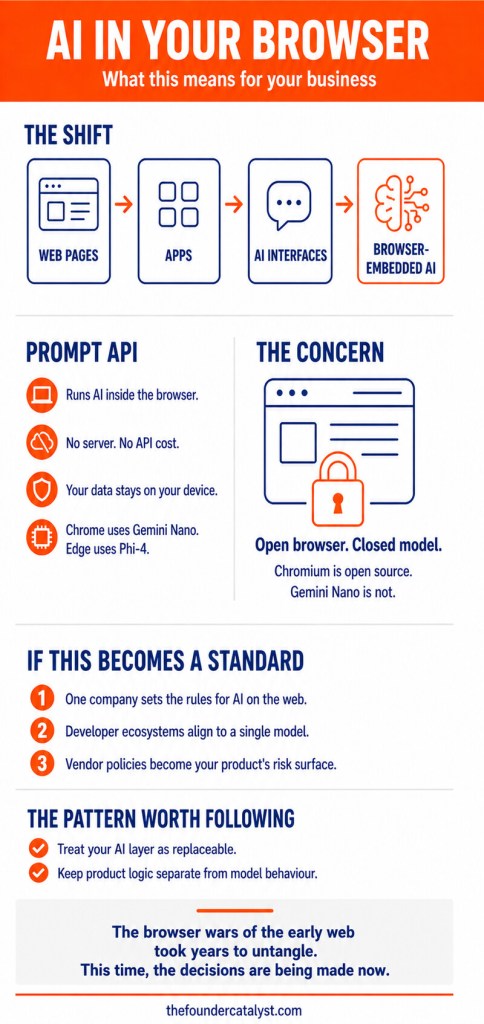
    We have moved through a familiar sequence. Web pages gave way to apps. Apps are giving way to AI interfaces. And now AI is being embedded directly into the browser itself. That last step is not a feature upgrade. It is a shift in who controls a foundational layer of how your customers and your products experience the web.

    Google Chrome and Microsoft Edge are both shipping something called the Prompt API. It lets web applications run AI inference directly inside the browser, with no server call, no API cost, and no data leaving the device. Chrome uses Google’s Gemini Nano. Edge uses Microsoft’s Phi-4.

    I built three demos with this last year, a creative writing tool, a translation assistant, and a vision assistant that describes images, all running locally on my laptop. I wrote about it on my personal blog. The technology works well for what it is. Fast, private, and free to run. For simple AI workloads, local inference like this is a logical and efficient step forward.

    The concern is not the technology. It is what happens if this becomes a web standard.

    Infographic titled 'AI IN YOUR BROWSER' outlining the shift towards browser-embedded AI, highlighting the shift from web pages to applications and AI interfaces.

    The Prompt API is currently a Community Group draft under W3C’s Web Machine Learning group, not a formal standard. The standardisation discussions have drawn serious objections from Mozilla and from W3C’s own Technical Architecture Group. The worry is interoperability. When developers build on a specific browser’s model, they tune their code to that model’s quirks. Over time, that creates model-specific behaviour baked into the web itself. We have seen this pattern before with browsers, and the web spent years cleaning it up.

    Chrome is built on Chromium, which is open source. The Gemini Nano model that ships with the Prompt API is not. Google does have an open weights model called Gemma, but Gemma is not what ships with the Prompt API. Google’s stated reason is that they need to enforce safety through their Generative AI Prohibited Uses Policy, and that requires controlling the model. Mozilla’s objection, which I think is sound, is that using a web API should not mean accepting one company’s content rules, especially rules that go beyond what is legally required anywhere.

    Chrome holds a dominant share of global browser usage. If this API becomes a standard and the model powering it remains closed and governed by a single company’s policies, that company effectively controls the default intelligence layer of the web. That shapes cost structure, developer decisions, and user experience in ways that compound quietly over time.

    The teams I see getting this right are already treating their AI layer as a replaceable component, keeping product logic separate from model behaviour, and treating vendor policies as part of their risk surface rather than background noise. It is not complicated, but it requires making a deliberate decision early rather than inheriting a dependency later.

    When I work with founders and leadership teams, platform dependency is almost always one of the first structural risks we surface together. A platform bet requires confidence in the governance, not just the technology. Who sets the rules, and what happens when those rules change? The browser wars of the early web are a useful reminder of how long it takes to untangle these things once they are embedded.

    The edge AI direction is right. Local inference, faster response, lower cost, better privacy; this is a sensible progression. But the model at the centre of it should be open, or at least governed by a neutral body, not by one company’s terms of use.

    No formal standard has been approved yet. The conversations are still live. But the decisions being made now in browser working groups will shape the web your customers use for the next decade. It is worth paying attention to.

    Are you watching the AI-in-browser space, or is it still too early to be on your radar?

  • What money alone cannot build?

    What money alone cannot build?

    “For founders, the question is which part of that transformation requires something that money alone cannot build.”

    This line stayed with me.

    Every founder I speak to right now is asking the same question: what should I build?

    Frontier AI models are moving fast. What looked like a defensible product six months ago feels like a feature today. Advice is everywhere, and most of it is too generic to act on.

    Then I read something that actually answered the question directly. S. Somasegar and Rasik Parikh at Madrona Venture Group cut through the noise in a way most commentary does not. Here is how I read it.

    Three areas where founders can still build with conviction.

    1. Own the liability, not just the tool.

    Frontier Labs will build powerful general-purpose systems. They will not absorb the legal, regulatory, and financial accountability that comes with specific outcomes in specific industries. I have watched Indian IT firms lose deals on exactly this gap — clients want someone to sign off and stand behind the result, not just ship the capability. That willingness to own risk is where durable margin lives.

    2. Build on data others do not have.

    Models are trained on what is public. The edge sits in what is not — internal workflows, edge cases, decisions, and historical context. When I built Simpligic years before GenAI was a term, the insight was the same: the moat lives in private data. If your product compounds with every customer interaction, you are in a territory the model labs have no roadmap to enter.

    3. Go deep into messy workflows.

    Some problems are not solved by more intelligence. They are solved by understanding how work actually gets done — across people, exceptions, approvals, and institutional habits built over decades. At Vishwak, the client relationships that held through every disruption were the ones where we were embedded in their delivery model, not just their vendor list. A two-year integration into how a firm actually operates is not something a foundation model company will replicate. There is no incentive to.

    Here is the framing I keep coming back to from the piece: the difference between a tool and an outcome. A tool makes a task easier. An outcome means you are on the hook for the result. Most of what is being built right now — including a lot of what gets funded — is tools. The businesses that will matter in five years are the ones that own the outcome.

    The question founders should be asking is not whether their product needs AI. That is the wrong filter. Soon enough, everything will. The more useful question is whether the solution requires something AI cannot supply on its own — a regulator who trusts you, data that never left your client’s firewall, a workflow only you understand end to end, or accountability that someone has to sign their name to.

    The article makes one more point that deserves to land. This buildout — hyperscalers, foundation models, the entire stack — is a multi-trillion-dollar bet that AI will transform every industry. That bet will pay off. But transformation and value creation are not the same thing. Value will concentrate in the places where technology alone is not sufficient. That is the territory worth building in.

    Full credit to Soma Somasegar and Rasik at Madrona for articulating this clearly. Soma is someone whose thinking I have followed for a long time — I first met him in 2005 when he led the Developer Division at Microsoft — someone who has always taken the long view, and has usually been right about it.l.

    The article from Madrona is here.


    If you are a founder stress-testing where to build, this is the kind of question I regularly dig into with the leaders I work with. Reach out at thefoundercatalyst.com or connect with me at linkedin.com/in/venkatarangan

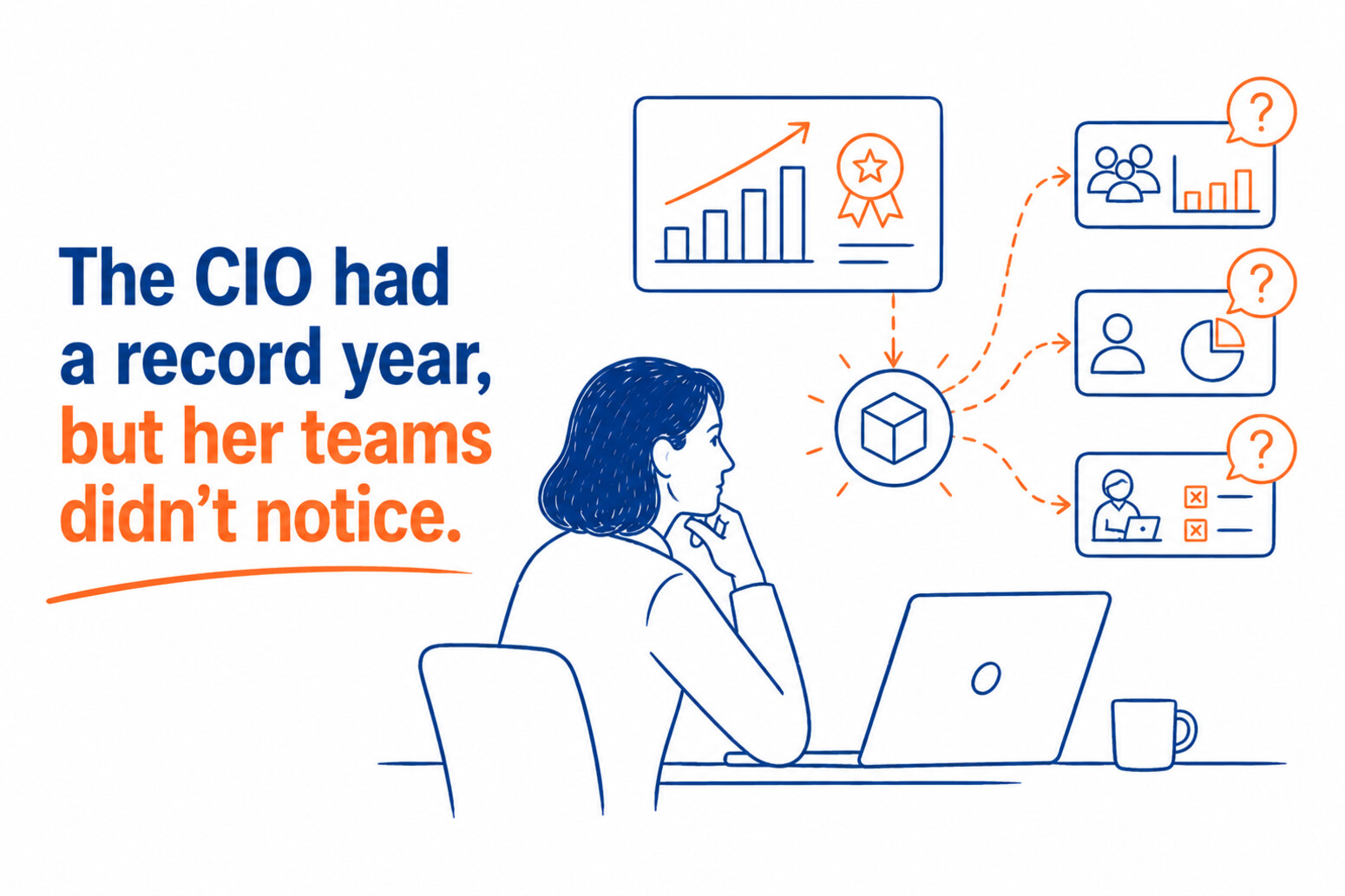
  • The CIO had a record year, but her teams didn’t notice.

    The CIO had a record year, but her teams didn’t notice.

    The CIO had every reason to be pleased. She wasn’t.

    Board visibility. CEO approval. Record numbers of internal apps shipped. Her IT team was delivering at a pace that would have been unthinkable twelve months ago.

    When I joined the call, I expected good news. I heard hesitation instead.

    It took me a few minutes to notice what was missing from her update. She never mentioned the line managers. Not once. I asked her directly: Were the department heads actually seeing productivity gains from these applications?

    “Venkat, you guessed it. That’s exactly my problem.”

    Her team had been shipping AI-built internal applications continuously for nearly a year. Every department was requesting bespoke tools — automation utilities, reporting dashboards, workflow agents — for specialised use cases that previously would never have cleared a development backlog. The economics had changed. AI made these builds fast and cheap. Requests kept coming. Delivery kept pace.

    But the telemetry told a different story. Usage in single digits. For large teams where even ten percent adoption would register clearly, the numbers were flat.

    The apps were built. They sat unused.

    This is not a story about AI failing. It is a story about a safeguard disappearing.

    Before AI entered the picture, cost and engineering bandwidth acted as a natural filter on internal tool requests. Most ideas died quietly in the queue — not because anyone evaluated them and said no, but because the cost of building was real and the wait was long. That friction, however crude, forced a basic form of demand validation. Only requests with genuine organisational pull survived it.

    AI has removed that friction almost entirely. And most organisations have not replaced it with anything.

    What happens next is predictable. A manager spots a genuine gap — usually a real one. A request goes in. The tool gets built without meaningful involvement from the people who would actually use it. No end-user consultation. No workflow integration thinking. The manager accepts delivery. The team quietly returns to what they already know.

    The app joins a growing collection of well-intentioned software that nobody opens.

    The frustrating part is that the productivity gains from AI are real, and the evidence is unambiguous. EY’s chief economist, citing Federal Reserve Bank of St. Louis data at Davos 2026, found that generative AI is already saving workers the equivalent of 1.6% of total work hours. A randomised experiment with 1,174 adults (NBER, 2026) found AI closed nearly three-quarters of the productivity gap between higher and lower-educated workers. And a University of Hong Kong study (2026) found that untrained AI access actually hurt performance, while even a brief training intervention significantly improved both adoption and outcomes. The technology delivers. The variable is always the people side.

    I have seen this pattern repeat across organisations, and it connects to something I write about in my book. Twenty-five years ago, I built inventory software for my father’s publishing firm — convinced that the clear benefits would drive adoption on their own. The staff resisted. Not because the tool was bad, but because nobody had brought them into the process. The breakthrough came only when the firm’s general manager, a man deeply rooted in the old ways, took a personal interest in learning the system. His endorsement shifted the entire team’s behaviour. The technology did not change. The human dynamic did.

    That lesson has not aged. If anything, AI has made it more urgent.

    Speed is easy to measure. Adoption is what moves the business
    Speed is easy to measure. Adoption is what moves the business

    Most AI tool deployments follow the same top-down pattern. A business leader identifies the gap. IT builds the solution. The actual users — the ones whose daily habits need to change — are consulted last, if at all.

    Users in large organisations carry significant inertia toward familiar tools and established routines. That inertia does not dissolve because a new application exists. It dissolves through involvement, through relevance, and through time. None of those three things gets faster just because the build cycle did.

    The fix is not more training sessions or better change management communications. Those are responses to a symptom.

    The deeper problem is that the old economic forcing function has gone, and nothing has taken its place. What needs rebuilding is a lightweight governance layer. Before any internal AI tool gets approved, two questions should have clear answers.

    Is there genuine pull from the people who will use it — not just from the manager who requested it?

    Does an existing tool or workflow already adequately cover this need?

    That gate does not need to be bureaucratic. It needs to exist.

    AI has made building cheap. It has not made building the right thing any easier. If anything, it has made that harder — because the friction that used to quietly filter out weak ideas is gone, and most organisations have not noticed yet.

    Speed of delivery is easy to measure and tempting to celebrate.

    Depth of adoption is what actually moves the business.


    If questions like these sit at the intersection of technology and leadership for your organisation, this is what I focus on at The Founder Catalyst. Happy to continue the conversation in the comments or connect directly.

  • What Microsoft got wrong about Copilot?

    What Microsoft got wrong about Copilot?

    Underpromise and overdeliver — my message to founders on AI

    Microsoft’s own corporate VP of the Office Product Group admitted it publicly this week: “When we first shipped Copilot, foundation models were not powerful enough to use Copilot to command the applications.”

    That is a remarkable thing to say out loud. And the right thing to say.

    Go back to late 2022. ChatGPT lands. Microsoft moves fast — faster than they should have — and Copilot arrives positioned as the AI-powered assistant that would transform how you work in Word, Excel, and PowerPoint. The demos were impressive. The promises were large. What landed in enterprise inboxes was a chatbot that could summarise a document but not meaningfully act on one.

    Users felt misled. Many quietly switched to ChatGPT. Enterprise teams started evaluating Gemini. And then Claude — particularly the disruption that Claude Cowork brought to real productivity workflows — reset the benchmark for what capable AI in the workplace could actually look like. Billions in market value moved. The pressure on Microsoft was real.

    They have now course-corrected. Agent Mode is rolling out across Word, Excel, and PowerPoint. Anthropic models sit alongside OpenAI models inside Copilot. The sidebar now shows you every step the AI takes on your document in real time. That is a genuine improvement, not a rebrand.

    Is it late? Yes. Is it too late? I don’t think so. Microsoft still owns the surface — Word, Excel, and PowerPoint are entrenched in enterprises and governments in a way that no AI startup can replicate overnight. Adding capable models to that distribution is a credible recovery. Not a comeback story, but a course correction that could hold.

    The lesson, though, is not really about Microsoft.

    It is about what you promise before you ship.

    Every CEO and CTO rolling out an AI initiative right now faces the same pressure Microsoft felt in 2022. The frontier lab demo is extraordinary. The consultant’s deck is compelling. The board wants to see momentum. So you make large claims. You announce something before the reality is ready. And then reality arrives.

    The smarter path is quieter. Pilot with a small, honest cross-section of your organisation — not the enthusiasts, the actual everyday users. Observe what actually gets used, not what gets praised in a feedback survey. Understand where the model genuinely helps and where it confidently fails. That gap between demo and daily use is where most AI rollouts go wrong, and no amount of training data or vendor reassurance closes it faster than watching your own people use it for two weeks.

    The good news today — which genuinely did not exist two years ago — is that AI coding agents let you iterate and fine-tune far faster than traditional development cycles allowed. The feedback loop is tighter. Use it before you go back to your board asking for the larger budget.

    Microsoft overpromised in 2022. They paid for it in user trust and adoption numbers, and they spent two years correcting course. They had the balance sheet and market position to absorb that. Most companies don’t.

    Promise less. Deliver more. Then expand.

    That is not caution. That is how you build something that compounds.


    If you are a founder or CXO working through an AI rollout — what to pilot, how to read real usage signals, when to scale — I work through exactly these decisions at thefoundercatalyst.com. Connect with me at linkedin.com/in/venkatarangan

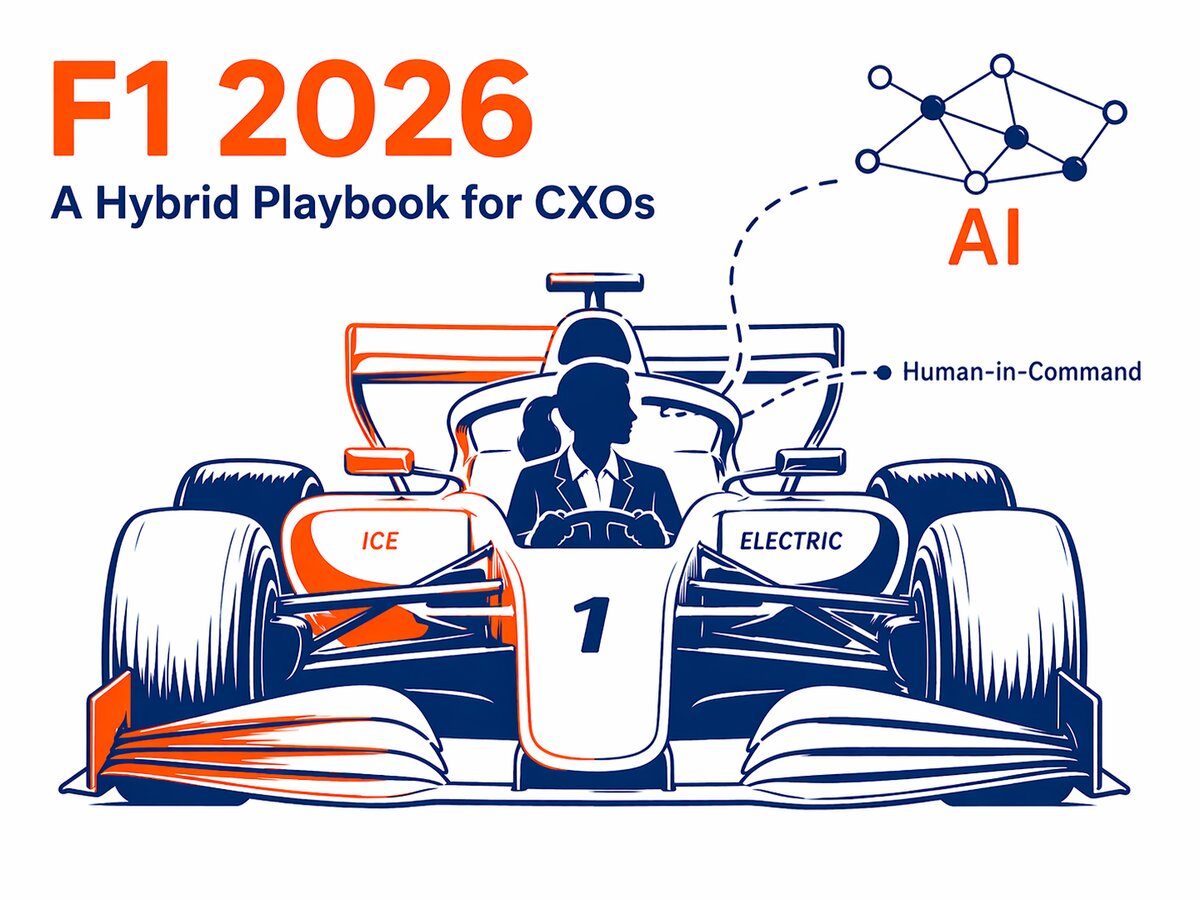
  • Is Formula 1 telling us something about how to roll out AI?

    Is Formula 1 telling us something about how to roll out AI?

    Stay with me for a second.

    Starting this 2026 season, F1 has quietly executed its biggest regulation overhaul in over a decade. The 1.6L V6 turbocharged engine stays. But the electric side of the hybrid system has been roughly tripled in power, and the sport is now targeting a 50:50 split between internal combustion and electric power. The cars are running on Advanced Sustainable Fuels for the first time, and DRS has been replaced by an electrically-driven Overtake Mode.

    A serious pivot. And yet F1’s own president has been categorical that the sport will never go fully electric. Not ideology — battery technology simply cannot sustain a Grand Prix, and pushing too fast would break the product itself. There is also a regulatory reality at play. Governments across the EU and elsewhere have been legislating hard on emissions and the long-term future of internal combustion engines. F1 had to respond to that pressure, just as every other industry has. It could not ignore the direction of travel, but it also could not pretend the technology was ready to go all the way.

    So here is what F1 has actually done. It read where the regulation is heading. It read where public sentiment is heading. It read where the technology is heading. And instead of picking a side, it built a hybrid architecture where the driver stays in the seat, but the electric system dramatically amplifies what the car can do. Even that has not been smooth, and the FIA is still tuning the rules with teams this month. Imperfect, but directionally right.

    This is the pattern I keep coming back to when founders and CXOs ask me how aggressively they should roll out AI inside their business.

    The temptation on both sides is to go to an extreme. One camp, in the name of optimisation, wants to rip humans out of workflows and hand entire functions over to agents. The other camp wants to wait, watch, and delay until things settle — play it safe. The data says both are mistakes.

    MIT’s NANDA initiative studied this through 2025 and found that around 95% of enterprise generative AI pilots deliver no measurable impact on the P&L, despite $30 to $40 billion spent. The 5% that did succeed shared a common pattern: they kept scope tight, focused on back-office automation where the ROI was clearest, and worked with specialised external partners rather than trying to build everything in-house. Firms that bought and partnered succeeded roughly twice as often as those that built internally.

    A Harvard Business School field experiment with BCG consultants sharpened the point further. For tasks inside AI’s current capability frontier, consultants using AI completed 12 percent more work, 25 percent faster, at higher quality. For tasks outside that frontier, the same consultants using AI were 19 percent less likely to get the right answer. Same people, same tools, different task. AI made them worse when the task was not the right fit.

    Now layer in the regulation piece. The EU AI Act’s core obligations for high-risk AI systems come into force on 2 August 2026. Article 14 of the Act uses a specific phrase that deserves attention: “human-in-command.” It is not a suggestion. It is a statutory requirement that high-risk AI — which includes recruitment, performance evaluation, credit decisions, medical diagnostics, and critical infrastructure — must be designed so a human can meaningfully supervise, intervene, and override. India is not there yet, but every serious jurisdiction is moving in the same direction.

    Put it together, and the picture is clear. The research says narrow deployments work, broad ones fail. The research says AI amplifies humans on the right tasks and actively harms them on the wrong ones. The regulation says, at least in high-stakes domains, a human must remain in the loop by law.

    The firms that will win the next few years are not the ones going all-in on autonomous AI, and not the ones hiding from it. They are the ones building a hybrid operating model now, keeping judgment with humans and leveraging AI, and getting good at the handoff long before it becomes mandatory.

    F1 worked out that an elegant hybrid is harder to build than a pure ICE or a pure EV. But it is the only architecture that keeps the sport competitive, relevant, and regulation-ready at the same time.

    The same logic applies to your business.


    If you are a CXO or founder thinking through how to sequence AI inside your organisation without getting ahead of your team, your customers, or the regulators, happy to talk. Reach me at v@thefoundercatalyst.com or connect on LinkedIn: linkedin.com/in/venkatarangan

  • How forecasts age in an AI moment?

    How forecasts age in an AI moment?

    Every quarter, someone in tech quietly walks back a confident prediction they made not long ago.

    In January 2026, Forrester published research showing that over half of all AI-attributed layoffs are likely to be reversed, because companies cut headcount based on AI promises that the technology was not yet ready to keep. The same month, Gartner forecast that generative AI in customer service would cost more than offshore human agents by 2030, prompting a pointed rebuttal from industry practitioners who argued Gartner was describing a vendor pricing failure, not an AI failure.

    The retractions are usually healthier than the original predictions. They just get a fraction of the attention.

    In October 2021, a year before ChatGPT, I delivered a talk called “The Future of Software Developers by 2040” to a developer conference. Looking back now is not about whether I got things right. The more useful question is which assumptions survived contact with a shock nobody saw coming.

    A few stood up reasonably well. The talk argued the (Indian) IT hiring boom would not last. TCS, Infosys, Wipro and HCL were on record quarters then, with attrition above 20 per cent. The direction was right, though the mechanism I imagined, gradual automation and growth of the global capability centres, turned out to be the smaller story. The larger one was a foundation AI model that could write working code from a plain English comment.

    One slide, titled “Going to be upside-down,” argued that the work mix in software would invert: more time on business understanding and customer needs, less on writing and testing code. That was framed as a gradual shift toward 2040. It is largely the reality in 2026 itself.

    The line that aged the worst was the one I closed with: let machines be machines, and let humans be human. It earned a warm nod in the room. Five years on, it has the ring of a sentence printed over a stock photo of a sunrise. Tidy aphorisms assume the boundary they describe will hold still. This one has not.

    Nobody in this industry predicts precisely. The people who navigate these shifts well are not the ones with the sharpest forecasts. They are the ones who revise quickly when the ground moves, before it costs them too much.

    There is a Chinese proverb associated with Deng Xiaoping: crossing the river by feeling the stones. You do not map the riverbed in advance. You step, test your footing, adjust, and step again. The destination matters. But the only honest method is one stone at a time.

    The next five years will not reward people who pick a single thesis and hold it. They will reward those who can hold a direction loosely, gather evidence weekly, and change their mind without ego when the facts demand it.

    The cost of a wrong forecast held too long is now measured in quarters, not years. The cost of revising one in public is mostly ego. And ego is the cheapest thing to spend.

    The forecasts that age worst are usually the ones that sound the wisest at the time.

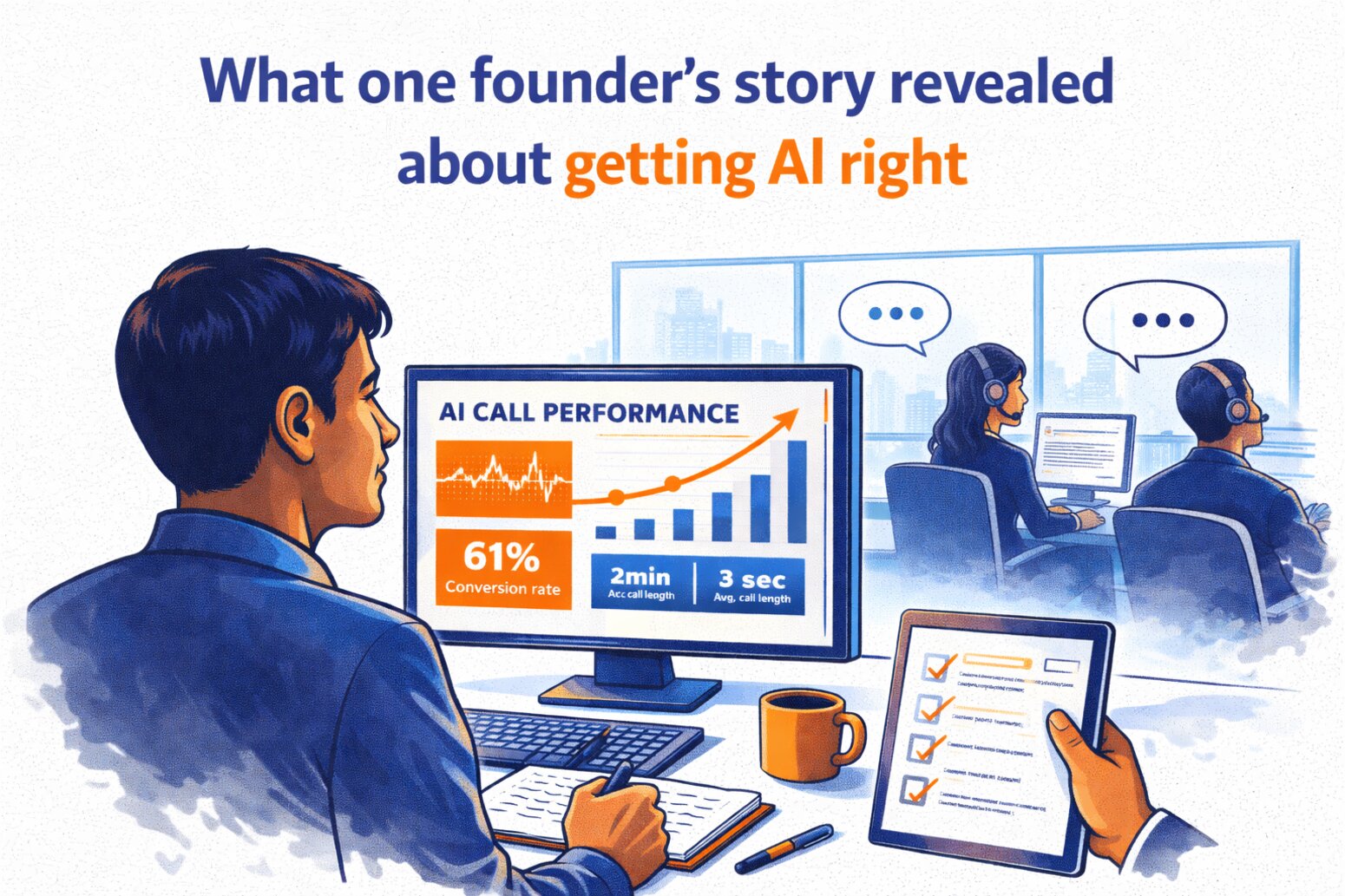
  • The Secrets to Successful AI Implementation Revealed

    The Secrets to Successful AI Implementation Revealed

    Last week, a founder from Indore (India) shared a thread about deploying AI voice calling at scale. I could not put it down. Because the real lessons have nothing to do with voice calls.

    Strip away the telephony context, and what you have is a masterclass in how to deploy any AI solution in an enterprise. Here is what stood out.

    The first lesson is about trust, not technology. Their AI voice was technically flawless. Too flawless. People hung up. The moment they added small imperfections, pauses, and a little background noise, conversion went up 40%. The lesson here is not about phone calls. It is about how humans receive AI-assisted interactions in any setting. Perfection triggers suspicion. Naturalness builds trust. Keep that in mind, whether you are deploying an AI chatbot, an AI-assisted email, or an internal co-pilot for your team.

    The second lesson is about the real competitive advantage. Their human QA team could review 30 calls a day. The AI system lets them audit every single conversation, spot patterns, rewrite responses, and redeploy within the hour. Five improvement cycles in a day versus five in a quarter. That compounding speed of learning is what separates organisations that achieve extraordinary results with AI from those that achieve mediocre ones.

    The technology is not the edge. The speed of learning from it is.

    The third lesson is the one I want every CXO reading this to write down. They went through three vendors before they understood the real problem. Every vendor built them a technically functional system that did not convert. Because no vendor knows your business well enough. The vendor knows the platform. You know what your customer means when they pause before answering. You know when a “call me later” is a genuine request and when it is a polite exit. You know what a good conversation in your context sounds like.

    This is exactly the mistake I see enterprises make repeatedly with AI deployments. They treat it like an infrastructure purchase. Hand over the requirements, receive the system, and declare it live. Then, wonder why the numbers are disappointing.

    Every successful AI deployment I have seen has one thing in common. Not a premium vendor. Not a cutting-edge model. One internal person who owns the prompt. Who listens, observes, refines, and iterates daily. Someone who understands the customer deeply and has the judgment to shape how the AI responds.

    That person is not an AI engineer. They are a domain expert with curiosity and ownership. And they are the difference between a deployment that impresses in a boardroom presentation and one that actually moves the needle.

    Where did your AI deployment surprise you the most, in a good way or a bad way?