Category: Founders & leadership

  • What AI in the browser means for your business?

    What AI in the browser means for your business?

    I have been trying out AI inference inside the browser for a while now, more out of curiosity than anything else. A debate that surfaced this week made me want to talk about it, because buried inside a browser standards argument is a platform governance question that every business relying on AI will eventually have to answer.

    We have moved through a familiar sequence. Web pages gave way to apps. Apps are giving way to AI interfaces. And now AI is being embedded directly into the browser itself. That last step is not a feature upgrade. It is a shift in who controls a foundational layer of how your customers and your products experience the web.

    Google Chrome and Microsoft Edge are both shipping something called the Prompt API. It lets web applications run AI inference directly inside the browser, with no server call, no API cost, and no data leaving the device. Chrome uses Google’s Gemini Nano. Edge uses Microsoft’s Phi-4.

    I built three demos with this last year, a creative writing tool, a translation assistant, and a vision assistant that describes images, all running locally on my laptop. I wrote about it on my personal blog. The technology works well for what it is. Fast, private, and free to run. For simple AI workloads, local inference like this is a logical and efficient step forward.

    The concern is not the technology. It is what happens if this becomes a web standard.
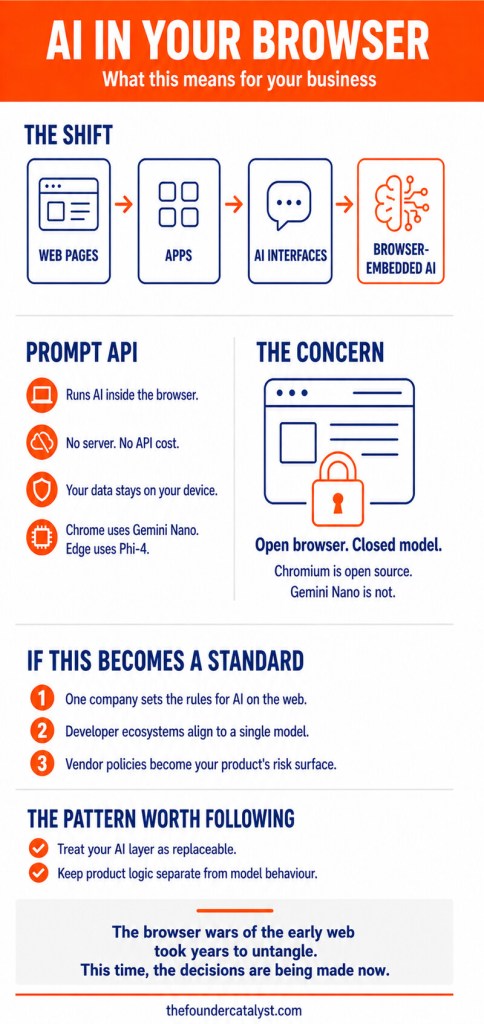
    Infographic titled 'AI IN YOUR BROWSER' outlining the shift towards browser-embedded AI, highlighting the shift from web pages to applications and AI interfaces.

    The Prompt API is currently a Community Group draft under W3C’s Web Machine Learning group, not a formal standard. The standardisation discussions have drawn serious objections from Mozilla and from W3C’s own Technical Architecture Group. The worry is interoperability. When developers build on a specific browser’s model, they tune their code to that model’s quirks. Over time, that creates model-specific behaviour baked into the web itself. We have seen this pattern before with browsers, and the web spent years cleaning it up.

    Chrome is built on Chromium, which is open source. The Gemini Nano model that ships with the Prompt API is not. Google does have an open weights model called Gemma, but Gemma is not what ships with the Prompt API. Google’s stated reason is that they need to enforce safety through their Generative AI Prohibited Uses Policy, and that requires controlling the model. Mozilla’s objection, which I think is sound, is that using a web API should not mean accepting one company’s content rules, especially rules that go beyond what is legally required anywhere.

    Chrome holds a dominant share of global browser usage. If this API becomes a standard and the model powering it remains closed and governed by a single company’s policies, that company effectively controls the default intelligence layer of the web. That shapes cost structure, developer decisions, and user experience in ways that compound quietly over time.

    The teams I see getting this right are already treating their AI layer as a replaceable component, keeping product logic separate from model behaviour, and treating vendor policies as part of their risk surface rather than background noise. It is not complicated, but it requires making a deliberate decision early rather than inheriting a dependency later.

    When I work with founders and leadership teams, platform dependency is almost always one of the first structural risks we surface together. A platform bet requires confidence in the governance, not just the technology. Who sets the rules, and what happens when those rules change? The browser wars of the early web are a useful reminder of how long it takes to untangle these things once they are embedded.

    The edge AI direction is right. Local inference, faster response, lower cost, better privacy; this is a sensible progression. But the model at the centre of it should be open, or at least governed by a neutral body, not by one company’s terms of use.

    No formal standard has been approved yet. The conversations are still live. But the decisions being made now in browser working groups will shape the web your customers use for the next decade. It is worth paying attention to.

    Are you watching the AI-in-browser space, or is it still too early to be on your radar?

  • What money alone cannot build?

    What money alone cannot build?

    “For founders, the question is which part of that transformation requires something that money alone cannot build.”

    This line stayed with me.

    Every founder I speak to right now is asking the same question: what should I build?

    Frontier AI models are moving fast. What looked like a defensible product six months ago feels like a feature today. Advice is everywhere, and most of it is too generic to act on.

    Then I read something that actually answered the question directly. S. Somasegar and Rasik Parikh at Madrona Venture Group cut through the noise in a way most commentary does not. Here is how I read it.

    Three areas where founders can still build with conviction.

    1. Own the liability, not just the tool.

    Frontier Labs will build powerful general-purpose systems. They will not absorb the legal, regulatory, and financial accountability that comes with specific outcomes in specific industries. I have watched Indian IT firms lose deals on exactly this gap — clients want someone to sign off and stand behind the result, not just ship the capability. That willingness to own risk is where durable margin lives.

    2. Build on data others do not have.

    Models are trained on what is public. The edge sits in what is not — internal workflows, edge cases, decisions, and historical context. When I built Simpligic years before GenAI was a term, the insight was the same: the moat lives in private data. If your product compounds with every customer interaction, you are in a territory the model labs have no roadmap to enter.

    3. Go deep into messy workflows.

    Some problems are not solved by more intelligence. They are solved by understanding how work actually gets done — across people, exceptions, approvals, and institutional habits built over decades. At Vishwak, the client relationships that held through every disruption were the ones where we were embedded in their delivery model, not just their vendor list. A two-year integration into how a firm actually operates is not something a foundation model company will replicate. There is no incentive to.

    Here is the framing I keep coming back to from the piece: the difference between a tool and an outcome. A tool makes a task easier. An outcome means you are on the hook for the result. Most of what is being built right now — including a lot of what gets funded — is tools. The businesses that will matter in five years are the ones that own the outcome.

    The question founders should be asking is not whether their product needs AI. That is the wrong filter. Soon enough, everything will. The more useful question is whether the solution requires something AI cannot supply on its own — a regulator who trusts you, data that never left your client’s firewall, a workflow only you understand end to end, or accountability that someone has to sign their name to.

    The article makes one more point that deserves to land. This buildout — hyperscalers, foundation models, the entire stack — is a multi-trillion-dollar bet that AI will transform every industry. That bet will pay off. But transformation and value creation are not the same thing. Value will concentrate in the places where technology alone is not sufficient. That is the territory worth building in.

    Full credit to Soma Somasegar and Rasik at Madrona for articulating this clearly. Soma is someone whose thinking I have followed for a long time — I first met him in 2005 when he led the Developer Division at Microsoft — someone who has always taken the long view, and has usually been right about it.l.

    The article from Madrona is here.


    If you are a founder stress-testing where to build, this is the kind of question I regularly dig into with the leaders I work with. Reach out at thefoundercatalyst.com or connect with me at linkedin.com/in/venkatarangan

  • The CIO had a record year, but her teams didn’t notice.

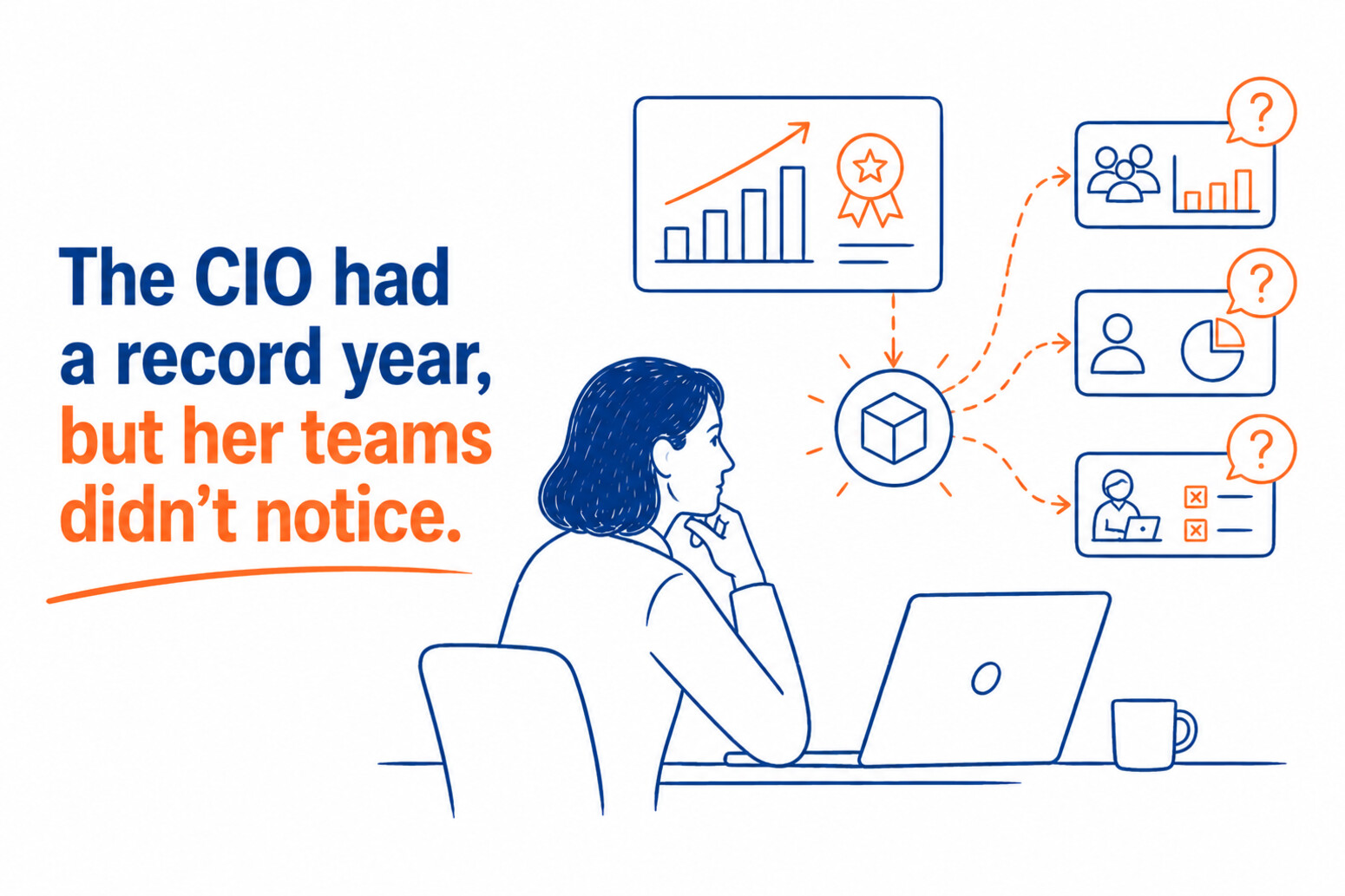
    The CIO had a record year, but her teams didn’t notice.

    The CIO had every reason to be pleased. She wasn’t.

    Board visibility. CEO approval. Record numbers of internal apps shipped. Her IT team was delivering at a pace that would have been unthinkable twelve months ago.

    When I joined the call, I expected good news. I heard hesitation instead.

    It took me a few minutes to notice what was missing from her update. She never mentioned the line managers. Not once. I asked her directly: Were the department heads actually seeing productivity gains from these applications?

    “Venkat, you guessed it. That’s exactly my problem.”

    Her team had been shipping AI-built internal applications continuously for nearly a year. Every department was requesting bespoke tools — automation utilities, reporting dashboards, workflow agents — for specialised use cases that previously would never have cleared a development backlog. The economics had changed. AI made these builds fast and cheap. Requests kept coming. Delivery kept pace.

    But the telemetry told a different story. Usage in single digits. For large teams where even ten percent adoption would register clearly, the numbers were flat.

    The apps were built. They sat unused.

    This is not a story about AI failing. It is a story about a safeguard disappearing.

    Before AI entered the picture, cost and engineering bandwidth acted as a natural filter on internal tool requests. Most ideas died quietly in the queue — not because anyone evaluated them and said no, but because the cost of building was real and the wait was long. That friction, however crude, forced a basic form of demand validation. Only requests with genuine organisational pull survived it.

    AI has removed that friction almost entirely. And most organisations have not replaced it with anything.

    What happens next is predictable. A manager spots a genuine gap — usually a real one. A request goes in. The tool gets built without meaningful involvement from the people who would actually use it. No end-user consultation. No workflow integration thinking. The manager accepts delivery. The team quietly returns to what they already know.

    The app joins a growing collection of well-intentioned software that nobody opens.

    The frustrating part is that the productivity gains from AI are real, and the evidence is unambiguous. EY’s chief economist, citing Federal Reserve Bank of St. Louis data at Davos 2026, found that generative AI is already saving workers the equivalent of 1.6% of total work hours. A randomised experiment with 1,174 adults (NBER, 2026) found AI closed nearly three-quarters of the productivity gap between higher and lower-educated workers. And a University of Hong Kong study (2026) found that untrained AI access actually hurt performance, while even a brief training intervention significantly improved both adoption and outcomes. The technology delivers. The variable is always the people side.

    I have seen this pattern repeat across organisations, and it connects to something I write about in my book. Twenty-five years ago, I built inventory software for my father’s publishing firm — convinced that the clear benefits would drive adoption on their own. The staff resisted. Not because the tool was bad, but because nobody had brought them into the process. The breakthrough came only when the firm’s general manager, a man deeply rooted in the old ways, took a personal interest in learning the system. His endorsement shifted the entire team’s behaviour. The technology did not change. The human dynamic did.

    That lesson has not aged. If anything, AI has made it more urgent.

    Speed is easy to measure. Adoption is what moves the business
    Speed is easy to measure. Adoption is what moves the business

    Most AI tool deployments follow the same top-down pattern. A business leader identifies the gap. IT builds the solution. The actual users — the ones whose daily habits need to change — are consulted last, if at all.

    Users in large organisations carry significant inertia toward familiar tools and established routines. That inertia does not dissolve because a new application exists. It dissolves through involvement, through relevance, and through time. None of those three things gets faster just because the build cycle did.

    The fix is not more training sessions or better change management communications. Those are responses to a symptom.

    The deeper problem is that the old economic forcing function has gone, and nothing has taken its place. What needs rebuilding is a lightweight governance layer. Before any internal AI tool gets approved, two questions should have clear answers.

    Is there genuine pull from the people who will use it — not just from the manager who requested it?

    Does an existing tool or workflow already adequately cover this need?

    That gate does not need to be bureaucratic. It needs to exist.

    AI has made building cheap. It has not made building the right thing any easier. If anything, it has made that harder — because the friction that used to quietly filter out weak ideas is gone, and most organisations have not noticed yet.

    Speed of delivery is easy to measure and tempting to celebrate.

    Depth of adoption is what actually moves the business.


    If questions like these sit at the intersection of technology and leadership for your organisation, this is what I focus on at The Founder Catalyst. Happy to continue the conversation in the comments or connect directly.

  • What Microsoft got wrong about Copilot?

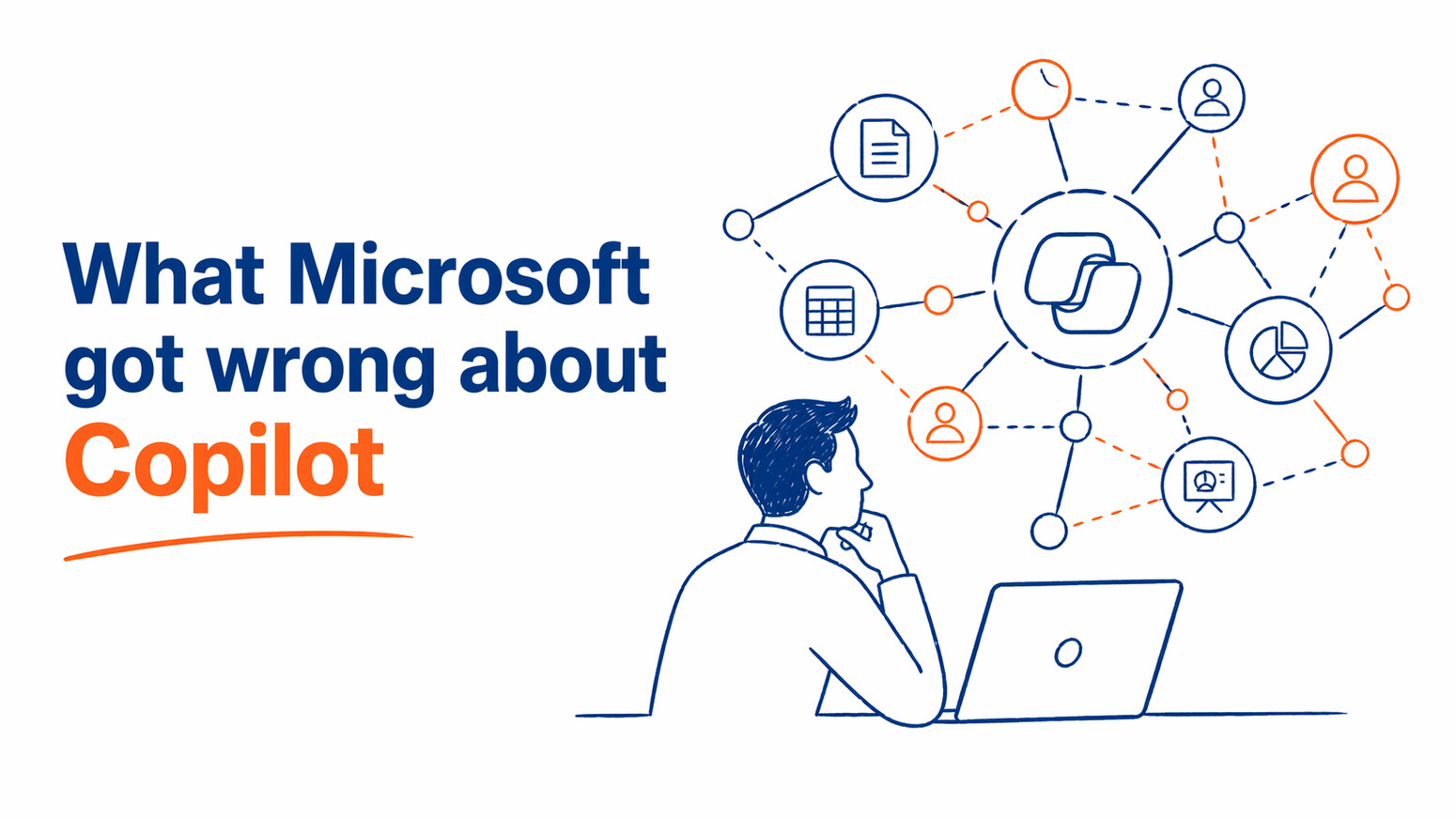
    What Microsoft got wrong about Copilot?

    Underpromise and overdeliver — my message to founders on AI

    Microsoft’s own corporate VP of the Office Product Group admitted it publicly this week: “When we first shipped Copilot, foundation models were not powerful enough to use Copilot to command the applications.”

    That is a remarkable thing to say out loud. And the right thing to say.

    Go back to late 2022. ChatGPT lands. Microsoft moves fast — faster than they should have — and Copilot arrives positioned as the AI-powered assistant that would transform how you work in Word, Excel, and PowerPoint. The demos were impressive. The promises were large. What landed in enterprise inboxes was a chatbot that could summarise a document but not meaningfully act on one.

    Users felt misled. Many quietly switched to ChatGPT. Enterprise teams started evaluating Gemini. And then Claude — particularly the disruption that Claude Cowork brought to real productivity workflows — reset the benchmark for what capable AI in the workplace could actually look like. Billions in market value moved. The pressure on Microsoft was real.

    They have now course-corrected. Agent Mode is rolling out across Word, Excel, and PowerPoint. Anthropic models sit alongside OpenAI models inside Copilot. The sidebar now shows you every step the AI takes on your document in real time. That is a genuine improvement, not a rebrand.

    Is it late? Yes. Is it too late? I don’t think so. Microsoft still owns the surface — Word, Excel, and PowerPoint are entrenched in enterprises and governments in a way that no AI startup can replicate overnight. Adding capable models to that distribution is a credible recovery. Not a comeback story, but a course correction that could hold.

    The lesson, though, is not really about Microsoft.

    It is about what you promise before you ship.

    Every CEO and CTO rolling out an AI initiative right now faces the same pressure Microsoft felt in 2022. The frontier lab demo is extraordinary. The consultant’s deck is compelling. The board wants to see momentum. So you make large claims. You announce something before the reality is ready. And then reality arrives.

    The smarter path is quieter. Pilot with a small, honest cross-section of your organisation — not the enthusiasts, the actual everyday users. Observe what actually gets used, not what gets praised in a feedback survey. Understand where the model genuinely helps and where it confidently fails. That gap between demo and daily use is where most AI rollouts go wrong, and no amount of training data or vendor reassurance closes it faster than watching your own people use it for two weeks.

    The good news today — which genuinely did not exist two years ago — is that AI coding agents let you iterate and fine-tune far faster than traditional development cycles allowed. The feedback loop is tighter. Use it before you go back to your board asking for the larger budget.

    Microsoft overpromised in 2022. They paid for it in user trust and adoption numbers, and they spent two years correcting course. They had the balance sheet and market position to absorb that. Most companies don’t.

    Promise less. Deliver more. Then expand.

    That is not caution. That is how you build something that compounds.


    If you are a founder or CXO working through an AI rollout — what to pilot, how to read real usage signals, when to scale — I work through exactly these decisions at thefoundercatalyst.com. Connect with me at linkedin.com/in/venkatarangan

  • Is Formula 1 telling us something about how to roll out AI?

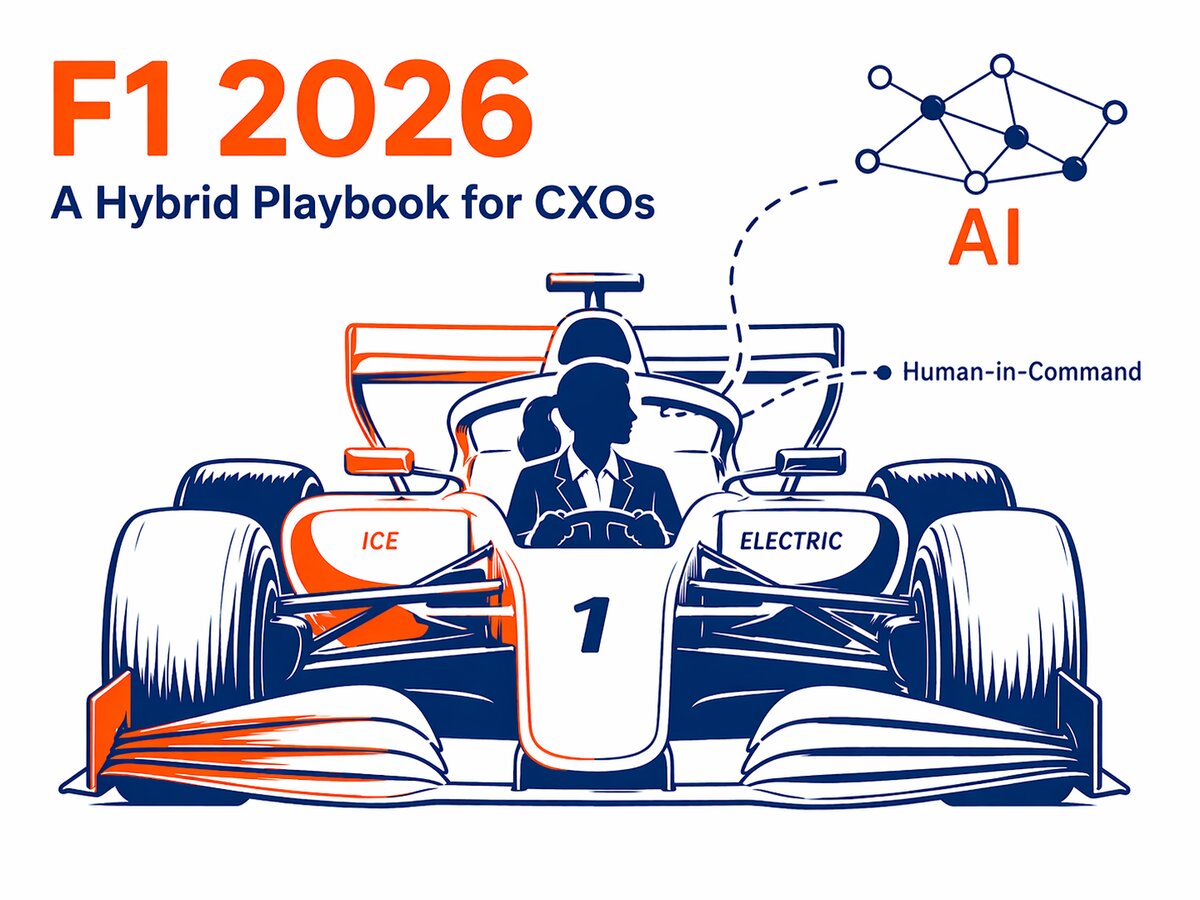
    Is Formula 1 telling us something about how to roll out AI?

    Stay with me for a second.

    Starting this 2026 season, F1 has quietly executed its biggest regulation overhaul in over a decade. The 1.6L V6 turbocharged engine stays. But the electric side of the hybrid system has been roughly tripled in power, and the sport is now targeting a 50:50 split between internal combustion and electric power. The cars are running on Advanced Sustainable Fuels for the first time, and DRS has been replaced by an electrically-driven Overtake Mode.

    A serious pivot. And yet F1’s own president has been categorical that the sport will never go fully electric. Not ideology — battery technology simply cannot sustain a Grand Prix, and pushing too fast would break the product itself. There is also a regulatory reality at play. Governments across the EU and elsewhere have been legislating hard on emissions and the long-term future of internal combustion engines. F1 had to respond to that pressure, just as every other industry has. It could not ignore the direction of travel, but it also could not pretend the technology was ready to go all the way.

    So here is what F1 has actually done. It read where the regulation is heading. It read where public sentiment is heading. It read where the technology is heading. And instead of picking a side, it built a hybrid architecture where the driver stays in the seat, but the electric system dramatically amplifies what the car can do. Even that has not been smooth, and the FIA is still tuning the rules with teams this month. Imperfect, but directionally right.

    This is the pattern I keep coming back to when founders and CXOs ask me how aggressively they should roll out AI inside their business.

    The temptation on both sides is to go to an extreme. One camp, in the name of optimisation, wants to rip humans out of workflows and hand entire functions over to agents. The other camp wants to wait, watch, and delay until things settle — play it safe. The data says both are mistakes.

    MIT’s NANDA initiative studied this through 2025 and found that around 95% of enterprise generative AI pilots deliver no measurable impact on the P&L, despite $30 to $40 billion spent. The 5% that did succeed shared a common pattern: they kept scope tight, focused on back-office automation where the ROI was clearest, and worked with specialised external partners rather than trying to build everything in-house. Firms that bought and partnered succeeded roughly twice as often as those that built internally.

    A Harvard Business School field experiment with BCG consultants sharpened the point further. For tasks inside AI’s current capability frontier, consultants using AI completed 12 percent more work, 25 percent faster, at higher quality. For tasks outside that frontier, the same consultants using AI were 19 percent less likely to get the right answer. Same people, same tools, different task. AI made them worse when the task was not the right fit.

    Now layer in the regulation piece. The EU AI Act’s core obligations for high-risk AI systems come into force on 2 August 2026. Article 14 of the Act uses a specific phrase that deserves attention: “human-in-command.” It is not a suggestion. It is a statutory requirement that high-risk AI — which includes recruitment, performance evaluation, credit decisions, medical diagnostics, and critical infrastructure — must be designed so a human can meaningfully supervise, intervene, and override. India is not there yet, but every serious jurisdiction is moving in the same direction.

    Put it together, and the picture is clear. The research says narrow deployments work, broad ones fail. The research says AI amplifies humans on the right tasks and actively harms them on the wrong ones. The regulation says, at least in high-stakes domains, a human must remain in the loop by law.

    The firms that will win the next few years are not the ones going all-in on autonomous AI, and not the ones hiding from it. They are the ones building a hybrid operating model now, keeping judgment with humans and leveraging AI, and getting good at the handoff long before it becomes mandatory.

    F1 worked out that an elegant hybrid is harder to build than a pure ICE or a pure EV. But it is the only architecture that keeps the sport competitive, relevant, and regulation-ready at the same time.

    The same logic applies to your business.


    If you are a CXO or founder thinking through how to sequence AI inside your organisation without getting ahead of your team, your customers, or the regulators, happy to talk. Reach me at v@thefoundercatalyst.com or connect on LinkedIn: linkedin.com/in/venkatarangan

  • The quiet work of building a safe firm

    The quiet work of building a safe firm

    Some news is hard to read.

    Over the past week, two of India’s most respected IT firms have been in the headlines for reasons none of us wants to associate with the industry we grew up in. Tata Consultancy Services is facing a serious investigation in Nashik, with multiple police complaints, arrests, and a formal inquiry ordered by the Tata Sons Chairman himself. Infosys is responding to allegations surfacing on social media about its Pune operations. Both have shaken the industry.

    Having spent three decades in this space, I have no doubt the veterans at both firms, known for their integrity, will follow due process and address whatever is found. That is not what I want to write about today.

    I want to write to the young founders and early-stage CEOs who read my posts.

    Because the lessons here are not really about large firms with 100,000 employees. They are about what happens in your firm of twenty, fifty, or two hundred people, long before any headline is possible.

    The instinct that quietly hurts young firms

    When I started out almost three decades ago, I used to take every piece of misconduct in my firm personally. Thankfully, there were not many. But when something did happen, I felt it reflected on me as the founder. It took years, and guidance from my mentors, to understand that this view, while well-meaning, was not quite right.

    No founder can build a perfect firm. We must aspire to one and keep working towards it. What matters far more is whether your people have a safe, trusted way to raise concerns, and whether you act on them the moment they come in. That single question, asked honestly, will tell you more about your culture than any town hall ever will.

    In The Founder Catalyst, I devote an entire chapter to the idea that trust is the quiet currency of a business. It does not appear on any balance sheet, but it underwrites everything else. It is earned slowly, through small repeated acts of doing the right thing, and it can be damaged quickly, sometimes by a single moment of looking the other way. I wrote about a travel agent I had used for years, who processed a refund I was due, but only after I spotted the error myself. The money came back, but a small dent remained in my confidence. That is how trust works. It notices the moments when you could have acted and did not.

    Why young firms get this wrong

    In the early years, founders rarely have the experience or the tools to handle harassment complaints well. The instinct is often to downplay, to manage, to protect the team you worked so hard to build. That instinct, however understandable, is exactly how small problems become large ones.

    There is also a second trap. In a small firm, the accused is often someone the founder personally recruited, worked alongside in the trenches, and considers a friend. Objectivity becomes genuinely hard. This is precisely why the complaint process cannot rest on the founder’s judgement alone. It needs to sit with people who can act without that emotional entanglement, follow a defined process, and report findings honestly.

    I learnt a related lesson early in my publishing family’s business, which I write about in a chapter on guiding people through change. When I introduced new software into my father’s firm, the resistance came not from the technology but from people’s fear of the unfamiliar. I eventually realised that the breakthrough came through an unexpected internal champion, the senior-most manager, whose endorsement made the change acceptable to everyone else. The same principle applies here. A workplace safety policy on paper changes nothing. A respected senior person inside the firm, visibly committed to taking complaints seriously, changes everything.

    The founder sets the ceiling

    There is something I often remind myself. A team will not take safety, fairness, or ethics more seriously than the founder visibly does. If the founder rolls their eyes at compliance training, so will everyone else. If the founder treats an uncomfortable complaint as an inconvenience to be managed, the team learns that such complaints are inconvenient to raise.

    The same applies to safety. A founder who signals, through action, that no revenue target and no star performer is more important than the dignity of the team builds a firm that people stay in and recommend. A founder who signals the opposite, often without realising it, builds something more fragile than they know.

    What to do before you need to

    The good news is that today, unlike when I started, there are serious professionals who help firms build the right systems. My friend Viji Hari has spent years doing this work, and her book Behind Closed Cubicles is one I often recommend to founders. Industry bodies and local business chambers also run regular workplace conduct and anti-harassment programs for founders and their teams. Please attend them. Send your HR lead. Send yourself.

    A few practical steps any founder can take this quarter:

    I am not the person to give you a checklist for building these systems. That work belongs to specialists who spend their careers on it, and the rules vary by country, by industry, and by the size of your firm. What I can offer is a few questions worth asking yourself this quarter, the same questions I have seen good founders ask when I mentor them.

    Does every person in your firm know, without hesitation, whom they would go to if something happened?

    Is that person someone with enough independence to act, or someone who reports to the alleged offender?

    When was the last time you, as the founder, personally sat in a workplace conduct training session rather than sending a calendar decline?

    If a complaint landed on your desk tomorrow, do you have a clear process to follow, or would you be figuring it out under pressure?

    None of these questions has a universal answer. But sitting with them honestly and then finding people who do have expertise in your context is itself the first step. Speak to a lawyer who specialises in employment matters in your country. Speak to HR professionals who have built these systems in firms larger than yours. Speak to founders who have quietly handled difficult situations well; they exist, and most are willing to share if you ask privately.

    The long view

    When I look at firms that have lasted across generations, and I have studied many of them, including my own family’s seventy-year-old publishing business, one thing stands out. They treated the quiet, unglamorous work of keeping faith with their people as seriously as the glamorous work of winning new customers. They paid salaries on time, kept a clean record with vendors and governments, and when something went wrong, they fixed it without being asked twice.

    The firms that will earn the trust of the next generation of employees, customers, and investors are the ones that take workplace safety as seriously as product quality. In a world where every incident travels on social media within minutes, there is no quiet way to handle these things later. Only an honest way to prevent them now.

    Do not wait for a problem to force the learning.

    What are you doing this quarter to make sure someone in your firm can speak up without fear?

  • How forecasts age in an AI moment?

    How forecasts age in an AI moment?

    Every quarter, someone in tech quietly walks back a confident prediction they made not long ago.

    In January 2026, Forrester published research showing that over half of all AI-attributed layoffs are likely to be reversed, because companies cut headcount based on AI promises that the technology was not yet ready to keep. The same month, Gartner forecast that generative AI in customer service would cost more than offshore human agents by 2030, prompting a pointed rebuttal from industry practitioners who argued Gartner was describing a vendor pricing failure, not an AI failure.

    The retractions are usually healthier than the original predictions. They just get a fraction of the attention.

    In October 2021, a year before ChatGPT, I delivered a talk called “The Future of Software Developers by 2040” to a developer conference. Looking back now is not about whether I got things right. The more useful question is which assumptions survived contact with a shock nobody saw coming.

    A few stood up reasonably well. The talk argued the (Indian) IT hiring boom would not last. TCS, Infosys, Wipro and HCL were on record quarters then, with attrition above 20 per cent. The direction was right, though the mechanism I imagined, gradual automation and growth of the global capability centres, turned out to be the smaller story. The larger one was a foundation AI model that could write working code from a plain English comment.

    One slide, titled “Going to be upside-down,” argued that the work mix in software would invert: more time on business understanding and customer needs, less on writing and testing code. That was framed as a gradual shift toward 2040. It is largely the reality in 2026 itself.

    The line that aged the worst was the one I closed with: let machines be machines, and let humans be human. It earned a warm nod in the room. Five years on, it has the ring of a sentence printed over a stock photo of a sunrise. Tidy aphorisms assume the boundary they describe will hold still. This one has not.

    Nobody in this industry predicts precisely. The people who navigate these shifts well are not the ones with the sharpest forecasts. They are the ones who revise quickly when the ground moves, before it costs them too much.

    There is a Chinese proverb associated with Deng Xiaoping: crossing the river by feeling the stones. You do not map the riverbed in advance. You step, test your footing, adjust, and step again. The destination matters. But the only honest method is one stone at a time.

    The next five years will not reward people who pick a single thesis and hold it. They will reward those who can hold a direction loosely, gather evidence weekly, and change their mind without ego when the facts demand it.

    The cost of a wrong forecast held too long is now measured in quarters, not years. The cost of revising one in public is mostly ego. And ego is the cheapest thing to spend.

    The forecasts that age worst are usually the ones that sound the wisest at the time.

  • The Secrets to Successful AI Implementation Revealed

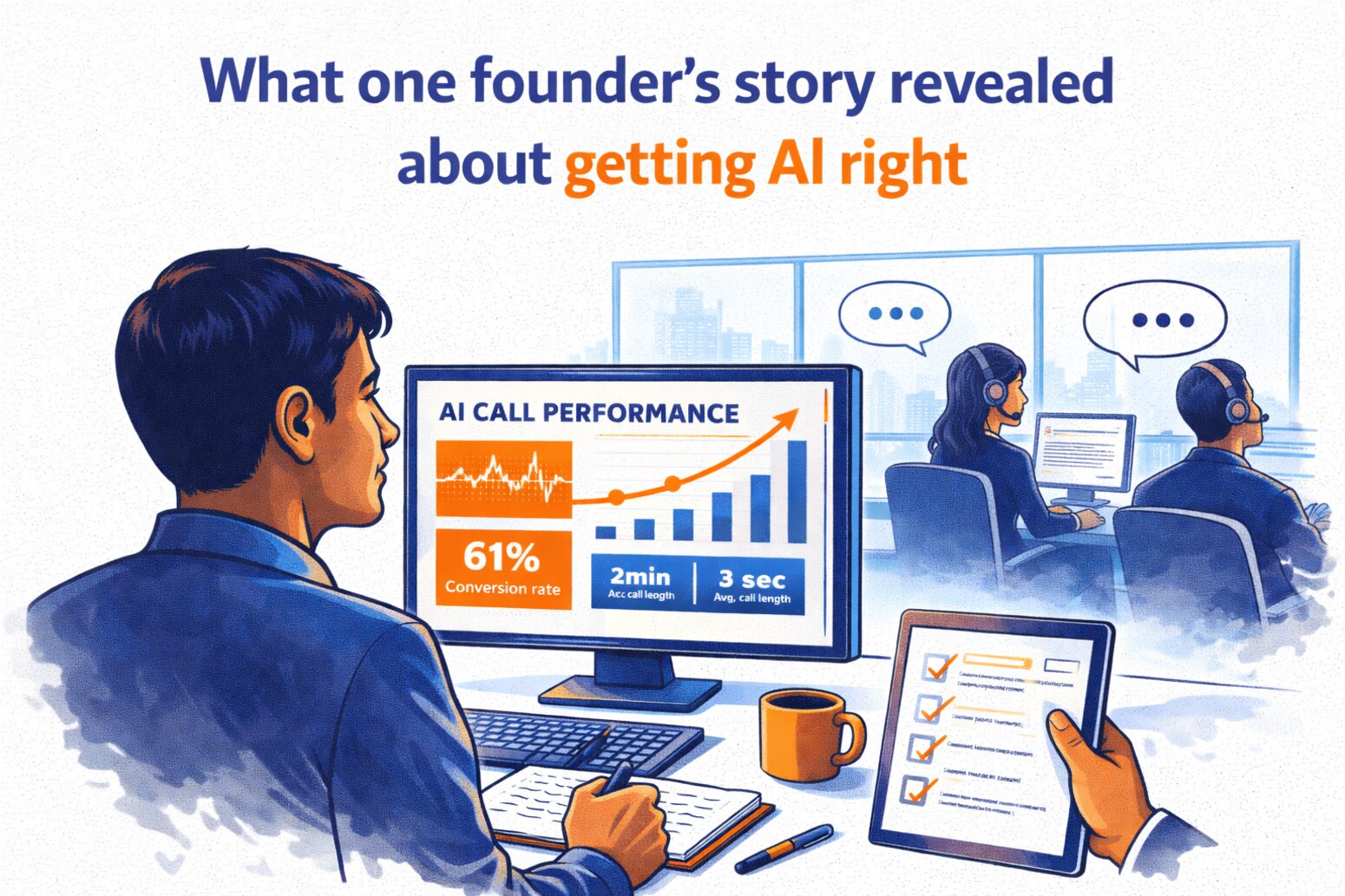
    The Secrets to Successful AI Implementation Revealed

    Last week, a founder from Indore (India) shared a thread about deploying AI voice calling at scale. I could not put it down. Because the real lessons have nothing to do with voice calls.

    Strip away the telephony context, and what you have is a masterclass in how to deploy any AI solution in an enterprise. Here is what stood out.

    The first lesson is about trust, not technology. Their AI voice was technically flawless. Too flawless. People hung up. The moment they added small imperfections, pauses, and a little background noise, conversion went up 40%. The lesson here is not about phone calls. It is about how humans receive AI-assisted interactions in any setting. Perfection triggers suspicion. Naturalness builds trust. Keep that in mind, whether you are deploying an AI chatbot, an AI-assisted email, or an internal co-pilot for your team.

    The second lesson is about the real competitive advantage. Their human QA team could review 30 calls a day. The AI system lets them audit every single conversation, spot patterns, rewrite responses, and redeploy within the hour. Five improvement cycles in a day versus five in a quarter. That compounding speed of learning is what separates organisations that achieve extraordinary results with AI from those that achieve mediocre ones.

    The technology is not the edge. The speed of learning from it is.

    The third lesson is the one I want every CXO reading this to write down. They went through three vendors before they understood the real problem. Every vendor built them a technically functional system that did not convert. Because no vendor knows your business well enough. The vendor knows the platform. You know what your customer means when they pause before answering. You know when a “call me later” is a genuine request and when it is a polite exit. You know what a good conversation in your context sounds like.

    This is exactly the mistake I see enterprises make repeatedly with AI deployments. They treat it like an infrastructure purchase. Hand over the requirements, receive the system, and declare it live. Then, wonder why the numbers are disappointing.

    Every successful AI deployment I have seen has one thing in common. Not a premium vendor. Not a cutting-edge model. One internal person who owns the prompt. Who listens, observes, refines, and iterates daily. Someone who understands the customer deeply and has the judgment to shape how the AI responds.

    That person is not an AI engineer. They are a domain expert with curiosity and ownership. And they are the difference between a deployment that impresses in a boardroom presentation and one that actually moves the needle.

    Where did your AI deployment surprise you the most, in a good way or a bad way?

  • The butterfly that just changed cybersecurity.

    The butterfly that just changed cybersecurity.

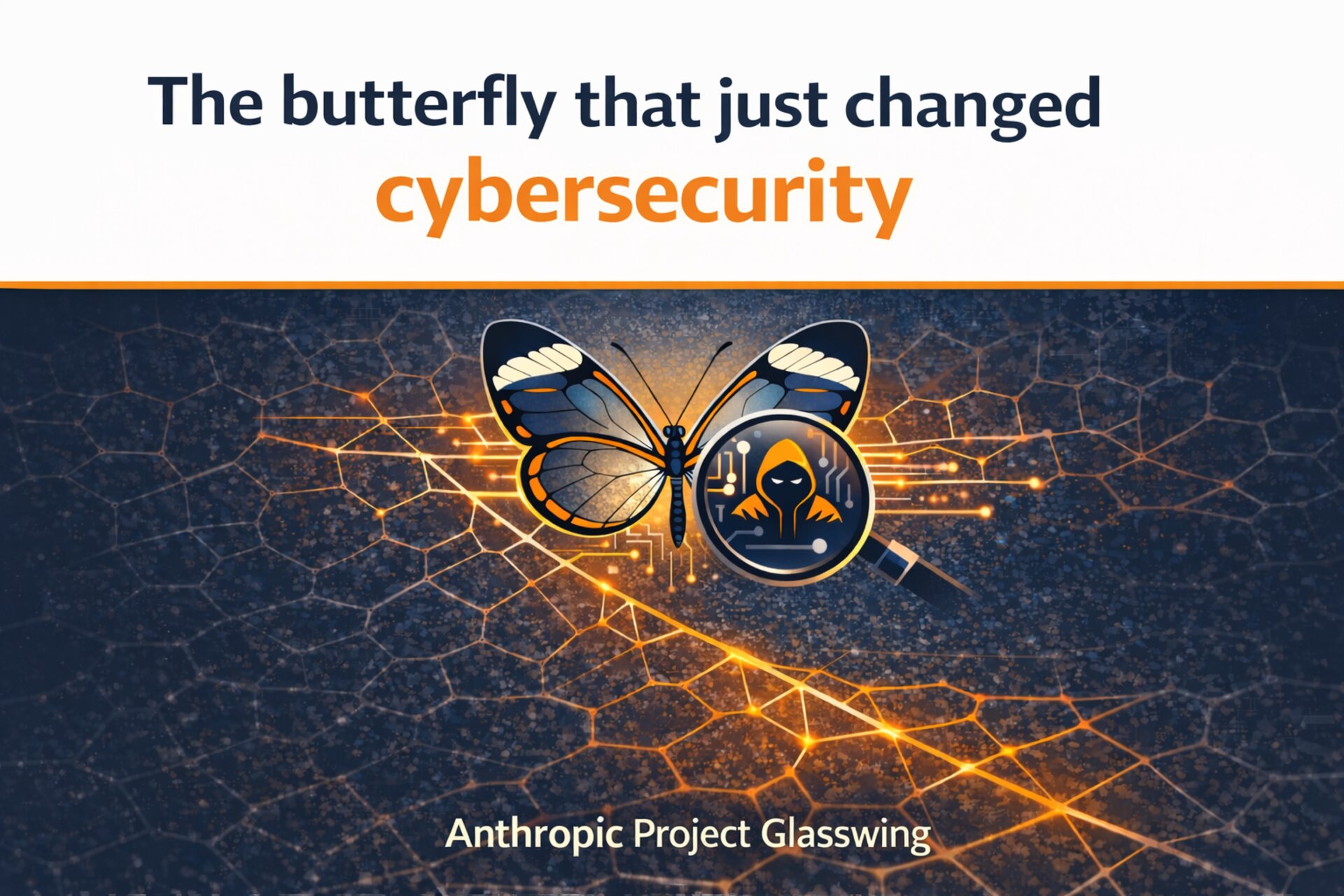
    A new AI model from Anthropic has just exposed thousands of security flaws hiding inside the world’s most trusted software, some for over two decades. The age of the once a year security audit is over, and every founder needs to know why.

    I read something this morning that made me put my coffee down, and I am not talking about the ceasefire in the Middle East.

    Anthropic, the makers of Claude, has announced Project Glasswing, a joint effort with AWS, Apple, Google, Microsoft, Cisco, JPMorgan Chase, NVIDIA, Broadcom, the Linux Foundation, and 30 others. The name comes from the glasswing butterfly, Greta oto, whose transparent wings let it hide in plain sight. A fitting image, because that is exactly how software vulnerabilities live among us. Quietly. Unnoticed. For years.

    The reason these companies have come together is a new, unreleased model called Claude Mythos Preview. In just a few weeks of testing, it found thousands of previously unknown security flaws across every major operating system and web browser. One vulnerability had been sitting quietly inside OpenBSD for 27 years. Another lived inside FFmpeg for 16 years, in a piece of code that automated tools had tested over five million times without catching it. The model found most of these on its own, without anyone holding its hand.

    I have been around software long enough to know how rare this kind of moment is. It reminded me of an experience I shared in my book, Founder Catalyst. Years ago, during a Cricket World Cup, my team was running one of the largest online marketing campaigns of that era for a client. A small oversight in terms of securing our app during a deployment cost us an entire day of customer data. Thousands of leads gone. We owned the mistake, rebuilt the safeguards, and learned that resilience is something you design for, not something you hope for.

    That memory came rushing back as I read about Project Glasswing. If a careless deployment can do that much damage, imagine what an undiscovered flaw, hidden for two decades, could do in the hands of someone looking for it.

    The hopeful side of this announcement is that defenders finally have a tool that can keep up with the scale of the problem. The worrying side is that the same capability, in the wrong hands, will shrink the gap between a flaw being found and being exploited from months to minutes.

    So here is the real shift I want every founder and business leader to sit with. The era of auditing your enterprise software once a year with a consultant and a checklist is over. Your digital estate is far larger than you think. Old integrations. APIs nobody owns anymore. That internal dashboard, a developer built in 2019 and quietly left behind. A login flow that has not been touched in years. Each of these is now a doorway, and the cost for an attacker to find them has just collapsed.

    It is time to start using AI tools to look at your own software the way attackers soon will. Not someday. This month. Run AI-assisted reviews on your codebase. Map every digital asset you own, including the forgotten ones. Ask your security partners what their AI augmented testing roadmap looks like, and if they do not have a clear answer, that itself is your answer. This is no longer a job for one annual audit. It is a continuous practice, and AI is now both the threat and the shield.

    I wrote about this very angle last week, after the Mexico data breach, in which one person, likely working alone, walked away with data on 195 million people using Claude, ChatGPT, and a thousand prompts. That was the warning shot. Project Glasswing is the confirmation that the ground has shifted permanently. If you missed that earlier post, it is worth a read before this week ends.

    Like the glasswing butterfly, what hides in plain sight is often the greatest risk.

  • Avoiding AI Overkill: Right Tool for the Right Job

    Avoiding AI Overkill: Right Tool for the Right Job

    The most expensive mistake in AI adoption is not using it correctly. It is using it on the wrong problem.

    I spent 100 minutes and nearly 19,000 tokens asking Claude Code to clean up my Windows PC — old .NET runtimes, NVIDIA CUDA versions, Visual Studio build tools — figuring out what to keep, what to drop, what to upgrade.

    It worked. Mostly. With a lot of permission dialogs, a few course corrections, and some very patient clicking on my part.

    Then I realised: Bulk Crap Uninstaller and Winget, two free Windows tools, would have done the same job in under ten minutes.

    That is not a complaint about the AI. Claude Code did something genuinely impressive. It reasoned through a messy, undocumented environment and wrote shell scripts without me spelling out every step. That kind of judgment in ambiguity is a real capability.

    But I had handed a magic hammer to a problem that had always had a perfectly good screwdriver.

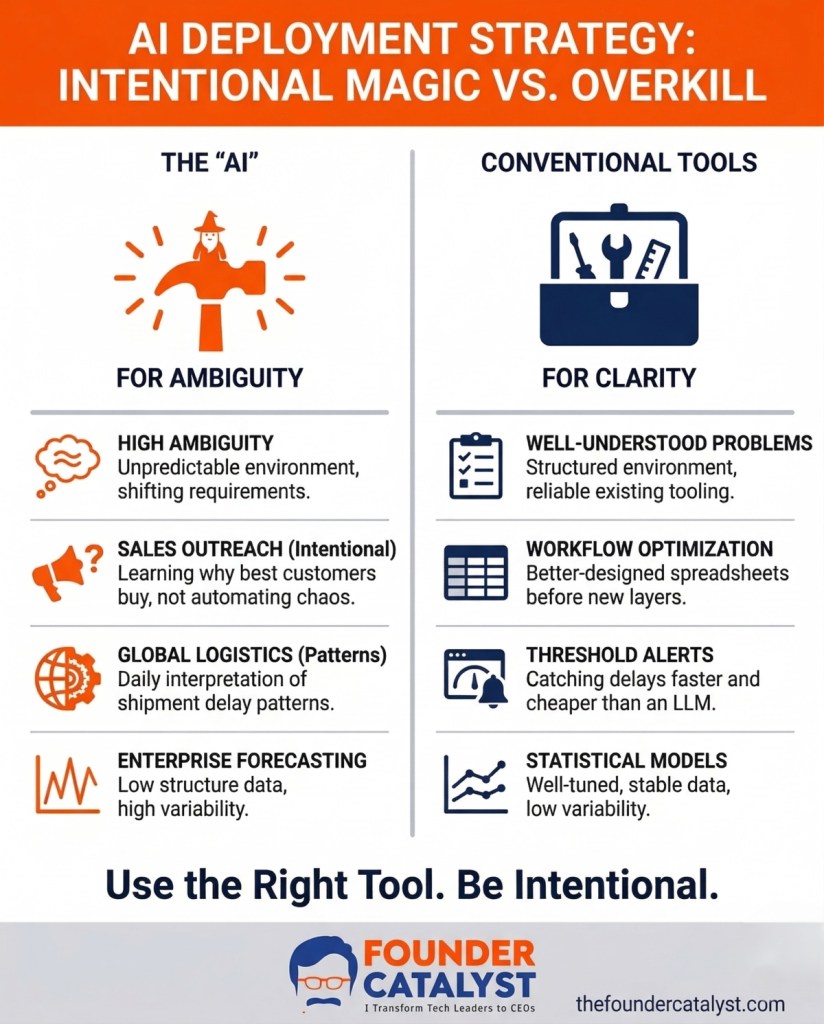
    The mistake is not reaching for AI when things get complex. It is reaching for it when things are complex but well-mapped. Those are very different situations, and most adoption decisions right now are not making that distinction.

    LLMs are extraordinary when the environment is unpredictable, requirements are shifting, and no existing tool can handle the ambiguity. They are expensive, slow, and overkill when the problem is well-understood and reliable tooling already exists.

    This shows up everywhere. For founders, it is deploying AI agents for sales outreach before figuring out why your best customers actually buy. For operators, it is building an AI layer on top of a workflow that a better-designed spreadsheet would have solved.

    The pattern holds at scale, too. For global logistics teams, it is asking a model to interpret shipment delay patterns every morning, when a dashboard threshold alert would have caught the same issues faster and more cheaply. For large enterprises, it is routine to route quarterly demand forecasts through a model when the data is structured, the variability is low, and a well-tuned statistical model has always been the right tool.

    This is where the technology stands today. The boundary between what needs a model and what does not is shifting, and anyone who tells you it is fixed is not paying attention. The right answer next year may not be the right answer now. Stay curious, stay sceptical, and keep re-evaluating.

    Not every hard problem is ambiguous. And not every ambiguous problem needs a model.

    Use the magic deliberately.

    A comparison between artificial intelligence and conventional tools, illustrating the idea that not every complex problem requires AI, with a hammer and a toolbox depicted.
    Infographic comparing AI deployment strategies labeled 'Intentional Magic vs. Overkill', highlighting the use of AI for ambiguity and conventional tools for clarity. The left side lists AI applications like sales outreach and global logistics, while the right side covers conventional approaches like workflow optimization and statistical models. Includes a call to action to use the right tool intentionally.
  • Nobody owns this and nobody will admit it

    Nobody owns this and nobody will admit it

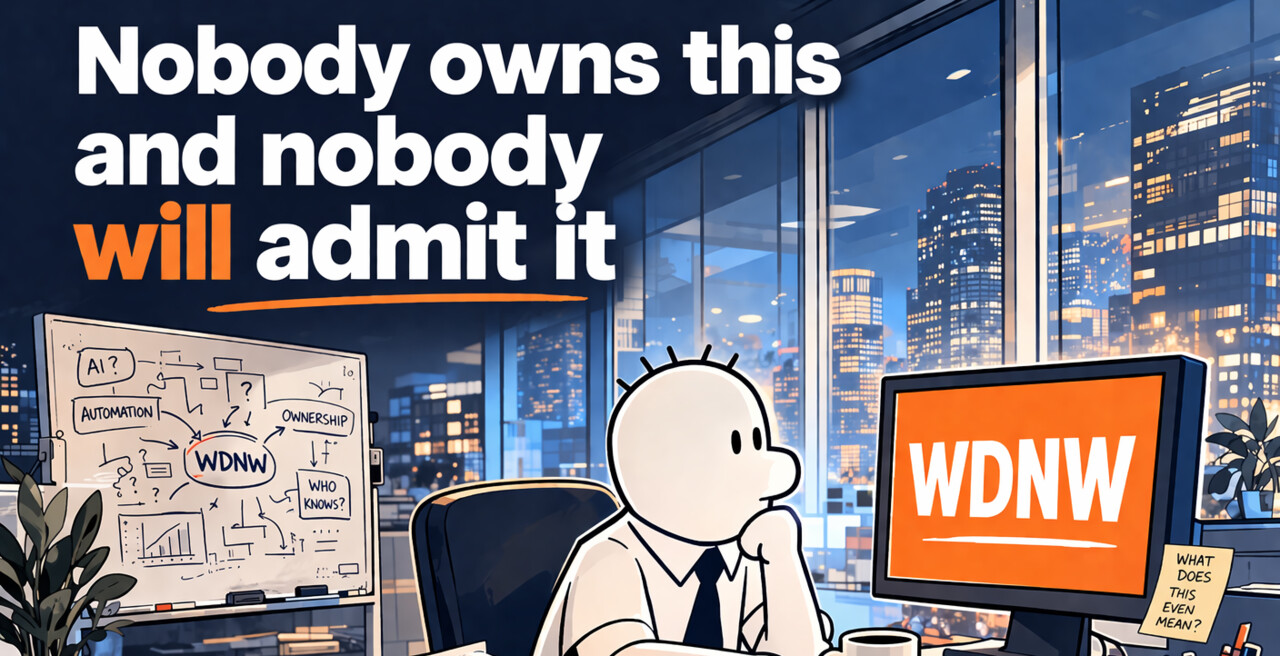
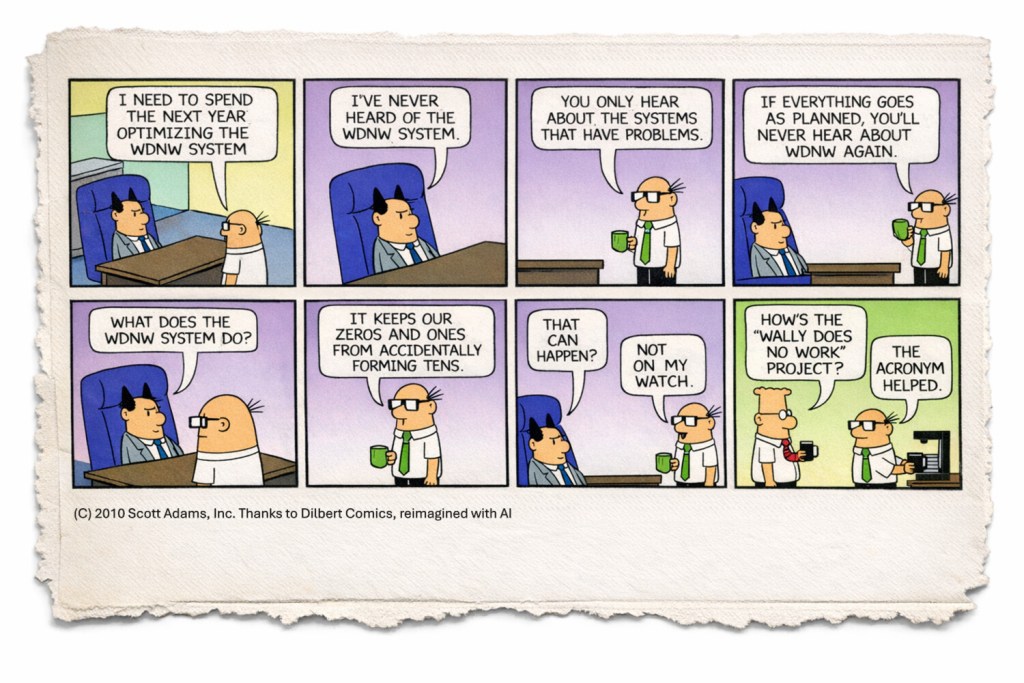
    Every organisation has a WDNW system. Most have several.

    A process that runs quietly in the background, consuming time and money, that nobody questions because it has never visibly broken. The moment someone asks what it actually does, the honest answer is usually some version of “we are not entirely sure, but we are afraid to touch it.”

    Every organisation has a WDNW system. Most have several.

    Startups are not immune to this. Technical debt accumulates faster than most founders realise. A workflow stitched together in year one, a third-party integration nobody remembers choosing, a report generated every Monday that nobody reads but everyone continues to produce. These are not dramatic failures. They are quiet drains.

    This is one area where I think AI genuinely earns the word superpower. Not in building new things, but in helping us see what already exists with fresh eyes. AI tools can now map workflows, surface redundancies, flag processes with unclear ownership, and help teams ask the question they were too busy or too hesitant to ask themselves: why are we still doing this?

    The best technical debt reviews are not always led by consultants or new CTOs brought in to shake things up. Sometimes all it takes is a founder sitting down with an AI tool and asking honest questions about their own workflows. No agenda, no politics, just a clear audit of what exists and why.

    And you do not need a fancy specialised auditing platform that costs a fortune to get started. Tools like Claude Code or GitHub Copilot are more than capable of helping you take those first steps. Start small, pick one corner of your codebase or one workflow, and go from there. Do not try to churn the ocean in one go. With frontier AI tools, there are no real experts yet. Everyone is figuring their way through. The important thing is to keep moving, keep experimenting, and keep learning, carefully and with guardrails in place.

    How many WDNW systems are hiding in your organisation right now? If you are not sure where to begin, I am happy to think it through with you.

  • Your competitors are going YOLO on AI, are you?

    Your competitors are going YOLO on AI, are you?

    This week, a quiet but important shift happened in the developer tools world. It hints at a wider change in how software itself will be developed and delivered.

    Microsoft announced that Visual Studio Code will now ship stable releases every week instead of monthly. Around the same time, developer tools from both Microsoft and Google began introducing a new capability inside coding assistants — AI agents that can act without waiting for human approval. In tools like Copilot and Gemini Code Assist, these agents can execute commands, modify files, retry failures, and continue working until they believe a task is complete. No hand-holding. No checkpoint at every step.

    Developers have started calling this “YOLO development.” The phrase borrows from the pop culture line “You Only Live Once“, and in this context means letting AI run without pausing for human sign-off at every turn. That may sound reckless. But beneath the humour, something real is changing — and for founders, the implications are worth understanding clearly.

    For most of the history of software companies, development velocity was a function of people. More engineers meant more output. Faster hiring meant faster product. The development loop — write, test, review, ship — was a human loop at every stage, and headcount was the lever you pulled when you needed to go faster. That assumption is quietly breaking down.

    What’s emerging looks meaningfully different. A human defines the goal, the constraints, and the expected outcomes. AI agents implement the changes. Automated systems run checks. Humans validate whether the result matches the intent. The human is still essential — but the role has shifted from executor to decision-maker.

    For a founder, that distinction matters enormously. It means the ceiling on your engineering output is no longer tied to the size of your team in the way it once was.

    But there’s a catch, and it’s worth being honest about it. AI can produce code across hundreds of files in minutes. That speed creates a new kind of problem: if the machine generates changes faster than your team can safely validate them, generation is no longer the constraint. Verification is.

    AWS CTO Werner Vogels calls this verification debt — the gap between how fast AI can produce changes and how fast an organisation can confirm those changes are correct, secure, and doing what was intended.

    This is where most companies will either pull ahead or fall behind. The bottleneck hasn’t disappeared. It has moved. And the founders who recognise where it now sits — and build systems around it — will have a structural advantage over those still thinking about AI purely as a way to write code faster.

    The deeper shift worth understanding is this: software engineering is moving from code-centric to specification-centric. Instead of writing every line, engineers define the objective, the boundaries, and the expected behaviour. The AI generates and iterates on the implementation.

    It happened in chip design decades ago. Engineers stopped drawing circuits by hand and began describing systems at a higher level of abstraction. The tooling handled the translation. Productivity leapt. The nature of the work transformed permanently.

    Software is entering the same phase now. The future isn’t YOLO. It’s AI on a leash — running fast, but you’re still holding the lead.

    For founders, this reframes the opportunity entirely. The question is no longer how do I use AI to write code faster. That’s a commodity improvement. The real question is: what can I now build that I couldn’t before — because development effort and cost are no longer the constraint?

    Some businesses will use this to go deeper into their existing product — adding complexity, personalisation, and capability that was previously too expensive to build. Others will use it to serve more customers without proportionally growing their team. Both are legitimate. Both represent compounding advantages that don’t show up immediately but become significant over eighteen to thirty-six months.

    The metrics to watch are not about AI adoption. They’re about business outcomes. Has the turnaround time of a key workflow come down? Has the team’s capacity to serve clients increased without a corresponding increase in cost? Has resolution time improved? Has your release cadence changed? These are the numbers that eventually show up in revenue, margins, and growth — and right now, most founding teams aren’t measuring them with enough discipline.

    So the real question isn’t whether your developers are going YOLO. It’s whether you, as a founder, are willing to go first.