
Category: AI & generative AI
-

Balancing AI Innovation with Humanity and Ethics
The recent podcast episode I participated in, hosted by the gracious Mr Prem Kumar, was an engaging and thought-provoking session on the theme, “Ethics at the Speed of Innovation: Is AI Innovation leaving Humanity and Ethics behind?” The discussion revolved around the critical role of ethics in AI, especially in the context of rapid innovation and real-world challenges. Here’s a detailed recap of the key points and examples I shared during the talk. Why do you want to use AI, can you do it without AI – this hard question brings the focus to the real objectives of the solution we are building. We need to keep the user in the centre. Empowering the user and that is really important: We somehow got a notion that when we do digitization, everything has to be decided by the system, No. I gave an example of a bank manager who needs the power to give small loans in an emergency immediately. Systems need to collaborate with one another. AI is progressing at an unprecedented pace, but it often outpaces the ethical considerations essential for its responsible deployment. I began by emphasizing the importance of balancing innovation with ethics, coining the concept of a “Minimum Ethical Product” (MEP) as an alternative to the popular “Minimum Viable Product” (MVP). This framework stresses the need to meet ethical standards, even if it means cutting features to prioritize fairness, transparency, and equity. Companies like Microsoft, Google and IBM are placing a lot of importance on what they call as Responsible AI. Many papers talk about placing the responsibility of AI on the people who are building it. Use AI systems, training them on data based on frequencies that match the needs of your business. The discussion then moved to the pillars of human-centric AI, focusing on user-focused design, empowerment, collaboration, and ethical integrity. Real-world examples illustrated these principles. Platforms like Khan Academy and ChatGPT demonstrate how AI can enhance education and productivity through personalized, user-centric solutions. Microsoft’s Seeing AI app, designed for visually impaired users, demonstrates how technology can profoundly improve lives by prioritizing human needs. IBM Watson for Oncology is an example where AI assists doctors by providing evidence-based treatment options. This empowers healthcare professionals to make informed decisions, improving patient outcomes. AI chatbots like those used by HDFC Bank in India prioritize customer needs by providing 24/7 support, answering queries, and resolving issues efficiently. One of the most compelling segments of the discussion was around the ethical dilemmas AI introduces. Drawing from the infamous “Trolley Problem,” I explained how AI systems, like those used in healthcare for resource allocation during the COVID-19 pandemic, face complex ethical choices. These systems, while efficient, often lack the empathy and cultural context needed for equitable decisions. Bias was another critical topic. I referred to the case of Amazon’s AI-powered recruitment tool in 2014, which exhibited gender bias due to its reliance on historical data dominated by male applicants. This highlighted the need for diverse teams in AI development to counteract biases not just from data but also from developers, algorithms, and cultural contexts. Ethical frameworks across cultures were also discussed. I noted how ethics can vary significantly by region and culture, with norms in India differing from those in Afghanistan or South America. This cultural diversity makes the creation of universal ethical guidelines challenging but essential. Practical challenges in ethical AI were addressed with examples like price discrimination based on consumer profiling. Taking this further, I raised a hypothetical scenario where businesses might adjust product prices based on whether a customer is browsing on an iPhone or walking into a store wearing an Apple Watch. Such practices, while technically feasible, highlight the fine line between innovation and exploitation. The role of leadership in fostering ethical AI was another key topic. I stressed the importance of CEOs and business leaders actively using and understanding AI tools. They need to spend more money training their users on how to use and take advantage of the new AI tools. Ethical innovation doesn’t have to hinder progress; it can serve as a competitive advantage, especially for smaller companies. Establishing cross-functional ethical committees and adopting global-local strategies for governance were proposed as practical steps. I highlighted the increasing legislation around AI ethics globally, pointing to frameworks in countries like India and Singapore. India’s Safe and Trusted AI Pillar under the IndiaAI Mission is a commendable initiative fostering ethical AI development. Such governance structures ensure that businesses balance innovation with compliance while remaining competitive. As we wrapped up the podcast, I reflected on the unintended consequences of AI and the importance of global thinking with local action. Ethical AI requires leadership, transparency, and inclusivity. Education and healthcare emerged as pivotal areas for ethical AI integration. I also urged leaders to explore tools like ChatGPT to familiarize themselves with AI’s potential and recommended Mustafa Suleyman’s book, “The Coming Wave,” for further insights into AI’s future trajectory. In conclusion, I sincerely thank Mr Prem Kumar for hosting this enlightening session and the team at Power of Knowing Forum for the opportunity to share my views. It was a pleasure to engage with such a vibrant and curious audience. To summarize, ethical AI must balance innovation with humanity, requiring global perspectives, local action, and unwavering commitment to fairness and transparency. While challenges persist, the possibilities for positive impact are immense. Let’s innovate responsibly and ensure we keep humanity at the centre of it all. -

Revolutionising Banking: How AI is Transforming India’s Public Sector
The recent advertisement from the Bank of Baroda seeking AI talent marks a significant milestone in the Indian banking sector’s digital transformation journey. This public sector bank’s move to hire AI professionals, including positions like Head of AI and Senior AI Engineers, signals a broader shift in how traditional banking institutions are embracing cutting-edge technology.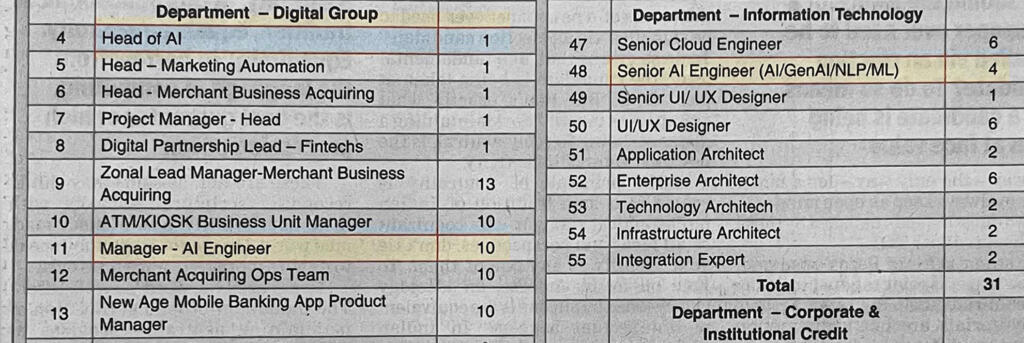 What makes Bank of Baroda’s AI initiative particularly noteworthy is its comprehensive approach to digital transformation. The bank has already implemented several AI-driven solutions, including Aditi, their virtual relationship manager that provides 24/7 customer support across multiple languages and handles routine banking queries. Their GyanSahay.AI serves as an internal knowledge repository, empowering employees with instant access to banking policies and facilitating continuous learning. Additionally, ADI (Advanced Digital Interface), their specialized GenAI chatbot, streamlines digital banking operations and enhances customer experience through personalized interactions. Recently, they conducted a GenAI Hackathon 2024 in collaboration with Microsoft, showcasing their vision for this technology.
The landscape of AI adoption in Indian banking presents an interesting contrast between public and private sectors. Private banks like HDFC Bank with its EVA (Your Personal Assistant) and ICICI Bank with iPal have been early adopters of AI technology. State Bank of India’s YONO platform and Punjab National Bank’s AI-based credit assessment systems demonstrate that public sector banks are quickly catching up. This healthy competition is driving innovation across the sector, with both public and private banks investing heavily in AI-powered solutions for everything from customer service to risk management.Bank of Baroda conducted GenAI Hackathon 2024 with Microsoft
Axis Bank’s approach to AI integration offers an important perspective on the future of banking jobs. The bank has explicitly stated that AI implementation won’t lead to job losses but rather to a transformation of roles. This aligns with the broader industry trend where AI is seen as a tool to enhance human capabilities rather than replace them. Employees are being retrained to focus more on complex decision-making and customer relationship management, while AI handles routine tasks. The Indian government’s proactive stance through initiatives like NITI Aayog’s National Strategy for AI has created a supportive environment for such technological advancement. This strategy aims to position India as a leader in AI, focusing on key areas including banking and financial services. Also, the IndiaAI Mission selected eight projects under the ‘Safe and Trusted AI Pillar’ initiative of the Government of India, further demonstrating the country’s commitment to leading in AI development. However, these transformations in Banks comes with its share of challenges. Banks must navigate issues like legacy system integration, data privacy concerns, and the need for comprehensive employee training. The investment required for AI implementation is substantial, both in terms of technology infrastructure and human capital development. Looking ahead, the benefits of AI integration in banking are clear: improved operational efficiency, enhanced customer experience, better risk management, and more personalized banking services. The Bank of Baroda’s recruitment drive represents more than just hiring; it’s a strategic move towards building a future-ready banking institution that can compete effectively in an increasingly digital world. As public sector banks continue to invest in AI capabilities, the traditional gap between public and private sector technology adoption is narrowing. This evolution promises a more competitive and efficient banking ecosystem that benefits all stakeholders—from customers enjoying better services to employees developing new skills for the digital age. The success of these initiatives will likely inspire other public sector institutions to follow suit, accelerating the digital transformation of India’s financial sector with Artificial Intelligence.Axis Bank assures AI will transform roles, not eliminate jobs
-

Simplifying Paperwork with Generative AI: A Practical Solution for Everyday Problems
In today’s world, where technology is transforming industries at lightning speed, we still encounter everyday challenges that make us wonder: Why hasn’t someone automated this yet? Recently, I had one of those moments while dealing with a tedious administrative task—reporting lost share certificates to the registrar. What should have been a simple process turned into a frustrating exercise, highlighting an area ripe for improvement with the help of generative AI. The Problem: Redundant Paperwork and Repetitive Forms To report my lost share certificates, I was required to generate around twelve different forms, including police complaints and official statements, all asking for similar information—name, folio number, stock name, and date, among other details. The repetitive nature of the task became increasingly frustrating. Each form required the same basic information, yet I had to manually fill out each one individually. This experience made me realize just how inefficient these workflows can be, especially in a world where technology could easily streamline the process. I understand that regulatory requirements often dictate these steps, but that doesn’t mean the process can’t be improved. What if there were a way to automate the generation of all these forms, reducing the time spent on repetitive data entry? The Solution: Generative AI to the Rescue This is where generative AI comes in. Generative AI, with its ability to process and generate content based on a set of inputs, could be used to simplify such tasks. Imagine a simple application or web platform where you enter your information once—name, folio number, stock name, and other necessary details—and the system automatically fills out all the required forms for you. Instead of spending hours manually filling out each document, a single, AI-driven application could generate all the necessary forms in one go. You could download pre-filled PDFs, ready for submission. This would not only save time but also reduce the risk of errors due to repetitive form filling. A Call to Business Leaders: Embrace Generative AI in Workflows This small example highlights a broader point: businesses can use generative AI to simplify workflows and remove unnecessary bottlenecks in various industries. Whether it’s filling out forms, automating customer service responses, or streamlining internal processes, AI has the potential to revolutionize how we handle repetitive tasks. By thinking outside the box, business leaders can identify similar pain points within their own workflows and apply AI-driven solutions. Not only does this save time and resources, but it also enhances productivity and improves the user experience. Technology is here to make our lives easier, yet so many workflows remain burdened with outdated, manual processes. Generative AI offers a practical, effective solution to streamline administrative tasks, allowing us to focus on what really matters. The future of business lies in automation, and by embracing AI now, companies can pave the way for more efficient and user-friendly systems. Let’s use technology not just to innovate, but to simplify. It’s time to make paperwork—and many other tedious processes—a thing of the past. -

The Future of Foundation Models: A Game for Big Tech, Not Startups
Foundation models like Large Language Models (LLMs) and Generative Pre-trained Transformers (GPTs) have revolutionized the way we interact with technology. These models, capable of understanding and generating human-like text, have become the cornerstone of many advanced AI applications. However, the development and deployment of these models are increasingly becoming the domain of only a few tech giants like Google, Microsoft, and OpenAI. This consolidation raises important questions about the future of AI development and the role of smaller players in the ecosystem.
Why Big Companies Dominate Foundation Models
The creation of foundation models such as GPT-3 and GPT-4 involves a massive amount of computational power, data, and financial resources. Training these models often requires supercomputers running for weeks, if not months, alongside access to large-scale datasets that are not easily attainable. As these models evolve, we’re not just talking about billions of parameters anymore; we’re looking at trillions. For instance, the upcoming GPT-5 is expected to have even more parameters, further pushing the boundaries of what is computationally possible.
For startups and smaller companies, the barriers to entry in developing their own foundation models are steep. The cost of the necessary hardware, cloud computing resources, and data acquisition is astronomical. Without the financial muscle and infrastructure of tech giants, it’s nearly impossible to train and deploy models of this scale. The result is a monopolistic landscape where only a handful of companies can afford to push the boundaries of what foundation models can do.
The Challenge of Scaling Foundation Models
Scaling these models isn’t just a matter of adding more parameters; it involves complex optimizations in architecture, training procedures, and deployment strategies. As we move towards even larger models like GPT-5, the requirements for computational power and data are only going to grow. The current trajectory suggests that only companies with deep pockets and extensive R&D capabilities will be able to keep up with this pace.
For most startups, the idea of developing a foundation model from scratch is not just challenging—it’s nearly impossible under the current paradigm. Unless a breakthrough occurs that allows these models to be trained with significantly less compute power, the development of foundation models will remain the playground of tech giants.
The Opportunity for Startups: Customizing Open-Source Models
While building a new foundation model may be out of reach for most startups, there is still a valuable opportunity in the AI landscape: leveraging and customizing existing open-source models. Meta’s LLaMA (Large Language Model Meta AI) and other open-source models offer a viable path for smaller companies to innovate without having to build their own models from the ground up.
The strategy here is to use these open-source foundation models as a starting point and then fine-tune them for specific applications and datasets. This approach allows startups to create highly specialized models tailored to their unique use cases without the enormous costs associated with developing a new foundation model. By focusing on niche markets and specialized applications, startups can carve out a space for themselves in the AI ecosystem.
For example, a healthcare startup can take an open-source model and fine-tune it on medical literature to create a system that excels in diagnosing diseases or recommending treatments. Similarly, a financial services company can customize a model to analyze market trends or provide personalized investment advice. In these scenarios, the value lies in the fine-tuning and customization process rather than in developing a new foundation model from scratch.
The Path Forward: Collaboration Over Competition
The current landscape suggests that the future of foundation models will be dominated by a few big companies. However, this doesn’t mean that startups and smaller companies are left out in the cold. Instead of competing directly with tech giants in building foundation models, startups can focus on creating innovative solutions on top of these models. By leveraging open-source models and refining them for specific use cases, smaller companies can still play a vital role in the AI ecosystem.
This dynamic creates an opportunity for collaboration between big tech and startups. Tech giants will continue to provide the backbone of AI with their massive foundation models, while startups can act as specialists, fine-tuning these models for various industries and applications. This collaborative approach allows for a diverse AI landscape where different players can contribute to advancing the field in their own ways.
Foundation models are likely to remain the domain of big companies like Google, Microsoft, and OpenAI due to the immense computational and financial resources required. However, this doesn’t mean that startups have no role in the AI future. By leveraging open-source models like Meta’s LLaMA and focusing on fine-tuning and customization, smaller companies can still innovate and provide valuable, specialized AI solutions.
In this evolving landscape, the key for startups will be to use the tools available to them creatively, adding value where it matters most. While the giants build the foundation, the opportunity for startups lies in building the specialized structures that sit on top, serving unique needs and markets. In this way, the AI ecosystem can remain vibrant and diverse, with room for players of all sizes to contribute to the ongoing technological revolution.
For startups seeking AI consulting or workshops, please reach out to us at our contact page
-

The Growing Value of Human-Crafted Content in a World of Algorithms
In today’s digital age, the convenience of algorithmically curated content is undeniable. Platforms like Spotify, YouTube, and Netflix have made it effortless to discover new music, videos, and shows based on our preferences. However, as technology advances and AI-driven curation becomes more prevalent, there’s an emerging desire for something more personal, something more… human. The Rise of Premium Human-Crafted Content Human-crafted content, in my opinion, is becoming increasingly premium. While algorithmic curation is efficient, it often lacks the depth and personal touch that only a human can provide. We are slowly realizing that the most meaningful and engaging experiences come from content that is carefully selected and crafted by someone who truly understands and appreciates it. The Magic of Human Curation: A Personal Anecdote A perfect example of this is a friend of mine who lives in the Netherlands. Every year, he creates a curated playlist on Spotify, shared with a group of around 100 of us. We eagerly anticipate this playlist every Christmas, as it isn’t just another collection of trending songs or algorithmically generated recommendations. It’s a thoughtfully assembled mix of tracks collected from around the world, crossing every music genre and cultural boundary. This playlist isn’t just music; it’s a carefully woven tapestry of sounds, memories, and emotions that only a passionate music lover could create. Each song tells a story, each genre represents a different mood or experience, and every track has been handpicked to evoke a certain feeling. No amount of AI-driven curation can replicate the soul, the passion, and the thoughtfulness behind this human-created list. And it’s not just a playlist—it’s a gift, a shared experience that connects us all through the universal language of music. Why Human-Crafted Content Matters What makes human-crafted content so special? It’s the authenticity, the personal touch, and the emotional connection it creates. While algorithms can analyze patterns and predict preferences, they lack the intuition, creativity, and cultural insight that humans bring to the table. Human curators can spot the nuances, appreciate the context, and understand the subtleties that make content resonate on a deeper level. In a world saturated with automated recommendations, human-curated content stands out as something rare and valuable. It’s not just about what is popular or trending; it’s about what is meaningful, what sparks joy, and what inspires. This is why human-crafted content is poised to become more important and premium as people seek more genuine and curated experiences. The Future of Content: Balancing Algorithms with Human Touch As we move forward, there’s no doubt that algorithmically curated content will continue to dominate our digital consumption. It’s convenient, efficient, and often surprisingly accurate. However, the growing appreciation for human-crafted content indicates a shift in how we value curation. People are increasingly seeking out content that has been thoughtfully curated by individuals who have a genuine passion for what they do. In the future, we may see a blend of the two: technology offering the convenience of discovery, while humans provide the depth and personal touch that truly elevates the experience. After all, it’s the human stories, emotions, and connections that make content truly memorable. Human-curated content offers something that algorithms cannot—authenticity, passion, and a personal connection. As we continue to embrace technology, the value of human touch in content creation and curation is becoming more apparent and cherished. Whether it’s a carefully crafted playlist, a handpicked selection of films, or a curated collection of articles, human-crafted content has a unique place in our lives. In a world increasingly dominated by automation, the desire for a human touch reminds us of the joy and connection that only people can provide. If you’re looking for a Corporate Trainer to conduct workshops on AI and its tools, please contact us at https://thefoundercatalyst.com/contact/ -

Bridging the AI Talent Gap: India’s Urgent Call to Action
In the rapidly evolving landscape of artificial intelligence (AI), India finds itself at a critical crossroads. Despite its historical dominance in the IT outsourcing sector, the nation is alarmingly lagging behind global leaders like China and the United States in producing AI specialists. A recent observation warns, “If timely action is not taken soon, we (India) might be double-digit years behind the AI world if we don’t wake up.” This stark statement underscores the urgency of the situation and the need for immediate action. While precise comparative data remains elusive, insights from the Global AI Talent Tracker 2.0 by MacroPolo—a think tank of the Chicago-based Paulson Institute—shed light on the disparity. In 2022, China accounted for a staggering 47% of the world’s top-tier AI researchers, the USA stood at 18%, while India lagged with a mere 5%. Notably, China’s share surged from 29% in 2019, highlighting its aggressive investment and focus on AI talent development. Furthermore, none of the top 25 institutions for elite AI research are based in India. Although India fares slightly better in terms of the origin of elite AI researchers, with 7% in 2022, it still trails behind the USA (28%) and China (26%). This gap is not just a statistic but a clarion call reflecting the pressing challenge India faces in the AI domain. Historically, India has excelled in IT outsourcing, establishing itself as a global leader in creating talent for traditional IT roles over the past three decades, despite numerous technological shifts, including those in Web, Mobile, and Cloud computing. However, the AI landscape presents a new and formidable challenge requiring a different approach. Falling behind in AI technology could have significant economic repercussions for India. AI is projected to add over $15 trillion to the global economy by 2030, boosting global GDP by 26%. Countries leading in AI innovation and adoption are likely to capture the lion’s share of these gains. If India fails to match the AI advancements of nations like China and the US, it risks losing out on job creation, productivity gains, and the potential to revolutionise key sectors like agriculture, healthcare, and manufacturing. Insights from Thought Leaders Mustafa Suleyman, CEO of Microsoft AI, in his book “The Coming Wave,” emphasizes China’s substantial lead in AI, attributing it to over a decade of strategic focus and billions in investment. He notes that China’s commitment to AI is not just financial but also deeply rooted in national strategy, encompassing education, research, and industry. In contrast, I find India’s current investment and strategic focus in AI are lacking. Rajiv Malhotra, in “Artificial Intelligence and the Future of Power,” critiques India’s leadership for shortsighted policies that prioritize immediate profits from wage arbitrage over long-term talent development. He argues that while India has been content with its role in the global IT services market, this has led to complacency and a failure to invest in the future of AI. Developing a robust pool of AI scientists and engineers demands decades of sustained effort—a commitment that cannot be achieved with the traditional outsourcing mindset. The Path Forward: A Comprehensive Strategy Despite these challenges, catching up is not beyond India’s reach. However, it demands visionary leadership across industry, government, academia, and industry bodies. The primary obstacle is the substantial investment needed, which may not yield immediate returns. Herein lies the crucial role of government support and public funding.- Transforming Education and Empowering Youth
- Strengthening Research and Industry Collaboration
- National Strategy and Global Partnerships
- Ethical AI and Social Inclusion
- Fostering Innovation and Building Infrastructure
-

The Growing Importance of Responsible AI: What You Need to Know
Artificial Intelligence (AI) is becoming an integral part of our daily lives, and with this rapid integration comes the growing focus on Responsible AI. It’s not just a technical field but also an ethical framework for developing and using AI technologies in ways that are fair, transparent, and respectful of human rights. At its core, Responsible AI is about ensuring that AI systems are not biased, insensitive, or unethical in their applications. Many people associate it with preventing discrimination or being mindful of sensitive issues like race and gender in AI algorithms. While these aspects are important, Responsible AI goes far beyond that. It involves using ethically sourced data to train AI systems, just as we’ve seen the rise of ethically sourced products in other industries, such as cocoa or fashion. What does this mean in practice? It means that the data used to train AI models needs to be carefully selected to avoid any inherent biases that could lead to harmful outcomes. But it’s also about recognizing the often-overlooked human labor behind AI systems. AI training doesn’t happen automatically—it requires substantial human involvement. For example, companies like OpenAI have hired thousands of workers in countries like Kenya, India, and Malaysia to help fine-tune AI models, such as ChatGPT. These workers play a critical role in improving the quality of AI outputs by providing feedback, yet their contributions are often invisible. A common method for refining AI models is through comparison-based feedback. You might have seen this when ChatGPT presents two possible responses and asks you to choose which one is better. This helps the system learn and adjust based on human preferences, which is crucial for improving the AI’s effectiveness. The sheer human effort behind these processes highlights the need for fair labor practices and ethical considerations in the AI field. As AI continues to evolve, it’s crucial that we think about the broader impact of these technologies—not just in terms of how they perform but also in how they are built and maintained. Responsible AI is about acknowledging both the technology’s power and the human effort that makes it possible. It calls for a balance between innovation and ethics, ensuring that AI benefits society as a whole. In summary, Responsible AI is about more than just preventing bias or sensitivity issues; it’s about ethically sourced data, fair labor practices, and mindful development. As we continue to adopt AI in our lives and businesses, it’s essential to engage in these conversations and advocate for responsible and ethical AI development. If you’re looking for a Corporate Trainer to conduct workshops on AI and its tools, please contact us at https://thefoundercatalyst.com/contact/ -

Is Your AI Model at Risk? Understanding Copyright Implications in Data Use
In the rapidly evolving landscape of artificial intelligence (AI), the use of training data is a critical component for developing effective and intelligent models. However, one aspect that often goes overlooked is the copyright on the training data used, which can have significant legal implications. The Overlooked Aspect of Copyright in AI AI models are trained using vast amounts of data, sourced from various texts, images, and other digital content. While this data is essential for improving the accuracy and functionality of AI systems, it is crucial to recognize that much of this content is copyrighted. This means that the original creators or owners of the content have legal rights that protect their work from unauthorized use. Imagine an AI model providing an answer that directly quotes an article from a publication like The Hindu. If this answer is reproduced or shared, it may infringe upon the copyright of the publication. Such a scenario is not far-fetched, and the legal repercussions can be severe. The Reality of Legal Enforcement One might wonder how copyright owners can enforce their rights in such a vast digital landscape. The reality is that many organizations are increasingly using sophisticated technologies to monitor and protect their content. They can crawl the internet to detect instances where their copyrighted material is being used without permission. If a company or individual is found to be using copyrighted material unlawfully, they can be sued for damages. While enforcement in countries like India may be less stringent, in the United States, the legal environment is more robust. Companies and law firms are already employing automated systems to track the use of copyrighted material online. They are actively monitoring for potential infringements and are prepared to take legal action to protect their interests. An Emerging Business Opportunity? The enforcement of copyright laws in the context of AI training data presents a unique business opportunity. Companies could potentially invest in technologies that help track the unauthorized use of copyrighted content in AI models. Such systems could serve a dual purpose: protecting the rights of content creators and providing a new revenue stream through licensing agreements or settlements from legal disputes. Given the increasing reliance on AI across industries, the demand for such protective measures is likely to grow. This presents a valuable opportunity for businesses and legal firms to innovate and develop solutions that address these emerging challenges. Conclusion As AI continues to integrate into various facets of our lives, understanding and respecting copyright laws is more important than ever. Companies developing AI technologies must be mindful of the data they use and ensure that they have the proper rights to include copyrighted material in their training sets. Failure to do so could result in costly legal battles and damage to their reputation. For content creators, it is essential to stay vigilant and explore ways to protect their work in this digital age. As technology continues to advance, so too must the strategies to safeguard intellectual property rights. After all, in the realm of AI and data, copyright is not just a legal concern; it’s a matter of respect for the creators whose work fuels the innovation we all benefit from. If you’re looking for a Corporate Trainer to conduct workshops on AI and its tools, please contact us at https://thefoundercatalyst.com/contact/ -

How to Avoid AI Tool Overload: Focus on What Works
In today’s tech-driven world, the sheer number of AI tools and startups can be overwhelming. With thousands of new tools popping up, each promising innovative solutions, it’s easy to fall into the trap of trying every new option that comes your way. However, a strategic approach can save you time, reduce clutter, and enhance productivity. Here’s why focusing on established tools and being selective about new ones is often the best approach. The Skepticism Surrounding New AI Tools When exploring new AI tools, it’s common to encounter platforms that require you to sign up with an email address, often resulting in a flood of unsolicited messages. This can be particularly frustrating if the tool doesn’t meet your expectations or fails to deliver on its promises. Many new startups offer exciting features, but the reality is that not all are worth the investment of your time and resources. Focus on Proven Solutions Instead of getting bogged down by every new tool or startup, it’s wise to invest your time in well-established platforms with a proven track record. Tools like ChatGPT, Adobe, Firefly, Google’s suite of products, and Microsoft’s Copilot are examples of reliable solutions that have stood the test of time and are backed by extensive research and development. These tools are continually updated and refined, ensuring that they meet high standards of functionality and reliability. Why Less Is More The market is flooded with niche tools claiming to solve specific problems, such as video summarization or content generation. However, many of these use cases are already well-addressed by major players like OpenAI, Microsoft, and Google. By focusing on these established platforms, you benefit from robust support, integration capabilities, and consistent updates, reducing the need to experiment with lesser-known alternatives. Strategic Approach to AI Tools- Prioritize Established Tools: Invest in tools with a strong reputation and a track record of success. They offer reliability and continuous improvement.
- Avoid Overload: Trying every new tool can lead to inefficiency and confusion. Stick to a core set of tools that meet your needs.
- Evaluate Carefully: Before signing up for new tools, research their benefits and potential drawbacks. Ensure they align with your goals and offer genuine value.
-

Navigating the World of AI Tools: Simplify and Succeed
In today’s rapidly evolving tech landscape, choosing the right AI tools can feel overwhelming. With countless options available, including various GPT models and integrations, it’s essential to streamline your approach for optimal efficiency and effectiveness. Here’s a guide to help you identify and utilize the right AI tools without getting bogged down by unnecessary clutter.- Identify the Right Tool
- Embrace the Ecosystem
- Say No to Clutter
-

The Real Potential of AI: Moving Beyond the Hype Cycle
After two years of relentless AI news and advancements, July 2024 has brought a wave of skepticism from Wall Street regarding the true potential of AI. This skepticism, while surprising to some, is a necessary reality check. In this blog post, I’ll discuss why this scrutiny is beneficial and how AI, particularly generative AI, is poised to transcend its current applications and revolutionize business processes.
The Hype Cycle and Wall Street’s Skepticism
The past two years have seen an explosion of AI developments, particularly in generative AI, leading to widespread enthusiasm and high expectations. However, this has also resulted in numerous products that are merely superficial wrappers around foundational models, rather than solutions that address real business problems. Wall Street’s current skepticism reflects a growing awareness of this issue and a demand for more substantive, impactful applications of AI.
Why Skepticism is Beneficial
I believe Wall Street’s cautious stance is ultimately a good thing. It encourages businesses and developers to move beyond superficial uses of AI and focus on creating solutions that deliver genuine value. This shift will drive innovation and lead to the development of AI applications that solve real problems, rather than just capitalizing on the AI buzz.
The Future of Generative AI
Generative AI, which has been primarily showcased through applications like ChatGPT, has vast potential beyond chatbots and conversational agents. The true power of generative AI lies in its ability to integrate seamlessly into various business processes. Here are a few ways this integration could manifest:
- Automating Routine Tasks: Generative AI can handle routine administrative tasks, freeing up human employees to focus on more complex and creative work.
- Enhancing Decision-Making: AI can analyze vast amounts of data to provide insights and recommendations, improving decision-making across all levels of an organization.
- Personalizing Customer Experiences: AI can tailor products, services, and communications to individual customer preferences, enhancing satisfaction and loyalty.
- Optimizing Supply Chains: AI can predict demand, optimize inventory levels, and streamline logistics, leading to more efficient supply chain management.
- Improving Product Development: By analyzing market trends and consumer feedback, AI can help businesses develop products that better meet customer needs and preferences.
Looking Ahead
Two years from now, I believe we will see generative AI deeply integrated into business operations across industries. This integration will make the current skepticism from Wall Street a moot point, as the tangible benefits of AI become increasingly evident. The key is to focus on developing AI solutions that address specific business challenges and deliver measurable value.
While Wall Street’s current skepticism may seem like a setback, it is a crucial step in the evolution of AI. By demanding more from AI applications, we are paving the way for more meaningful and impactful innovations. Generative AI has the potential to revolutionize business processes, and as we move beyond the hype cycle, its true value will become increasingly clear.
-

Top Three Trends in Generative AI Applications for Enterprises in 2024
Generative AI is revolutionizing the business landscape, enabling enterprises to streamline operations, enhance decision-making, and create innovative solutions. In 2024, several key trends have emerged as organizations integrate generative AI into their workflows. Let’s explore the top three trends shaping the adoption and utilization of generative AI applications in enterprises.- Customization Over Off-the-Shelf Solutions
- Cautious Internal Use with a Shift Toward Customer Integration
- Shifting Budget Allocations