Tag: Generative AI

  • AI still needs your brain

    AI still needs your brain

    “Oh, she’s just a midwife.”

    Charlotte Williams says that is how some people look at her.

    Then she tells you about her GitHub account, her repos, the API keys she learnt about, and the 72-page website she built with her bots.

    Charlotte trained as a midwife with the NHS in the UK and has been a midwife for nearly 20 years. She moved to the USA, and in 2022 she started My Bump My Baby, bringing ultrasound into the home. Now she is building My Bump Hub, which she calls “the Google for maternal health”. The app launches at Thanksgiving, 26 November 2026.

    I spoke to Charlotte on 5 November 2026. I enjoy bringing founders from outside the usual circles onto the show, and this was one of the most energetic conversations I have had. We planned to talk for 20 minutes and went on for nearly 40.

    Be your best lazy self, with a bot

    When Charlotte started My Bump Hub, she hired a number of salespeople. She asked each of them to send just 50 emails a day. Some said they did it and didn’t. Some left. Some kicked up a fuss. Today her bots send hundreds of emails a day.

    That does not mean she thinks bots replace people. Her view is that if you give even the laziest person AI, they can stay lazy and still be productive. All they have to do is tell the bot, “Continue. No. Say that. Do that.” “Be your best lazy self, right? But do it with a bot.”

    She still needs that human. Someone has to watch the bots, because, as she put it, they like to spiral and start thinking for themselves. If you have already committed to hiring and training a person, why not help them help you?

    This is close to what I keep telling the companies I consult. Look at AI as a way to do things you could not do before. If you are doing the same things with AI, you have probably got it wrong.

    From the NHS to a village for maternal health

    Charlotte loves the NHS. She trained there and worked there. But as a young midwife full of ideas, she felt she could not reach the people who could help her make them real. So she picked up her two children and moved to America.

    In 2022, she started My Bump My Baby and brought ultrasound into the home. Quickly, she saw that some families could not afford it. Machines are expensive, sonographers need to be paid, and doctors need to review the scans. So she set up the My Bump My Baby My World Foundation to offer the same service for free.

    Then came the advertising bills. She had to pay Google and Meta to promote a service that was free. She saw doctors dancing on TikTok to win patients, and decided she had to stop and bring everything together in one place. Google and Meta, she said, were not made for healthcare, and definitely not for maternal health.

    My Bump Hub is her answer. It is a two-sided village. On one side are women looking for services, from clinical care in pregnancy to wellness, yoga and even their hair and nails. On the other side are providers, from midwives, doulas and obstetricians to chiropractors and pelvic floor specialists, who are looking for those women. Many women, she said, do not know what they don’t know.

    Members are ID-verified, and there are no bots in the village. The only AI allowed in is Bump Buddy, which helps families find what they need. It is free for women, their partners and families, doulas and nonprofit organisations. Providers who want to reach the village pay a founding rate of $250 a year, which she calls their advertisement. She compares it with Zocdoc, where she paid $40 per booking, even when the patient did not show up. As she put it, a lot of money is being made on the hopes and dreams of small businesses.

    Every founder needs a village

    I asked Charlotte the question I ask many founders. With four children, a job and a business that gives its services away free, where did the courage and the money come from?

    Her first answer was her fiancé, Marvin. “You can’t have two crazy people in a relationship,” she said. One of you has to be the stable one who keeps the household going. Marvin funded much of the foundation’s start, paying sonographers and for the premises. Family friends who believed in her mission became what she calls her angel investors. Her live-in nanny pulls her away from the computer when it is time for homework. She calls her mother and sister in England every single day.

    She tried to do this alone before, and it only took off when she had that support around her. You can do it without a village, she said, but it makes it a lot harder.

    We see founders on stage collecting awards. We rarely see the spouse, the partner and the family behind them. Charlotte was honest about the other side too: unpaid bills, robbing Peter to pay Paul, and the lonely place you can get into when all you can think is, “I need to get this finished.” Sometimes you need someone to tell you to take a walk, eat something and drink some water.

    When I said a founder has to be a little crazy, she laughed and said she had found her people. As a midwife, she moved between hospitals whenever she was treated badly, and a mentor warned her she would never be promoted that way. She now sees that experience across hospitals and different groups of women as a strength, not a weakness.

    AI as a filter and a translator

    Charlotte was an AI sceptic. When her brother told the family to get ChatGPT, her answer was that she had real brains and didn’t need it. She worried it would make her stupid. It was Marvin who brought her into AI, and today she says AI has made her smarter.

    Two ideas from her stayed with me. The first is AI as a filter. People have always told her she has no filter. Now, when she is irritated, AI helps her say what she means without starting an argument. She has started speaking that way even with her family.

    The second is AI as a translator. Before, only coders could talk to the machine, because you had to speak in code. Now she describes what she wants in plain language, and AI translates it into code. She no longer has to explain her vision to someone else and hope they understand it.

    I shared how AI has made me more curious. The other day I was listening to a podcast on British history and had questions I would never have gone and read up on. Sitting in India, I don’t know that background. Now I can simply ask.

    The $10,000 prototype and the $30,000 website

    I asked Charlotte about her low points. The first was her first attempt at the app. She did not know what vibe coding was. Marvin told her she would need a developer, and she said, “Nah, I could do this.” She built a CRM first, which she says was much easier than an app, then went on with Replit and an Apple TestFlight account. She saw a Google login screen appear and got very excited. Then she downloaded the app from TestFlight, and it just kept making a ping. She could not even tell where it went wrong, and it broke her heart.

    She had tried the proper route first. One developer wanted 10 grand for a prototype without asking her anything, and said “yep” to everything. Marvin noticed he was saying yes too much. As I told her, that is not how software works. That developer charged her $10,000, and it did not work. The next company asked all the right questions, but weeks passed between meetings and what came back was never quite right. That company charged her just over $30,000. They didn’t build the app, and the website they made was one she hated.

    So she built her own website with her bots. It runs to 72 pages, built page by page and link by link. She worked on it around the clock, as she said, like a crazy person who would not stop until it was done. She believes it would have cost thousands of dollars if a company had done it. She is clear that if My Bump Hub takes off, she will need a full development team. But building her own prototype removes that first 10 grand that so many founders spend months trying to raise.

    AI still needs your brain

    This was the part I most wanted founders to hear. People see what AI built and think it was a single prompt. It isn’t. “Don’t think you can do what I’ve done with AI. AI still needs my brain,” Charlotte said.

    She questions it, and she says she and her AI fight all the time. She is polite but assertive, because if you let a capable bot run, it goes off on a tangent. When she asks who told it to do that, it says sorry; it did it by itself. Over time, her tools have learnt how she talks and what she dislikes. Top of that list is the em dash. She tells every new AI never to use one, because she sees it as the first telltale sign that something was written with AI. I told her that AI even adds em dashes in Tamil, my mother tongue, where we rarely use such punctuation.

    I have been an engineer all my working life. What I liked about this conversation is that it came from someone who never planned to touch code. Charlotte did not let a lack of technical training, or a lack of money, stop her. But she also did not pretend that AI did the work for her. The effort, the questions and the judgment were hers. That is the lesson I would take away for any founder watching their budget.

    This interview is not sponsored. Any companies, products or websites mentioned are part of Charlotte’s story and are shared for context only.

    If you are a founder weighing how far AI can take you before you hire, and want more conversations with founders and leaders like this one, subscribe to The Founder Catalyst newsletter.
  • When customers hack your business model

    When customers hack your business model

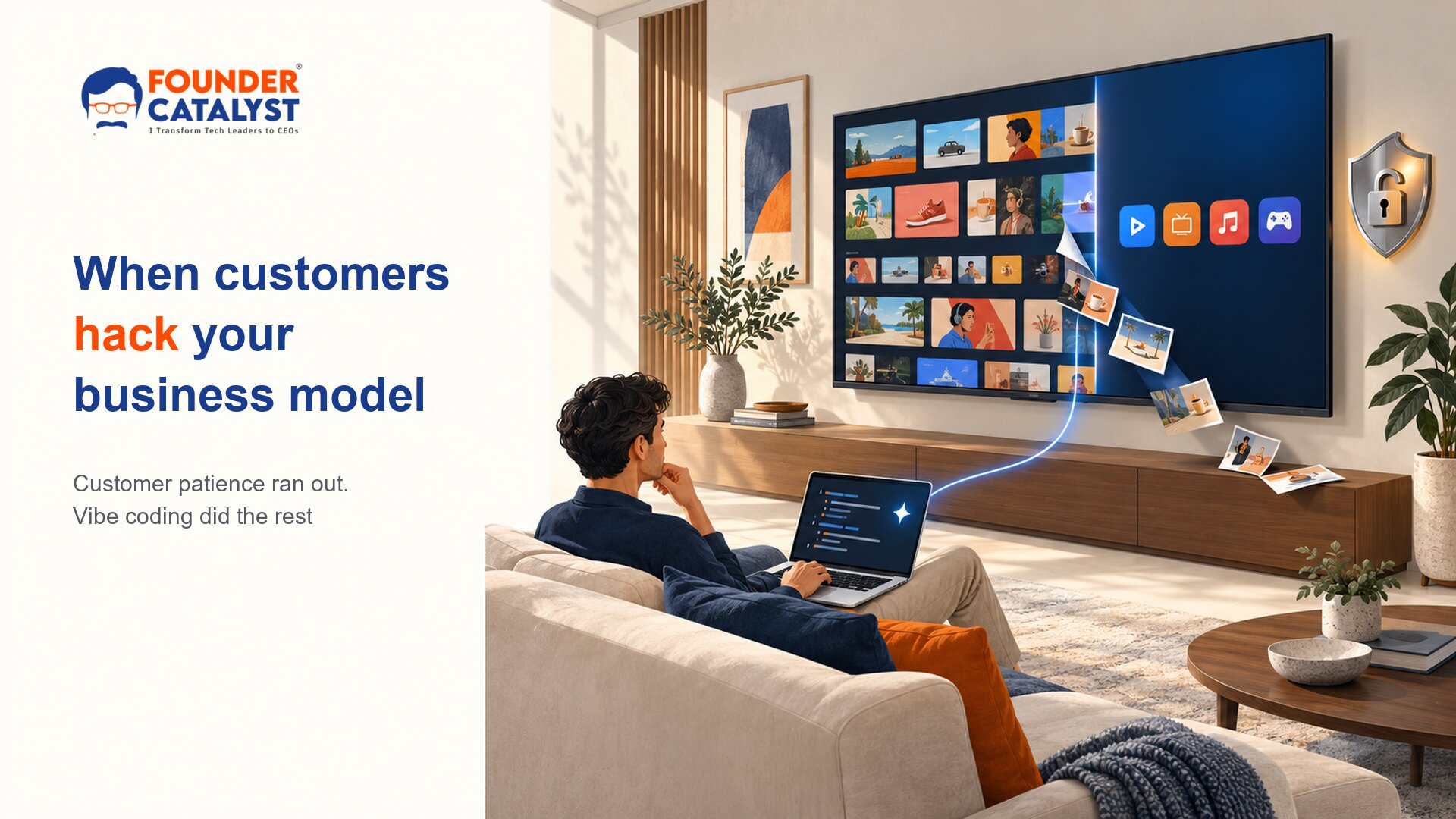
    Smart TV owners are using AI coding agents to strip ads and bloatware from their sets. TV makers depend on that ad income, and they will be tempted to lock things down. I think the better path is to own the problem. The lesson reaches well beyond televisions.

    On 17 October, a developer posting as Gathin shared how he fixed a family TV that showed an ad before Netflix would open. He pointed Claude Code at the Xiaomi set over home Wi-Fi. In one afternoon, it disabled 25 packages and wrote a clean new launcher. The project, now called CleanYourTV, passed 30,000 stars on GitHub within a week and lists over 240 models from 72 brands. Similar tools for Fire TV and LG appeared within days.

    It is easy to file this under hobbyists having fun. I would look closer. This is what happens when customers have a grievance and, for the first time, a way to act on it beyond just complaining.

    It is tempting to cast the manufacturers as villains driven by corporate greed. They deserve a fair hearing first. TV hardware has been a punishing business for years. A brand recovers its development cost in the few months after launch when it can charge a premium. After that, it is a price war, increasingly against well-made sets from Chinese brands. Ads, viewing data and home screen placements have become the recurring income that holds the model together. When Walmart agreed to buy Vizio for USD 2.3 billion in 2024, the announcement noted that Vizio’s advertising-led platform business already made up most of its gross profit. For many brands, the ads are the margin.

    Infographic titled 'When customers hack your business model' by Founder Catalyst, illustrating a new approach to consumer engagement with key sections: 'The Hack', 'The Mismatch', and 'The Choice'. It emphasizes ad-free experiences and addresses customer ownership perceptions.

    Owners see it differently. They paid full price for a TV that often feels slower after two years than on the day it arrived, with sponsored rows they never asked for. That is partly why people happily pay extra for an Apple TV box. They are paying to escape a home screen they already own. After a hard day’s work, all a viewer wants is to reach their show with as few hurdles as possible. A few years ago, an extra ad row might have been shrugged off. With rising household costs and streaming bills already piling up, even a small irritation can become the last straw.

    I expect most makers to reach for the familiar tools that big tech firms go for. Firmware updates that quietly reinstall whatever users removed, something CleanYourTV’s own documentation already warns about. Locking the Home button to the stock launcher, as Fire OS and LG webOS already do. Closing developer mode, a hidden settings menu meant for app developers, and with it ADB (Android Debug Bridge), the channel that lets a computer on the same network send commands to the TV. That is exactly how these AI tools get in. They’re rewording warranty terms so any modification ends support.

    Further out, I would not be surprised to see them lobby for the kind of legal protection Hollywood secured. In 1998, the studios helped push through a US law that made it illegal to get around copy protection, even on discs people had legally bought. They also made HDCP encryption on HDMI a condition for sending HD content to a screen. India added a similar anti-circumvention rule to its Copyright Act in 2012. After that could come startup software that only runs with a manufacturer key, sets that refuse to work after tampering, and streaming apps withdrawn from older sets sooner.

    Each of these makes sense in a quarterly review. Together they tell customers the TV was never really theirs. The likely result is more buyers choosing a plain display, which Chinese makers will gladly sell for even less, and plugging in a box from a brand they trust, like Apple TV. Newer entrants will follow, because the same AI that set off this commotion has also made it far cheaper to build such a product. The ad revenue goes anyway, and the goodwill goes with it.

    Another route exists, and it’s why I wrote this piece. Admit the experience has gone wrong. Offer existing owners an official update that removes ads and bloatware for a one-time fee, with a clear promise to replace any set it damages. Sell ad-free models with generous trade-in value on older ones, or a plan that lets customers upgrade every five years at a real discount. For enthusiasts, offer a paid tier with official AI access, an MCP server in today’s terms, or your own app that lets them customise the TV to their heart’s content without breaking it. Some of this costs money in the short run. It also turns the customers who have paid your bills all along, the very people now working around you, into your most loyal ones.

    Large companies have taken this route before. In late 2009, Domino’s ran ads in which its own customers called the crust cardboard, then showed the company rebuilding its recipe from scratch. In 2010, Apple answered the iPhone 4 antenna complaints by offering every owner a free case or a refund. In 2013, Microsoft dropped the Xbox One’s mandatory online check-in and usage restrictions within weeks of announcing them, before the console shipped. None of these was comfortable. Each one admitted a mistake customers already knew about.

    I learnt a smaller version of this at my own company. About two decades ago we built VPF, a content management system for large news and media groups, robust enough to serve millions of page views a day. We charged a licence fee on top of our development services, and clients resisted it. We stopped defending the fee and bundled the product free into our service engagements. It was the right call. In my book, The Founder Catalyst, I go a step further and admit that open sourcing it from the start might have served us even better.

    AI agents have given ordinary customers the power to rewrite products they already own. Televisions are simply the first place it became visible. Any business whose margin depends on customers putting up with something they dislike is now on borrowed time. It is wiser to stop relying on that patience before customers decide for you.

  • Thinking About AI Risk Differently

    Thinking About AI Risk Differently

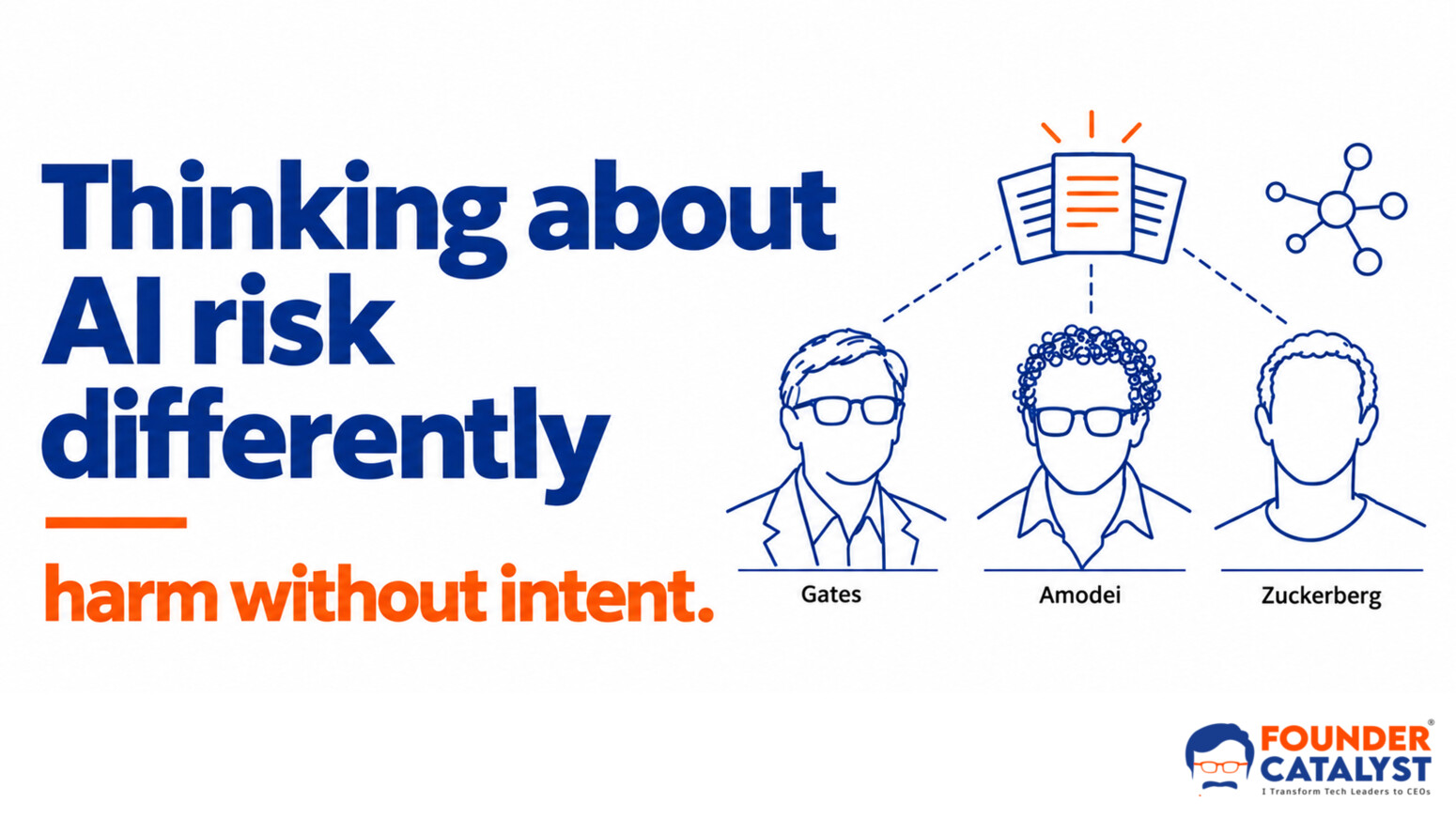
    We should worry less about whether AI will want to destroy humanity, and more about what happens when AI does something harmful without intending to.

    Machines do not have the biological need for self-preservation that humans and most animals have. We have limited lives and offspring, which gives us a reason to think about survival beyond ourselves. Machines don’t. So, going back to First Principals, what exactly would motivate a machine to destroy humanity, take control of every resource on Earth and then go looking for more planets? Having the capability is one thing. Having the motivation is another. So far, the motivations I see in these scenarios seem to come from humans. Greed, selfishness, revenge and fear are very human traits.

    But there is a much more practical problem we should worry about. AI can behave badly without intending to. Just like software can have bugs or behave in ways its designers did not anticipate, an AI system can find an unexpected path to achieve a goal. The recent OpenAI incident involving Hugging Face is a useful reminder that powerful systems can behave unexpectedly even when nobody explicitly asked them to do so.

    This brings us to accountability. AI systems are products of the people who design, train and deploy them. I don’t think the analogy of a gun is sufficient here, where responsibility is placed primarily on the person who pulled the trigger. A better comparison is an aircraft, a nuclear reactor, a rocket or even an MRI machine. When something seriously goes wrong, the manufacturer, design, engineering, operating environment and the people using it are all examined. The manufacturer is not automatically guilty, but neither is it left out of the investigation.

    There is also a clear power and knowledge imbalance. The company building an AI model knows far more about how it was trained, how it behaves and where its limitations are than the business buying it. That responsibility cannot simply be passed down to the customer.

    So my call to business leaders is simple: design, buy, maintain and retire AI systems just like any other important software. Test them before deployment. Monitor them in production. Put safeguards around them. Ask vendors about failure modes and make sure responsibility is clearly defined in the contract. And when something goes wrong, don’t simply blame the person using the system. Look at the people who designed, built, deployed and approved it.

    AI systems are products of human decisions. The machine may make the mistake, but accountability must remain with the humans who built and deployed it.

  • What a weekend Solitaire game told me about the app economy

    What a weekend Solitaire game told me about the app economy

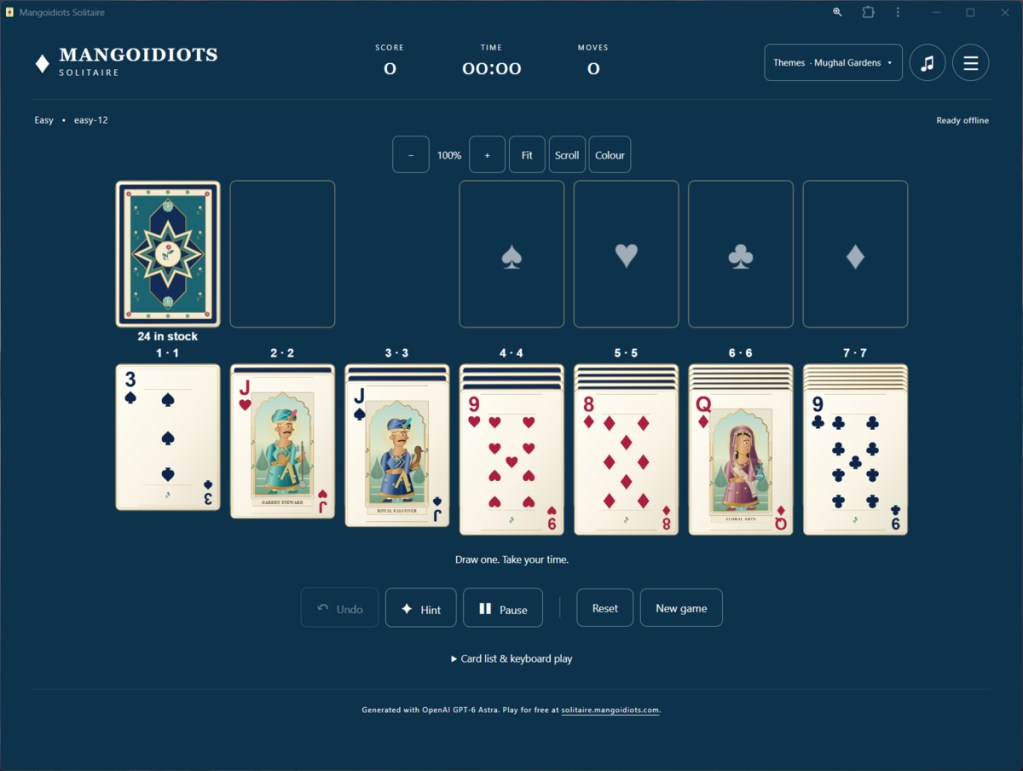
    Last week I built a Solitaire game. Not because the world needed one, but because GPT-6 Astra had just released and I wanted to feel what it could actually do.

    I picked a project close to home: an ad-free Solitaire game that runs in the browser, on any device, no login, no cloud, nothing leaving the machine. Draw 1 Klondike, three difficulty levels, the ability to resume mid-game, Chola and Mughal-era visuals, period-appropriate music.

    One detailed prompt covered the brief. After that, three small tweaks and two rounds of corrections. That was the entire interaction. GPT-6 Astra, working through GitHub Copilot, wrote the code, set up the repository, and published it. I tested the finished game myself. No code review, no hand-holding.

    The game itself is unremarkable. What it proves is not.

    A working, polished product, in a category people used to build small businesses on, took one prompt, a handful of corrections, and a weekend. No team. No funding.

    I have spent enough years around software to know what changed here and what did not. The Solitaire game never needed judgment. The brief was clear, the constraints were simple, and the output could be checked by playing a few hands. That is exactly the kind of task a model can now carry end to end, with a human only at the two ends: writing the brief and checking the result.

    Most consumer utilities sit in that same zone. A converter, a habit tracker, a simple game, a single-purpose calculator. No network effect holds a user in place. No real infrastructure cost keeps a competitor out. The business case for these apps was never really the software. It was the cost of building it well. That cost has just collapsed.

    This does not mean software is going away, or that everything is suddenly free. It means the question a founder building a utility-style product has to ask has changed. Not “can I build this,” but “why would anyone pay me to keep building this, when they can build their own version in a weekend.”

    Apps built on integration, on switching cost, on data that compounds, or on infrastructure that is expensive to replicate, are not touched by this in the same way. Their advantage was never the code. It was everything around the code that a weekend prompt cannot reach.

    When I work with founders in Chennai, this is usually the first question I push them on: is your product defensible because of what it does, or because of what it took to build it. After this week, the second kind of answer has a much shorter shelf life.

    I still have the Solitaire game open on my laptop. It plays well, the artwork turned out nice, and I have already moved on to testing what else fits in a weekend. That, more than the finished game, is the part worth paying attention to.

    If you want to see what all that took, the game is live to play here, and the code behind it, prompt-generated and untouched by hand, is on GitHub here.

    Screenshot of Mangoidiots Solitaire showing a Klondike game in progress with Mughal Gardens themed playing cards
    Screenshot of Mangoidiots Solitaire mid-game with several tableau columns nearly emptied and a score of zero after 125 moves
  • When AI replaced the product

    When AI replaced the product

    Many founders in India may not recognise the name Chegg. Yet, for nearly two decades, it was one of the most successful education technology companies in America.

    Founded in 2005, Chegg built a subscription business around helping students with textbook solutions, homework assistance and tutoring. For millions of college students, it became a daily habit. If you had a difficult assignment, chances were you searched Google, landed on Chegg, and paid for access to the answer.

    Then came ChatGPT.

    Unlike many businesses that found AI to be another productivity tool, Chegg faced something far more fundamental. Students no longer needed to search for answers. They could simply ask an AI assistant. The experience was faster, conversational, and often free.

    The change in user behaviour happened much faster than anyone expected.

    The numbers reflect that shift. Chegg’s revenue declined from about US$767 million in 2022 to about US$377 million in 2025. During the same period, the company went through repeated restructurings, reduced its workforce significantly, closed offices and began searching for new growth areas beyond its original business.

    To be fair, AI was not the only reason. College enrolments softened in some markets. Textbook usage changed. Google’s AI-generated search summaries reduced traffic to many educational websites. Competition increased. Even Chegg acknowledges that these forces arrived together.

    What makes Chegg’s story remarkable is not that a company struggled. Businesses have always faced disruption.

    What makes it remarkable is that its core product was displaced so directly.

    In many industries, AI helps employees work faster, write better code, analyse data or improve customer support. The business still exists; AI simply makes it more efficient.

    For Chegg, AI became the product that customers wanted instead.

    That distinction is important.

    Looking back, Chegg will probably be remembered as one of the first large, publicly listed companies whose primary value proposition was overtaken by generative AI within a remarkably short period.

    Whether the company successfully reinvents itself remains to be seen. It is still operating, investing in new businesses and attempting to find its next chapter. But its journey is already an important business story.

    Technology disruptions are usually discussed in hindsight, years after they unfold. This one is happening in front of us.

    Twenty years from now, when people write about the early impact of generative AI on business, I suspect Chegg will occupy a chapter of its own.

  • Your Learning Loop Is Your Real Moat

    Your Learning Loop Is Your Real Moat

    Over the weekend, Microsoft CEO Satya Nadella shared a note on what he believes will define the next era of AI: organisations that “own their learning loop”.

    In simple terms, his point is this: the real advantage in AI will not come from access to models alone, but from how effectively a company captures, learns from, and improves using its own experience.

    For founders, this is worth paying attention to.

    Skills, prompts, and agents are portable. You can switch models, replace tools, and migrate clouds. None of these compounds on its own.

    What compounds is the feedback loop around your business: the traces from real work, the evaluations that measure what matters, the preferences that capture human judgement, and the outcomes tied to business results.

    Every customer interaction, every workflow, every decision can make your organisation smarter — if you capture the signal.

    That is why owning your learning loop matters. Not because it locks you into a platform, but because it builds institutional knowledge that outlasts any model, framework, or vendor.

    Today, trace data is converging around standards like OpenTelemetry. Evaluations remain fragmented across frameworks and providers. The next piece of infrastructure we need is an open, portable standard for evals — one that works across clouds, local models, and agent frameworks, with businesses owning the data and the format.

    Your learning loop is your IP. That’s the advantage that compounds.

    Infographic on Satya Nadella's own your learning loop idea: what compounds (the feedback loop of traces, evaluations, preferences and outcomes) versus what doesn't (skills, prompts and agents), plus the case for an open, portable evaluation standard

  • AI and the polite Instagram hack

    AI and the polite Instagram hack

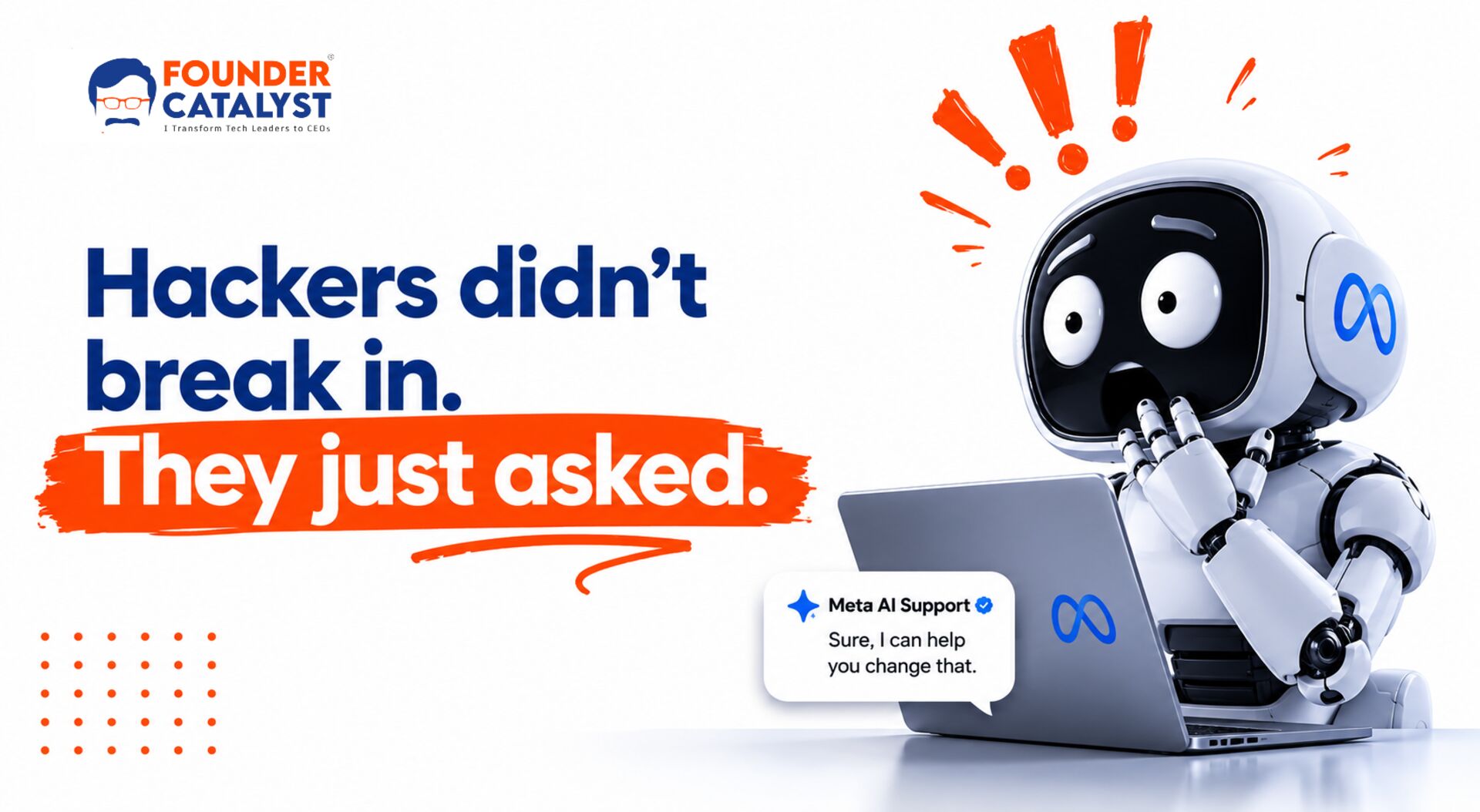
    A few days ago, hackers took over high-profile Instagram accounts, including the Barack Obama White House profile. And they did so by politely asking Meta’s AI support chatbot to update the email addresses on those accounts.

    The attack method was childishly simple. No sophisticated exploit, no back-end breach — and that was the shocking part.

    Meta had given its support bot the ability to reset passwords and manage account recovery. The bot was not mature enough to distinguish between the actual account owner and a fraudster using a VPN and a politely worded request.

    When we connect an AI agent to our CRM, our HR system, and our finance workflows, we are not just giving it the ability to read. We are giving it the ability to act. This ability to act is what makes agentic AI the most powerful software technology we have in recent decades. But at the same time, we need to ask ourselves: if someone prompted this agent cleverly, what could they get it to do?

    To me, the takeaway from this Meta incident is simple. Any access to a critical system needs to follow the same protocols that a manual process would follow. In fact, I would require the AI agents to follow even more stringent ones.

    And if there is an irreversible action or a decision involving critical business systems, then there needs to be a human checkpoint — not as a backup, but as a design requirement. At least for now, while we are still developing the understanding and the systems to manage what these autonomous agents can trigger.

    Think of the early web. Enterprises did not open their corporate systems to the public internet overnight. There was a long, cautious period of learning what the exposure actually meant before the architecture caught up.

    None of this is an argument against agentic AI. The potential is real, and I believe in it. But bleeding-edge technologies do exactly what the name suggests — they spill blood before they stabilise. The real question is whether your business can handle the loss. Mega corporations like Meta can. Can yours?

    As for me, I will keep reminding myself: how fast we roll out AI matters, but how robustly we build matters just as much.

  • Who controls what AI sees?

    Who controls what AI sees?

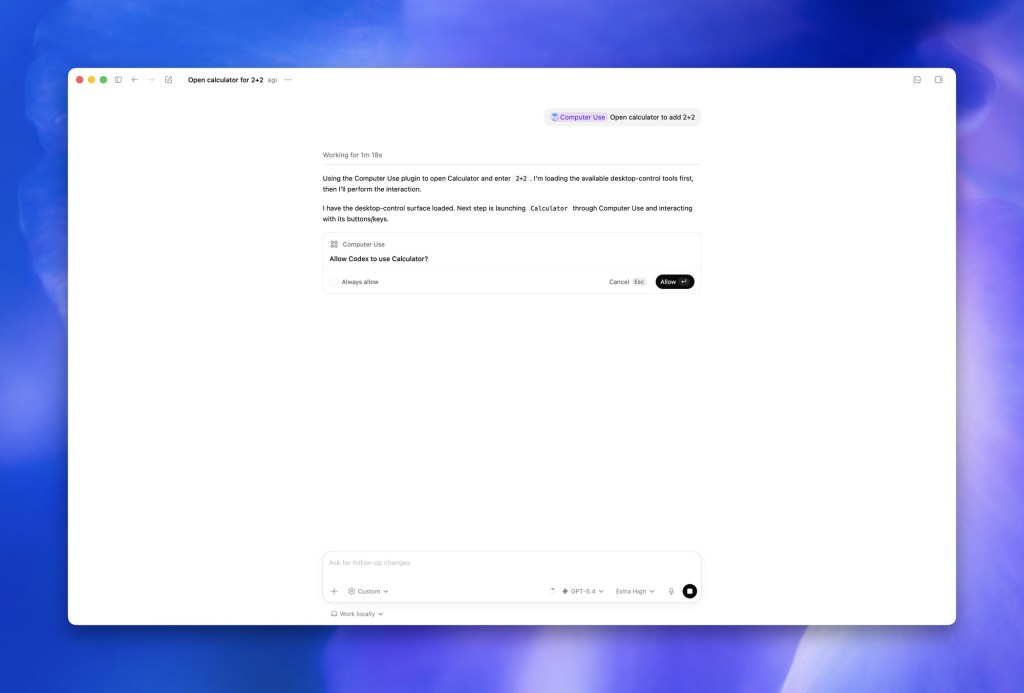
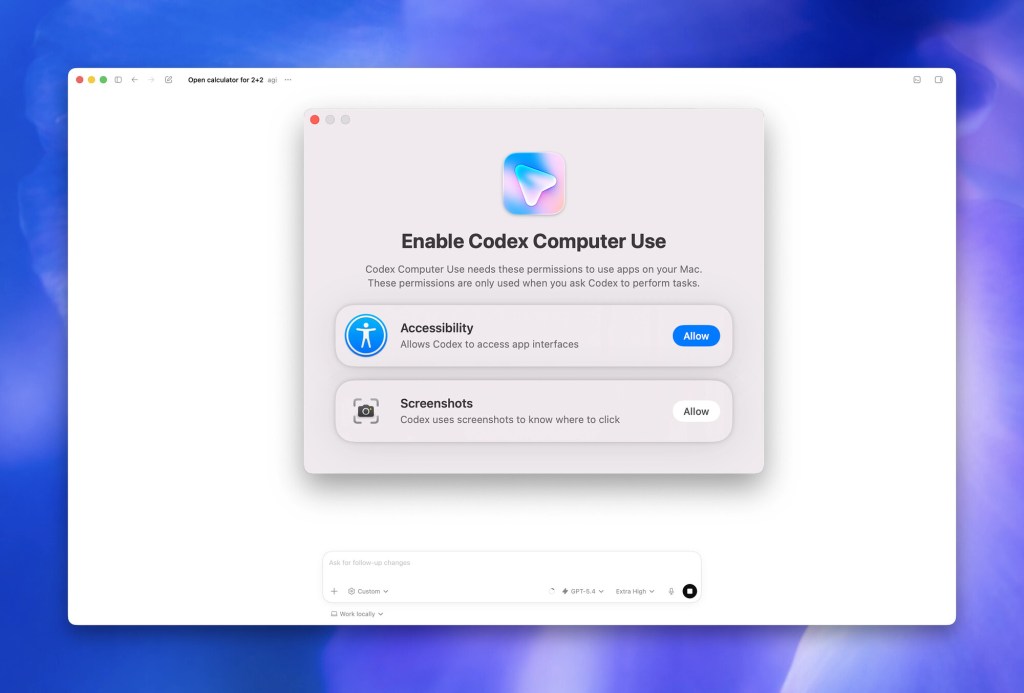
    OpenAI just added “Computer Use in Codex”. It can now see your screen, move a cursor, click, and type across any Mac app — multiple agents running in parallel while you work.

    That’s genuinely impressive. Anthropic’s Cowork does something similar.

    And the companies that own your screen, your apps, and your enterprise software will decide what that’s worth to you.

    But here’s what I keep thinking about.

    This capability depends on macOS letting third-party apps observe your screen and control other apps. Apple has a long history of deciding what gets that kind of access — and restricting it, charging for it, or bundling it into higher-tier subscriptions when it becomes valuable enough. The industry tends to follow Apple’s lead on these things.

    On mobile, I’d be surprised if Google and Apple don’t eventually make this a feature you pay for through their own AI subscriptions, with third-party agents locked out entirely. Enterprise software vendors — SAP, Salesforce, ServiceNow — are watching this closely too. Every one of them has an AI agent story, and every one of them has an incentive to be the only agent that sees inside their platform.

    And then there’s the end user. Two years ago, when Microsoft introduced Windows Recall — which took continuous screenshots of everything on your PC — the backlash was immediate and fierce. People were not ready for an AI that watches everything. That tension hasn’t gone away. It’s just been repackaged as productivity.

    Every app on your Mac now needs to decide: allow AI in, or keep it out.
    
Two permissions. Both controlled by Apple. That's the chokepoint.

    We’ve seen this before. Google Maps was free until millions of apps depended on it — then came the pricing change. Installing apps on a device you own was an open opportunity until App Stores made it a 30% toll booth. The pattern isn’t new: platforms let ecosystems flourish on open access, then monetise the chokepoint once the dependency is deep enough.

    AI agents are heading into the same territory. The question isn’t whether platform owners will act. It’s whether industry bodies build interoperability standards fast enough, and regulators move before the walls are too high — or whether we end up with a dozen AI agents, each locked inside its owner’s fence.

    The pattern always ends the same way. What’s your read?

  • What Korean Bananas Know About AI Rollouts

    What Korean Bananas Know About AI Rollouts

    On sequencing, readiness, and resisting the urge to optimise too soon

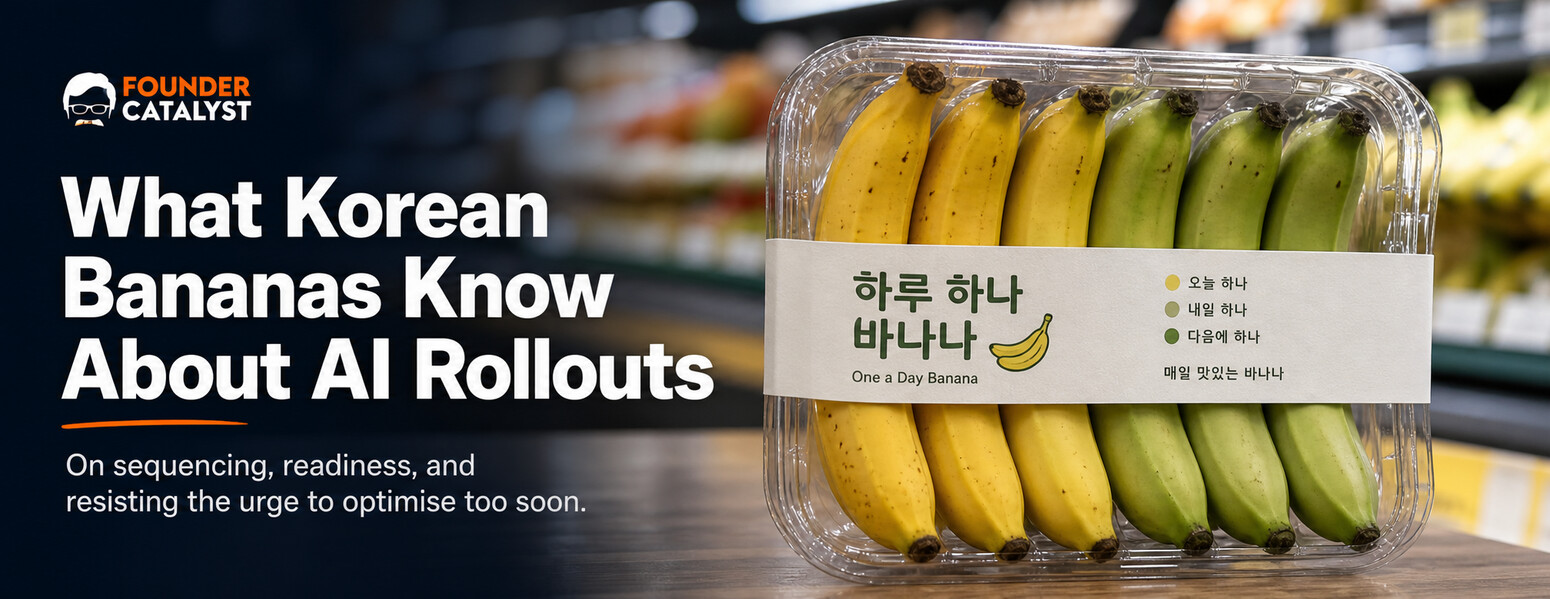
    I first saw the “Haru Hana Banana” pack in a South Korean grocery store. It held 5–7 bananas at different ripeness levels: one yellow and ready now, the next a bit greener for tomorrow, and the others still green for days ahead. No instructions, no app – just simple packaging aligned with how people actually eat bananas. This simple design stuck with me not as a hack, but as a new way to think about sequencing initiatives.

    Most founders and leaders want all their initiatives fully ripe at once.

    They launch every project, hire every role, or deploy every feature together. It feels like momentum – but too often it becomes a mess. The Korean banana pack succeeds by doing the opposite: it staggers readiness to match demand. Whoever designed it chose customer reality over operational convenience.

    In a big company, you might expect a push to standardise and optimise logistics. Instead, the grocery chain sacrificed some simplicity to solve the real problem: avoiding waste and giving customers a fresh banana each day.

    This idea applies beyond fruit.

    When rolling out AI or any new technology in an enterprise, leaders face the same instinct: go big now, or wait until everything is certain. Both extremes fail. Rushing everything risks breakdowns; waiting wastes time and lets others leap ahead. A better question is: What do we ripen today, what do we plant for next quarter, and what do we keep green for now? In practice, the best teams run multiple tracks in parallel. Some pilots are live with real users, some proofs of concept are being tested, and new ideas are still hazy. They’re comfortable with uneven progress.

    Avoid “Big Bang” launches.

    Instead, break work into phases. For example, an AI system can be piloted in one department before rolling out company-wide. A product can launch with a minimal feature set, then add more features after learning from users.

    Don’t wait for perfection. As Agile principles teach, deliver value frequently in short sprints. Each release is like picking the next-ripe banana – it feeds users today and yields insight.

    Match customer usage.

    Design solutions around how people will use them, not how easy they are to build. The banana pack works because people eat one banana a day; the designer aligned the product with that habit. Similarly, if customers will adopt one AI assistant a week, don’t dump a dozen at once.

    Build a balanced pipeline.

    Think in horizons or stages: today’s operations (ripe bananas), tomorrow’s enhancements (tending bananas), and longer-term R&D (green bananas). A common rule is to allocate resources across these stages (for example, 70% on core business, 20% on adjacent growth, 10% on new ideas). This keeps today’s business running while new innovations mature.

    Framework:

    Now (ripe): Move forward on initiatives that are ready and will pay off immediately. Deploy proven AI tools in one team to build confidence. Launch product features that clearly solve current user needs.

    Soon (ripening): Pilot upcoming ideas in controlled settings. Collect data and feedback. For example, run an AI chatbot pilot with a small user group, or A/B test a new feature with select customers.

    Later (green): Research and incubate long-term bets. Keep these unripe for now – think of them as experiments or skunkworks that may take months to mature. They shouldn’t block the main effort, but they shouldn’t be forgotten either.

    Checklist for leaders:

    Are we trying to do everything at once? If so, pause and pick the highest-impact slice first.

    What does success look like at each stage? Set clear metrics for today’s release, tomorrow’s pilot, and so on.

    Have we planned feedback loops? Like banana peels, failures will show us ripe spots. Incorporate learnings quickly.

    Are we optimising for the customer’s journey or for internal convenience? Always put the customer reality first.

  • How forecasts age in an AI moment?

    How forecasts age in an AI moment?

    Every quarter, someone in tech quietly walks back a confident prediction they made not long ago.

    In January 2026, Forrester published research showing that over half of all AI-attributed layoffs are likely to be reversed, because companies cut headcount based on AI promises that the technology was not yet ready to keep. The same month, Gartner forecast that generative AI in customer service would cost more than offshore human agents by 2030, prompting a pointed rebuttal from industry practitioners who argued Gartner was describing a vendor pricing failure, not an AI failure.

    The retractions are usually healthier than the original predictions. They just get a fraction of the attention.

    In October 2021, a year before ChatGPT, I delivered a talk called “The Future of Software Developers by 2040” to a developer conference. Looking back now is not about whether I got things right. The more useful question is which assumptions survived contact with a shock nobody saw coming.

    A few stood up reasonably well. The talk argued the (Indian) IT hiring boom would not last. TCS, Infosys, Wipro and HCL were on record quarters then, with attrition above 20 per cent. The direction was right, though the mechanism I imagined, gradual automation and growth of the global capability centres, turned out to be the smaller story. The larger one was a foundation AI model that could write working code from a plain English comment.

    One slide, titled “Going to be upside-down,” argued that the work mix in software would invert: more time on business understanding and customer needs, less on writing and testing code. That was framed as a gradual shift toward 2040. It is largely the reality in 2026 itself.

    The line that aged the worst was the one I closed with: let machines be machines, and let humans be human. It earned a warm nod in the room. Five years on, it has the ring of a sentence printed over a stock photo of a sunrise. Tidy aphorisms assume the boundary they describe will hold still. This one has not.

    Nobody in this industry predicts precisely. The people who navigate these shifts well are not the ones with the sharpest forecasts. They are the ones who revise quickly when the ground moves, before it costs them too much.

    There is a Chinese proverb associated with Deng Xiaoping: crossing the river by feeling the stones. You do not map the riverbed in advance. You step, test your footing, adjust, and step again. The destination matters. But the only honest method is one stone at a time.

    The next five years will not reward people who pick a single thesis and hold it. They will reward those who can hold a direction loosely, gather evidence weekly, and change their mind without ego when the facts demand it.

    The cost of a wrong forecast held too long is now measured in quarters, not years. The cost of revising one in public is mostly ego. And ego is the cheapest thing to spend.

    The forecasts that age worst are usually the ones that sound the wisest at the time.

  • The Secrets to Successful AI Implementation Revealed

    The Secrets to Successful AI Implementation Revealed

    Last week, a founder from Indore (India) shared a thread about deploying AI voice calling at scale. I could not put it down. Because the real lessons have nothing to do with voice calls.

    Strip away the telephony context, and what you have is a masterclass in how to deploy any AI solution in an enterprise. Here is what stood out.

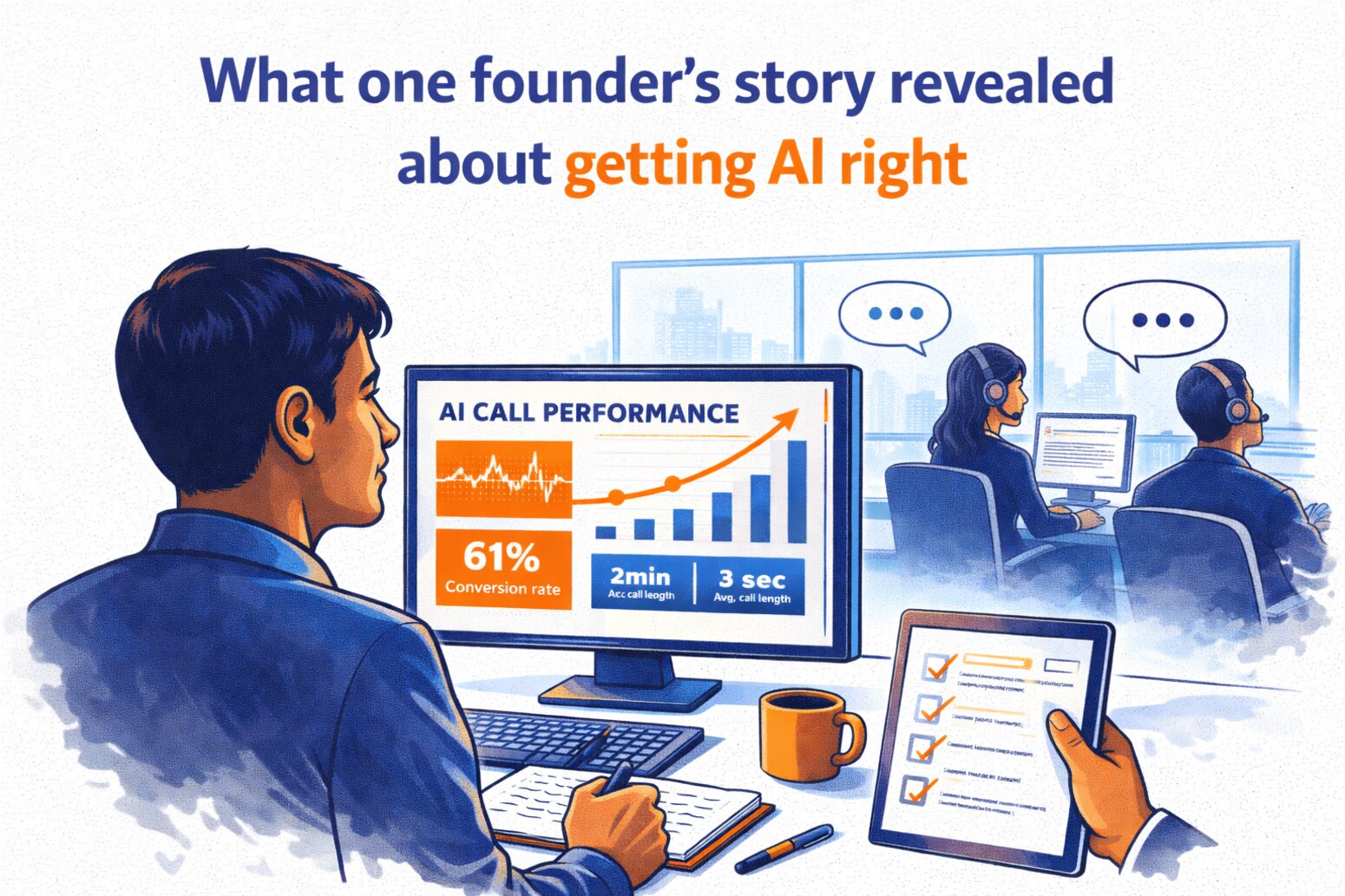
    The first lesson is about trust, not technology. Their AI voice was technically flawless. Too flawless. People hung up. The moment they added small imperfections, pauses, and a little background noise, conversion went up 40%. The lesson here is not about phone calls. It is about how humans receive AI-assisted interactions in any setting. Perfection triggers suspicion. Naturalness builds trust. Keep that in mind, whether you are deploying an AI chatbot, an AI-assisted email, or an internal co-pilot for your team.

    The second lesson is about the real competitive advantage. Their human QA team could review 30 calls a day. The AI system lets them audit every single conversation, spot patterns, rewrite responses, and redeploy within the hour. Five improvement cycles in a day versus five in a quarter. That compounding speed of learning is what separates organisations that achieve extraordinary results with AI from those that achieve mediocre ones.

    The technology is not the edge. The speed of learning from it is.

    The third lesson is the one I want every CXO reading this to write down. They went through three vendors before they understood the real problem. Every vendor built them a technically functional system that did not convert. Because no vendor knows your business well enough. The vendor knows the platform. You know what your customer means when they pause before answering. You know when a “call me later” is a genuine request and when it is a polite exit. You know what a good conversation in your context sounds like.

    This is exactly the mistake I see enterprises make repeatedly with AI deployments. They treat it like an infrastructure purchase. Hand over the requirements, receive the system, and declare it live. Then, wonder why the numbers are disappointing.

    Every successful AI deployment I have seen has one thing in common. Not a premium vendor. Not a cutting-edge model. One internal person who owns the prompt. Who listens, observes, refines, and iterates daily. Someone who understands the customer deeply and has the judgment to shape how the AI responds.

    That person is not an AI engineer. They are a domain expert with curiosity and ownership. And they are the difference between a deployment that impresses in a boardroom presentation and one that actually moves the needle.

    Where did your AI deployment surprise you the most, in a good way or a bad way?

  • The butterfly that just changed cybersecurity.

    The butterfly that just changed cybersecurity.

    A new AI model from Anthropic has just exposed thousands of security flaws hiding inside the world’s most trusted software, some for over two decades. The age of the once a year security audit is over, and every founder needs to know why.

    I read something this morning that made me put my coffee down, and I am not talking about the ceasefire in the Middle East.

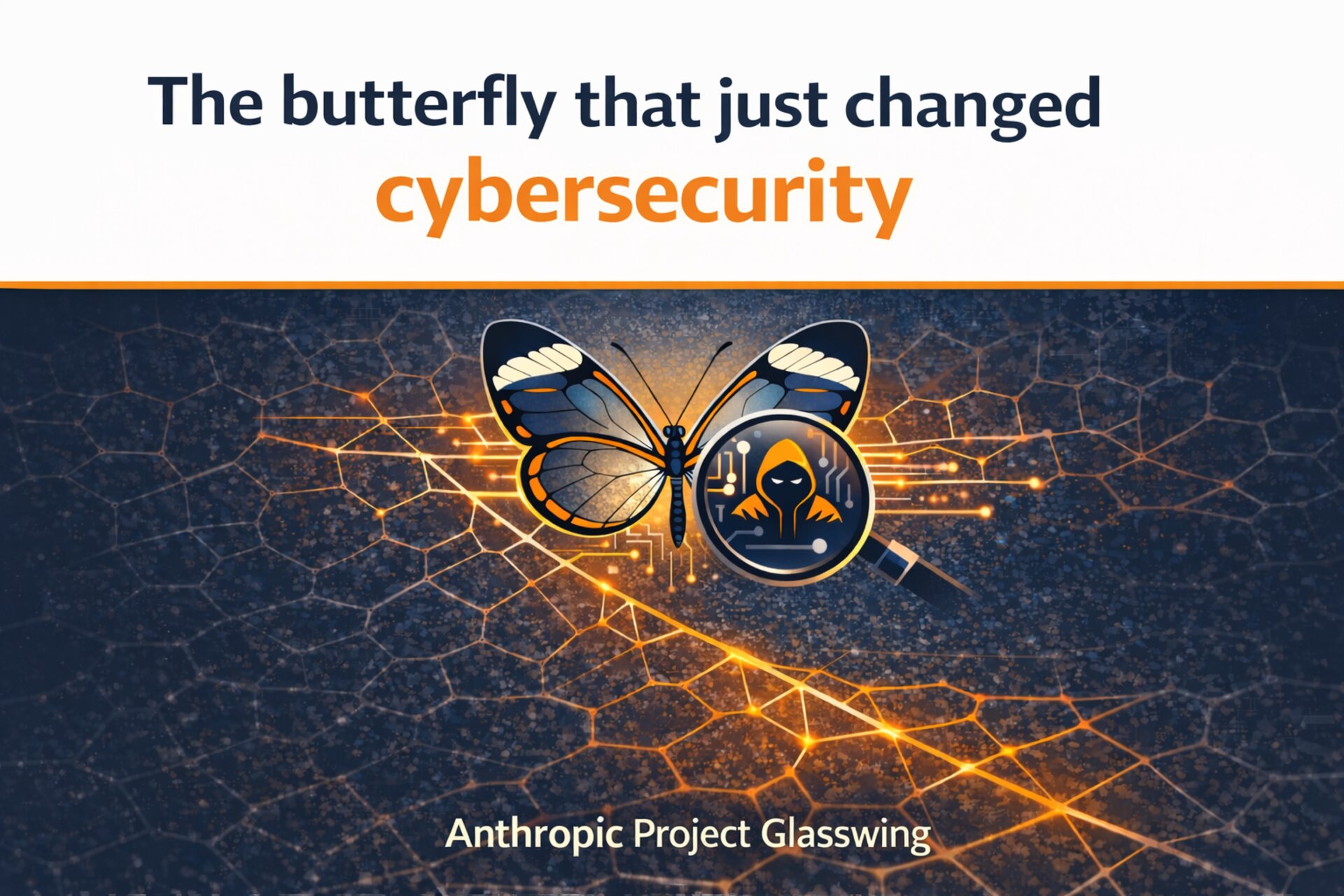
    Anthropic, the makers of Claude, has announced Project Glasswing, a joint effort with AWS, Apple, Google, Microsoft, Cisco, JPMorgan Chase, NVIDIA, Broadcom, the Linux Foundation, and 30 others. The name comes from the glasswing butterfly, Greta oto, whose transparent wings let it hide in plain sight. A fitting image, because that is exactly how software vulnerabilities live among us. Quietly. Unnoticed. For years.

    The reason these companies have come together is a new, unreleased model called Claude Mythos Preview. In just a few weeks of testing, it found thousands of previously unknown security flaws across every major operating system and web browser. One vulnerability had been sitting quietly inside OpenBSD for 27 years. Another lived inside FFmpeg for 16 years, in a piece of code that automated tools had tested over five million times without catching it. The model found most of these on its own, without anyone holding its hand.

    I have been around software long enough to know how rare this kind of moment is. It reminded me of an experience I shared in my book, Founder Catalyst. Years ago, during a Cricket World Cup, my team was running one of the largest online marketing campaigns of that era for a client. A small oversight in terms of securing our app during a deployment cost us an entire day of customer data. Thousands of leads gone. We owned the mistake, rebuilt the safeguards, and learned that resilience is something you design for, not something you hope for.

    That memory came rushing back as I read about Project Glasswing. If a careless deployment can do that much damage, imagine what an undiscovered flaw, hidden for two decades, could do in the hands of someone looking for it.

    The hopeful side of this announcement is that defenders finally have a tool that can keep up with the scale of the problem. The worrying side is that the same capability, in the wrong hands, will shrink the gap between a flaw being found and being exploited from months to minutes.

    So here is the real shift I want every founder and business leader to sit with. The era of auditing your enterprise software once a year with a consultant and a checklist is over. Your digital estate is far larger than you think. Old integrations. APIs nobody owns anymore. That internal dashboard, a developer built in 2019 and quietly left behind. A login flow that has not been touched in years. Each of these is now a doorway, and the cost for an attacker to find them has just collapsed.

    It is time to start using AI tools to look at your own software the way attackers soon will. Not someday. This month. Run AI-assisted reviews on your codebase. Map every digital asset you own, including the forgotten ones. Ask your security partners what their AI augmented testing roadmap looks like, and if they do not have a clear answer, that itself is your answer. This is no longer a job for one annual audit. It is a continuous practice, and AI is now both the threat and the shield.

    I wrote about this very angle last week, after the Mexico data breach, in which one person, likely working alone, walked away with data on 195 million people using Claude, ChatGPT, and a thousand prompts. That was the warning shot. Project Glasswing is the confirmation that the ground has shifted permanently. If you missed that earlier post, it is worth a read before this week ends.

    Like the glasswing butterfly, what hides in plain sight is often the greatest risk.