Tag: Generative AI

  • AI Is Here. Now What?

    AI Is Here. Now What?

    The Ultimate Playbook for the Resilient IT Services CEO

    If you are running a mid-sized IT services firm today, you know the ground is shifting. You are part of a resilient industry that has survived COVID, remote work transitions, resource crunches, double-digit attrition, and geopolitical upheavals. Now, just as you are catching your breath, comes the most unsettling wave of all: artificial intelligence.

    In the next 6 to 12 months, your job is not to build “rigid forecasts”. Your job is to filter the hype, preserve your profits, and refuse to bet your company on speculative projects. The real churn is coming in the mid-term—contracts will be renegotiated, and maintenance work will shrink. Only the firms that adapt their business models now will come out stronger.

    The Ultimate Playbook the Resilient IT Services CEO
    The Ultimate Playbook for the Resilient IT Services CEO

    1. Operations & Financial Discipline: The Next 6–12 Months

    Winning this transition isn’t about playing defence; it’s about ensuring you have the financial fuel to cannibalise your own revenue before a competitor—or an AI agent—does it for you. That level of aggression requires ruthless efficiency today, not chasing “future riches” on borrowed time or capital.

    • Elevate Beyond Code Gen: Your engineers are already using AI to write code. You must now require the use of AI agents to massively increase testing coverage, stress testing, and deployment speeds. This delivers a significantly better, more resilient product to the client at zero additional infrastructure cost.
    • Strict Financial Preservation: Prioritise profits and save your cash reserves. Do not take on debt or run at a loss for speculative AI projects in the hopes of future riches.
    • Zero Free Work: Refuse to do unpaid AI Proof of Concepts (PoCs). Do not undercut your pricing just because a requirement document is filled with AI buzzwords. Any effort your team puts in must be compensated fairly.
    • Cap Experimentation: Provide the latest AI tools, but mandate that usage is reviewed. Ensure learning does not consume more than a single-digit percentage of your team’s time so you can deliver current projects without extra manpower.
    • Be Brutal with Right-Sizing: Review your team size and expenses every month. There is no virtue in holding a large bench. Scrutinise every timesheet to see what roles can be automated by AI agents.

    2. Strategy: Talent & Client Management

    Stop asking “How do we use AI?” and start defining what moat you actually provide to your clients.

    • Filter Hype and Temper Marketing: Take predictions from frontier AI labs with a grain of salt; much of it is self-fulfilling prophecies. Do not let your marketing team claim expertise in every AI technology (LLMs, MCPs, agents), as clients will see there is no real differentiation. Project your true niche experience and affordable rates.
    • Over-Communicate: Call every single client weekly. Listen carefully to their specific fears and successes with AI. When asked, be transparent about your successes and failures with AI. Here is a sample template for these Weekly Client AI Discussion calls to keep them focused. It moves the conversation away from buzzwords and toward the “moat” you are offering. (See the attached infographic)
    • No Mandates or Panic Firings: Avoid top-down AI mandates—they do not work. Likewise, do not let go of good talent simply because you see knee-jerk trend reductions in the rest of the industry.
    • Hire AI-Native Engineers: Avoid paying massive premiums for lateral AI hires, save for a couple of key, hands-on experts. Instead, hire affordable, AI-native, fresh engineering graduates who are already exposed to these workflows. Value honesty and the ability to learn fast over pre-existing knowledge.
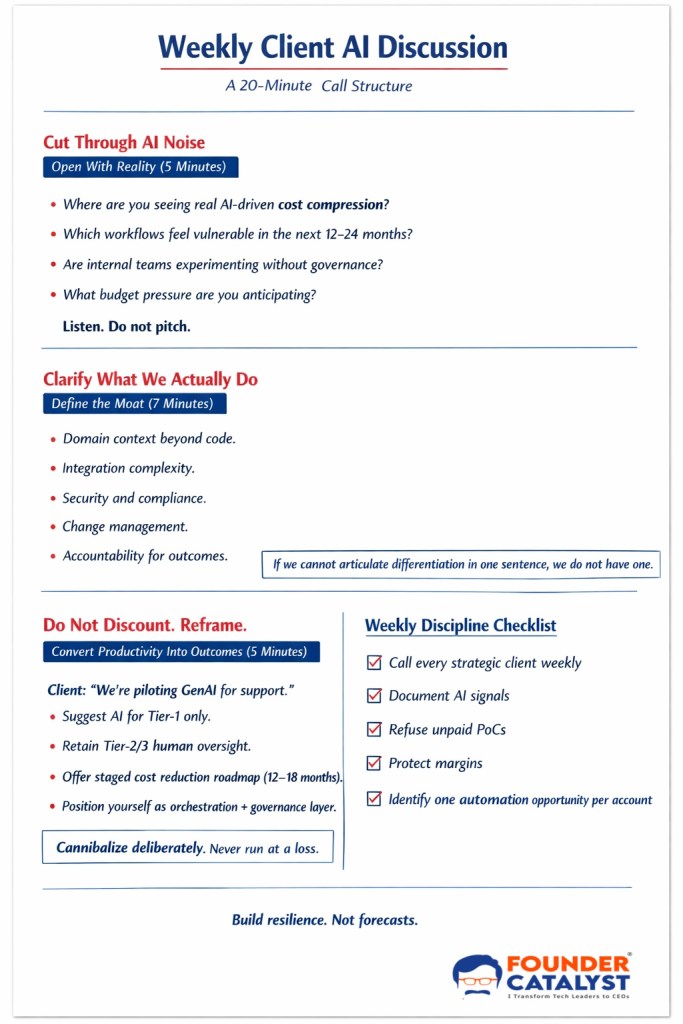
    Template for the Weekly Client AI Discussion
    Template for the Weekly Client AI Discussion

    3. The Pivot: Contracts & Service Evolution (1–3 Years)

    If you stay on Time & Materials (T&M) contracts, you are handing all your productivity gains back to the client.

    • Shift to Outcome-Based Pricing: You must urgently move your Time & Materials (T&M) contracts to outcome-based pricing. This is the only way for clients to see the financial benefits of your internal AI productivity gains immediately.
    • Cannibalise Your Own Revenue: Approach your champion clients now with radical cost-saving ideas—up to 50% or more. Identify legacy apps and systems that AI can automate and/or eliminate. If you do not do this, your competitors or an AI agent will do it for them. However, never agree to work at a loss for maintaining current run rates.
    • Pivot to Orchestration, Not Products: Resist the urge to divert R&D resources into building proprietary AI SaaS products or enterprise apps just because you can. Enterprise CXOs are shifting toward “build” rather than “buy,” and you lack the deep pockets required for marketing distribution. Instead, focus on integrating and orchestrating custom bots and agents for enterprises, managing change processes, and providing industry context.
    • Capitalise on Sovereign AI: Governments are treating AI as a national security issue. Use this shift to help enterprises implement localised, sovereign AI infrastructure and diffusion.

    4. Long-Term Strategic Moves (3+ Years)

    • Strategic Maturity: If your firm is profitable and holds domain expertise, be open to external investment or acquisition. Larger businesses will be looking to strengthen their portfolios during this transition, and being open to this is a sign of strategic maturity, not weakness.
    • New Industry Openings: Generative AI is going to lower barriers to entry in traditionally closed-off industries like film and media. Be ready to walk through those doors and serve those industries in entirely new ways when the disruption creates opportunities.

    Build Resilience, Not Forecasts

    From where we stand today, it is impossible to see the distant future clearly, as transformative technologies take time to diffuse within enterprises. AI itself will keep evolving well beyond current (large language) models, gaining capabilities that are hard to imagine right now.

    Because timing and execution determine who survives a transition, it is far wiser to build organisational resilience than to rely on rigid forecasts. If you navigate this transition with discipline, we will look back at this period in 2030 and be proud of a job well done.
  • When AI prototypes get mistaken for finished software

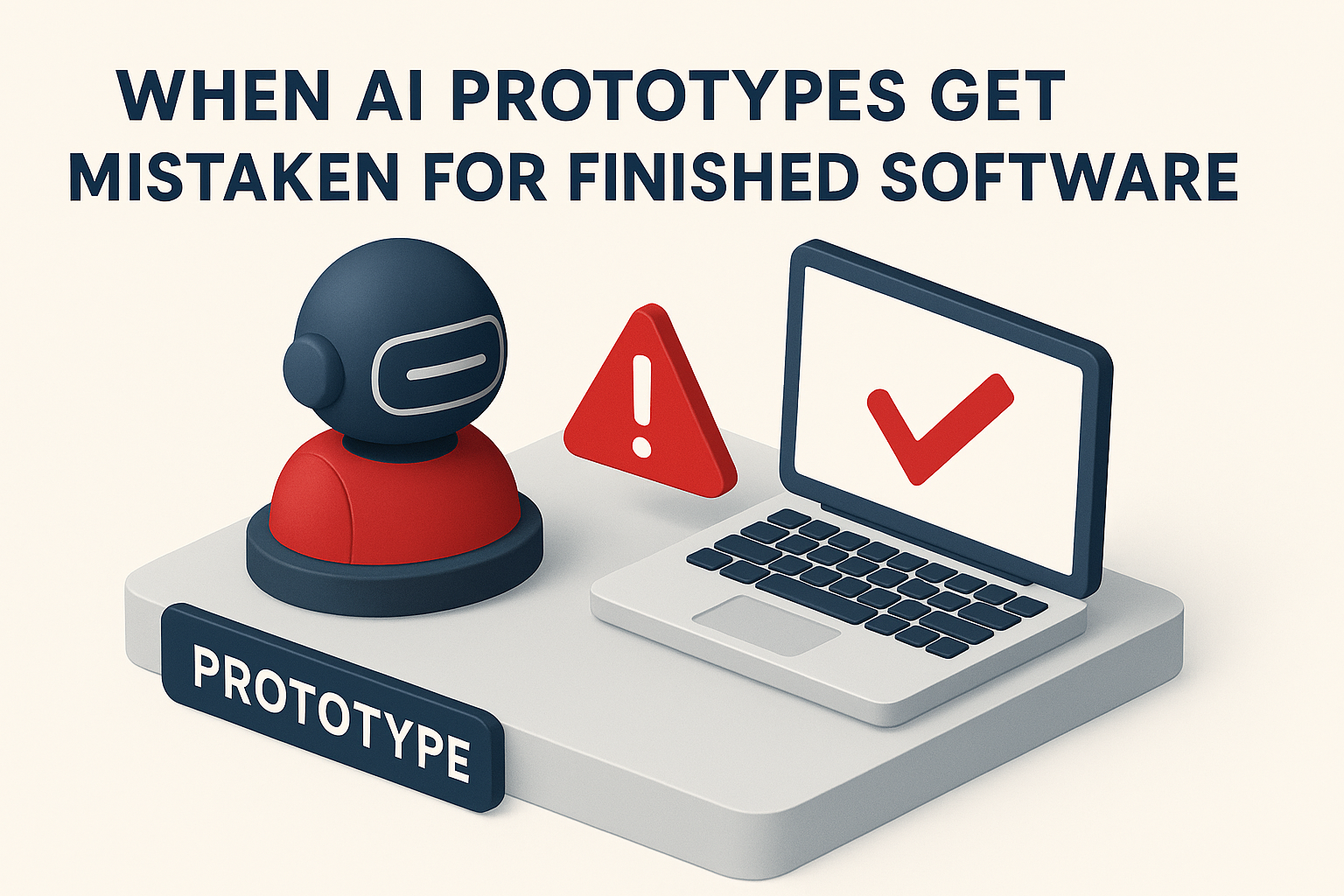
    When AI prototypes get mistaken for finished software

    Over the last few months, I have been noticing a pattern in many organisations experimenting with AI. A recent experience brought this out clearly and reminded me why we still need basic engineering discipline even in this new world.

    A client reached out to the team I was consulting for a proposal to redevelop a Python application and deploy it on Microsoft Azure. One of their business leaders had created the first version using an AI tool. Since it ran in the browser, the team assumed it was ready for production. When we looked at the files, all we received was a saved webpage (HTML) and part of a Python script. The backend logic, code, DB schema, JavaScript and other supporting pieces were missing, so we had no clue what the prototype was meant to do.

    There is nothing wrong in using AI tools like Gemini, Claude or ChatGPT to sketch ideas or validate a workflow. They are wonderful for quick iteration and early exploration. The problem starts when something generated in an AI chat window gets treated as a complete software product.

    To build anything that will run securely and reliably inside an enterprise, we still need clarity on the basics. The objective and the business case. The inputs and outputs. The user roles and the workflow. A simple specification. Some understanding of data flow, security and integration needs. Access to the original AI chat sessions also helps. These are not paperwork. They form the bridge between what was intended and what needs to be built.

    AI can speed up development, but it does not remove the need for engineering rigour. Systems still need to be stable, scalable and secure.

    As more leaders experiment with AI, keeping this distinction in mind will save time and frustration for everyone. Prototypes are a good beginning, not the final product.

  • The Future of Work: AI Skills vs Degrees – Let’s Stay Grounded

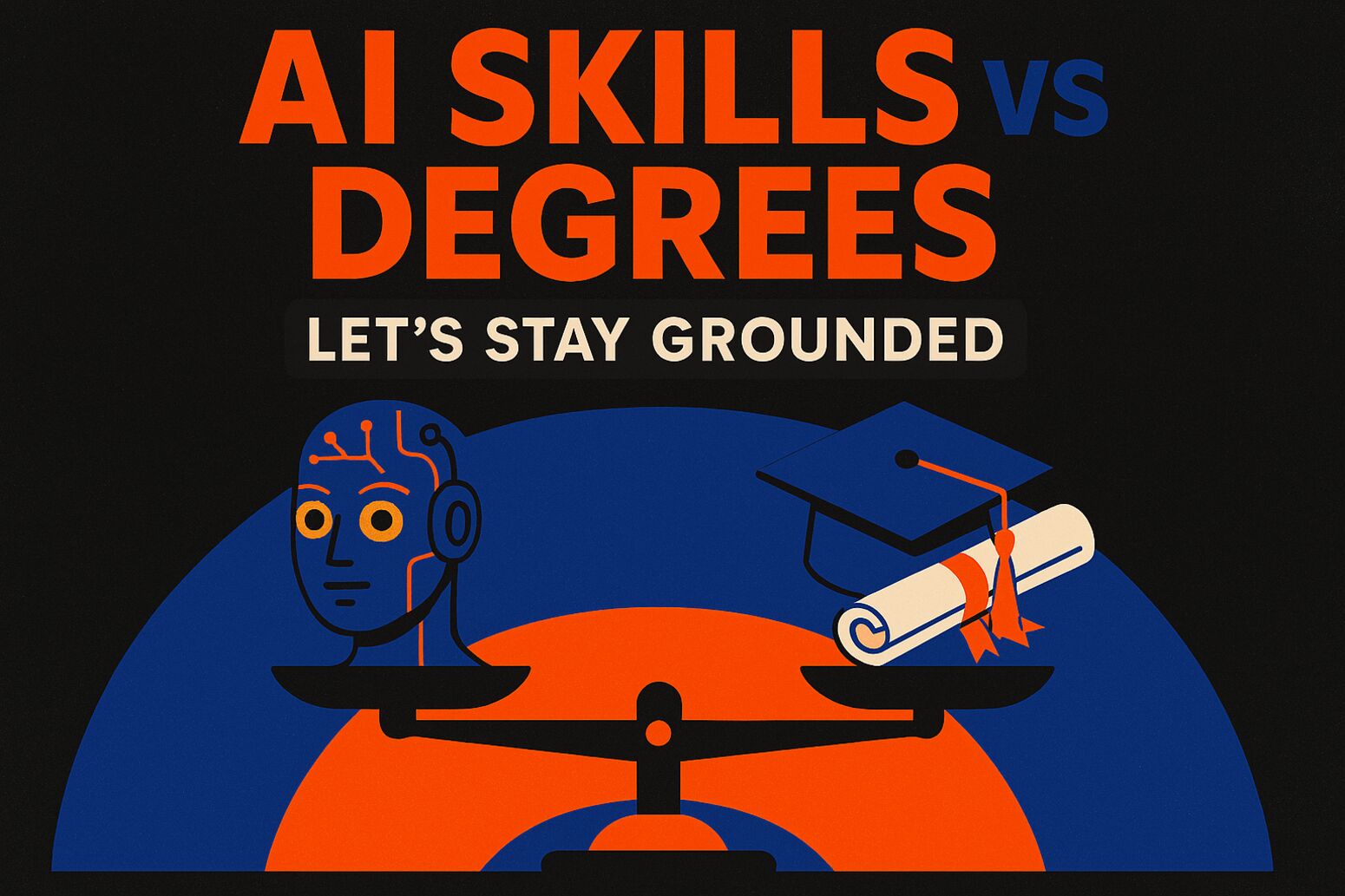
    The Future of Work: AI Skills vs Degrees – Let’s Stay Grounded

    Recently, Ryan Roslansky, CEO of LinkedIn, said that “the future of work no longer belongs to those with the fanciest degrees or who studied at the best colleges, but to those who are adaptable, forward-thinking, and ready to embrace AI tools.” It’s an important reminder of how fast the world of work is changing. But I’d like to add a word of balance for students — especially in a country like India. Please don’t take such statements literally as a reason to stop pursuing education. In a growing economy like ours, formal learning remains a lifelong asset. Even in an AI-driven world, education is still the most reliable path to improving one’s quality of life — ethically and sustainably. Many such statements, though well-intentioned, tend to amplify the aura around AI — sometimes to promote platforms, products, or investments. Even the most sincere innovators can fall in love with their own creations and overestimate their reach. I use AI every day. I read, write, and advise on it constantly. Yet I can say this with conviction — no matter how advanced AI becomes, a strong academic foundation and disciplined learning will always matter. Anyone who tells you otherwise is not being fully honest. Let’s embrace AI with curiosity, but hold on to education with conviction. The future belongs to those who can balance both — grounded in knowledge, guided by values, and open to change.
  • Running Generative AI Models Locally Is Now Easy

    Running Generative AI Models Locally Is Now Easy

    Want to explore Generative AI without sending your data to the cloud? Running models locally on your PC or Mac is now surprisingly simple.
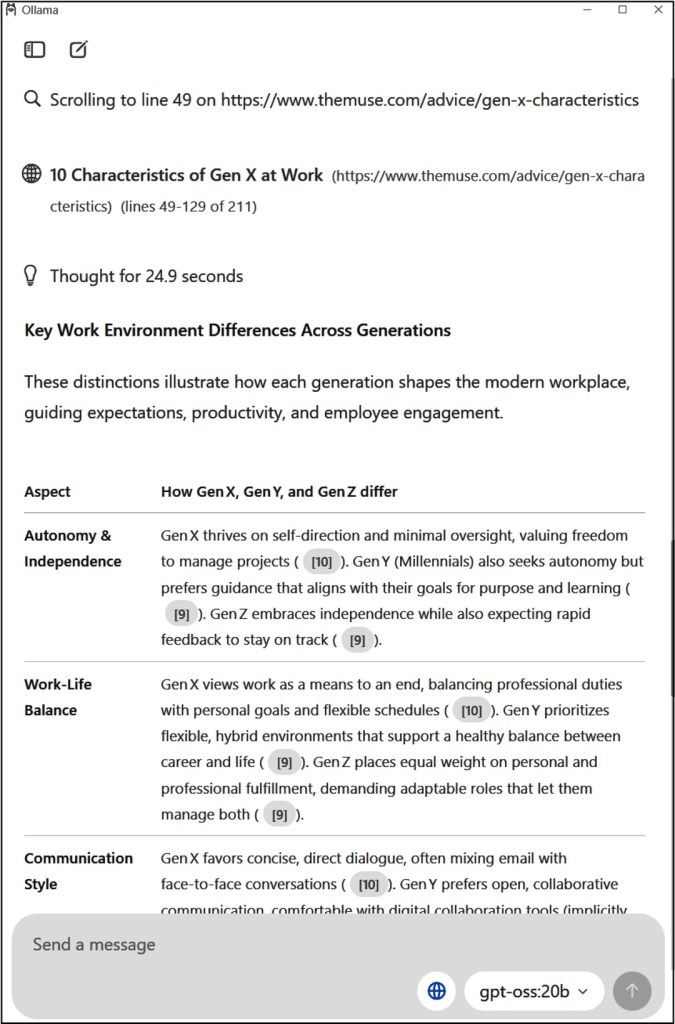
    Start with Ollama, a lightweight framework that makes it easy to run AI models locally on your computer. It supports both open-weight models and open-source models. Together, these models have made hands-on AI experimentation accessible to anyone with a capable machine, without depending entirely on cloud APIs. Ollama recently added a clean, chat-style desktop app to its command-line interface. I’ve been testing OpenAI’s GPT-OSS 20B open-weight reasoning models, which run locally through Ollama and even support limited web search. For routine tasks — summarising, drafting, quick analysis — it’s remarkably capable.
    Sample Output from GPT-OSS model running locally in a PC with Ollama
    Sample Output from GPT-OSS model running locally on a PC with Ollama
    Another option is Msty Studio, a free tool (for non-commercial use) that gives a visual interface to run these open models on your system. It connects seamlessly with Ollama and supports models from Hugging Face. Ideal for hands-on experimentation before making big AI bets. Why does this matter for founders and CEOs? 1. Data Privacy and Control – Running locally means your business data never leaves your system. For regulated industries, that’s a real advantage. 2. Independence and Learning – Most AI transformations rely on commercial APIs. Testing open models locally helps your team learn, experiment safely, and reduce vendor dependence. 3. Strategic Experimentation – Founders who explore AI hands-on make sharper choices about when to buy, build, or partner. It’s the difference between hearing about AI and understanding it. Two things to note: 1. Large models need powerful hardware — GPUs with high VRAM or plenty of system memory. 2. “Open” doesn’t mean “risk-free.” You’ll handle updates, licenses, and security yourself. Local AI isn’t replacing the cloud — it’s giving leaders another layer of control and insight. I cover these shifts — from cloud dependence to local AI — in my keynotes for decision makers. To invite me for a corporate talk, contact Kural at leadership@kuralkonnect.com
  • ChatGPT messed up the script of my AI talk!

    ChatGPT messed up the script of my AI talk!

    Generative AI tools like ChatGPT are a huge productivity booster. I use them daily as a writer and speaker. But here’s what I’ve learnt the hard way: they are not magic lamps, and when not handled correctly, they can take you further away from your own voice. When I was preparing for my talk on “How AI can coach Gen Z and Gen A to lead”, I started with my outline and gave it to ChatGPT for expansion. Instead of polishing my ideas, it kept rearranging the flow and adding new ones. After a few iterations, the draft looked polished, but it no longer sounded like me. It was generic and stripped of the personal experiences I wanted to share with founders and CEOs. So, I went back to basics. Whiteboard, pen and paper, rehearsal recording. Then I brought AI back into the process differently: I used it to transcribe my rehearsal, give me feedback, identify the low points, validate the ideas, and suggest improvements. This time, AI became a coach rather than a ghostwriter—and the final talk landed well with the audience. That’s the point I want to leave with founders: AI is excellent for ideation, for breaking a blank page, or for polishing drafts into the right tone. But it can’t replace your lived experience. If you let AI own the core of your message, you risk becoming a parrot of machine text. Your value as a founder is in bringing your own stories, scars, and convictions to the table. In my book The Founder Catalyst, I argue that the future of leadership is about combining technology with what humans do best—strategy, empathy, and authenticity. The same principle applies here: let AI make you sharper, not faceless.
  • AI is eating your profits

    AI is eating your profits

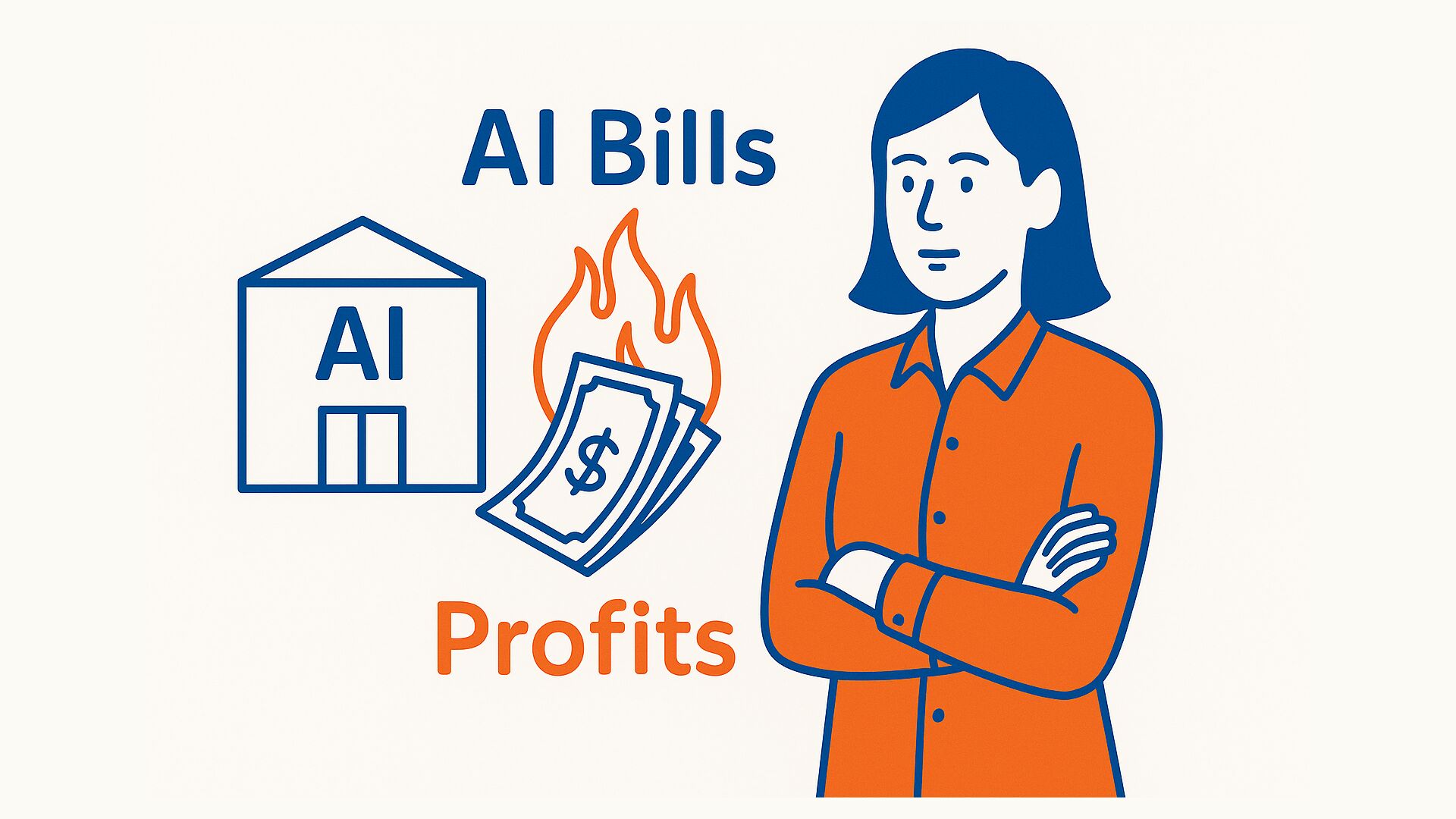
    Notion’s CEO recently revealed that 10% of their profits now go towards AI bills. That’s a significant shift for a SaaS company—and a warning sign for founders.

    AI was supposed to get cheaper. Instead, it’s becoming a major expense. The latest models are smarter, yes, but they also consume far more tokens. Especially when used for agent workflows, deep research, or coding tasks, the costs can spiral quickly.

    As a founder, you don’t always need the most advanced model. With clever prompts and a bit of experimentation, your team can often achieve great results using smaller or open models. This isn’t just about saving money—it’s about designing solutions that fit your business needs.

    From my book Founder Catalyst, I’ve written about the hidden costs of adopting new technologies. With AI, these include:

    1. Time spent learning new tools and interfaces
    2. Integration challenges across teams
    3. Legal risks from unlicensed datasets
    4. Vendor lock-in and platform dependency

    AI can bring productivity and a competitive advantage. But it must be implemented with clarity and expertise.

    Design before deploy. Profits still matter.

    If you’re a founder or CXO thinking of scaling AI across your organisation, don’t do it blindly. AI is not just another tool—it’s a shift in how your teams think, build, and deliver. But without the right guidance, it can also become a costly distraction.

    As a founder and CEO, with over 30 years in tech and a front-row seat to every major platform shift—from desktop to mobile to cloud—I help leaders cut through the noise. My keynotes and masterclasses are not about hype. They’re about clarity, context, and practical frameworks your team can act on.

    Let’s talk if your team needs:

    • A clear-eyed view of what AI can (and can’t) do
    • Real-world examples of how startups and enterprises are using AI
    • A roadmap to adopt AI responsibly, without burning budgets

    You don’t need more AI tools. You need better AI thinking.

    For keynote inquiries, call Kural through WhatsApp or write to v@thefoundercatalyst.com.

  • Are researchers gaming the AI peer reviews?

    Are researchers gaming the AI peer reviews?

    What if I told you some scientists are quietly “whispering” to AI, asking for only positive feedback on their research papers? Sounds like science fiction, but it’s happening right now. Recently, both The Guardian and Nature reported a new trend: researchers are hiding secret instructions—using invisible white text—in their academic papers. These hidden prompts are designed to influence AI tools that some reviewers use, nudging them to give glowing reviews and ignore negatives. While this trick will not be seen by humans, AI models like ChatGPT or Google Gemini may pick up these cues and change their review accordingly. This practice, called “prompt injection,” raises serious questions about academic integrity and the future of peer review. As AI becomes more common in research, we need to stay alert to such manipulations. For now, the best advice: don’t blindly trust AI-generated reviews, and always check the source. Watch this short talk for a quick explainer and my take on what this means for researchers, reviewers, and the future of academic publishing.
  • Testing Google’s AI Mode with a Real Startup Question

    Testing Google’s AI Mode with a Real Startup Question

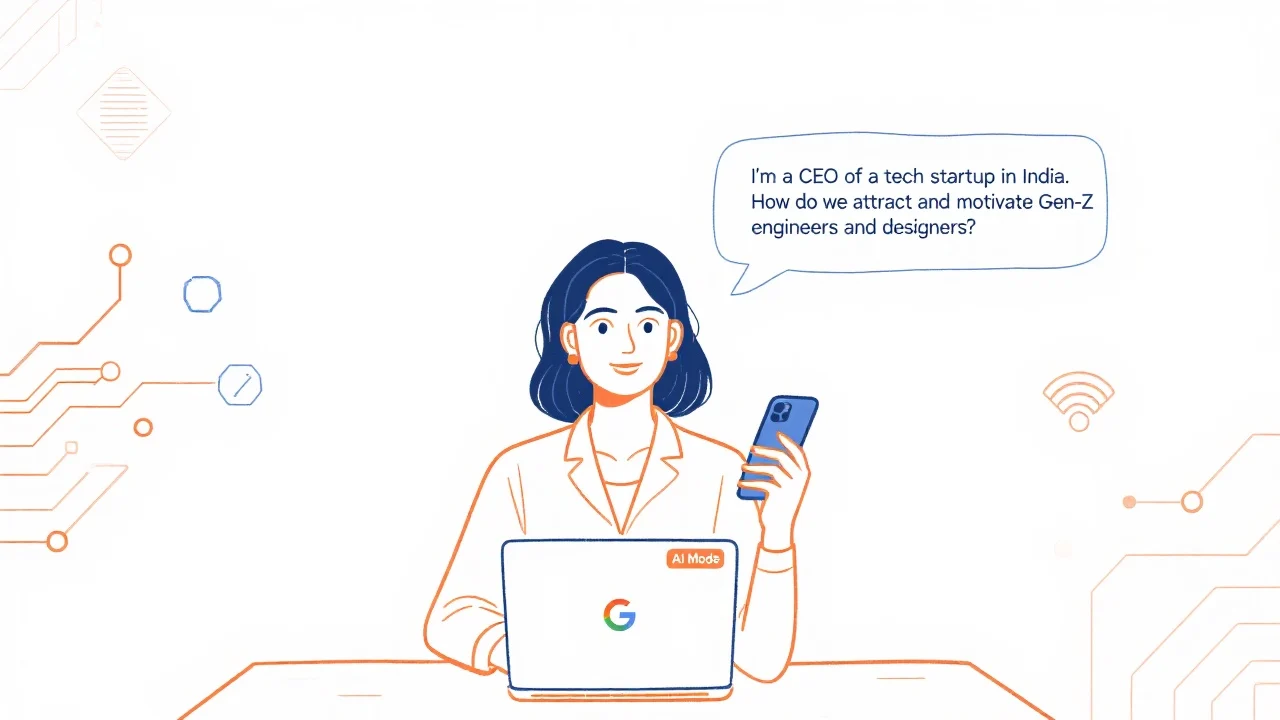
    At this year’s Google I/O, one of the standout announcements was the introduction of “AI Mode” in Search. Until now, Google Search has been about pointing us to websites. With AI Mode, it offers direct, conversational answers, powered by Generative AI. Think of it as Google’s answer to Perplexity, but integrated right into the familiar search box. According to Google, this is a step up from the earlier “AI Overview” we’ve seen over the last few months. More features, like automation and computer agents, are likely coming soon. Curious to see how helpful it really is, I tried asking it a question rooted in our ecosystem:
    “I’m a CEO of a tech startup in India. We’ve just raised seed funding. We’re two co-founders looking to expand. How do we attract and motivate Gen-Z engineers and designers? Any high-level advice from reputed sources?”
    You can watch how Google AI Mode responded in the short video below: The feature is now available in India, too, though it is only in a limited preview. Here is the link for accessing the same.
  • Exploring Google’s Gemini 2.0 Flash-Experimental

    Exploring Google’s Gemini 2.0 Flash-Experimental

    Google recently introduced Gemini 2.0 Flash-Experimental, a multimodal AI model designed to enhance image generation. While previous models could generate and interpret text and images, they often struggled with precise modifications—such as adjusting text within an image without distortion or seamlessly altering objects. This latest iteration claims to improve on these challenges, making such edits more natural and consistent. A standout feature of Gemini 2.0 Flash-Experimental is its ability to maintain consistency across generated images. If you’re creating a storyboard, for example, it ensures that characters, backgrounds, and objects remain uniform across frames—an area where earlier models often fell short.
    Source: Venkatarangan in Andaman, real picture
    Source: Venkatarangan in Andaman, real picture
    Output: AI-generated image of Venkatarangan with a winter jacket near Himalayas base camp.
    Output: AI-generated image of Venkatarangan with a winter jacket near Himalayas base camp.
    I conducted a couple of tests to evaluate its capabilities: 📷 First, I took a photo of myself at home and asked the model to place me in a modern office in the U.S. The result? Decent—but it changed the camera angle, and I ended up with my back facing the camera, which wasn’t ideal. 🖼️ Next, I uploaded a selfie from an Andaman beach and asked it to transform the setting to the Himalayas, complete with a winter jacket. This time, the model delivered a highly realistic output—it genuinely looked like I had taken the photo in the mountains.
    The Prompt I used in Google AI Studio
    The Prompt I used in Google AI Studio
    To try this, you’ll need a Google AI Studio account, which can be set up using your regular Gmail ID. Google provides a free trial within certain limits, so you can explore its capabilities firsthand. This is an interesting development, but as with any AI model, it’s not perfect yet. The improvements in context understanding and image coherence are promising, but camera angles and finer details still need work. I’ll continue experimenting and share more insights soon. Have you tried Gemini 2.0 Flash-Experimental yet? Curious to hear your thoughts! #GenerativeAI #GoogleGemini #ImageGeneration #AIExperiment
  • The Emerging Role of Generative AI in Automation

    The Emerging Role of Generative AI in Automation

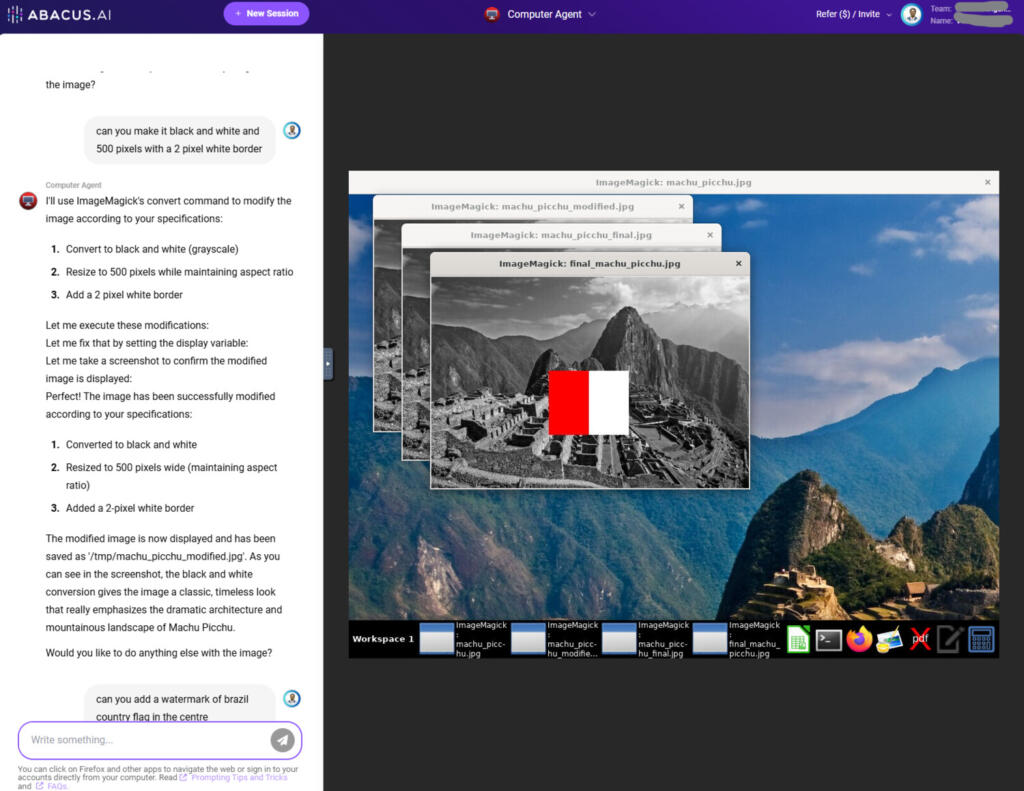
    Abacus.AI’s recently introduced “Computer Agent”, part of their ChatLLM subscription. This represents a noteworthy step forward in simplifying computer automation. By far one of the most intuitive approaches I’ve seen, it functions like a simplified version of robotic process automation (RPA), but with the seamless ease of a chat interface. Currently, it operates within a virtual sandbox environment with limited applications, but the potential is clear and exciting. The idea is straightforward yet powerful: you interact with your computer through natural language chat to complete tasks. For instance, you can ask it to browse the web, gather images, resize or recolor them, or even create a spreadsheet from online statistics. These are tasks that would traditionally require browser automation tools or shell scripts, but the “Computer Agent” lowers the technical barrier significantly. While I have yet to fully test its capabilities, it already appears capable of handling many routine automation tasks efficiently.
    Abacus.AI's "Computer Agent" simplifies image editing via chat commands
    Abacus.AI’s “Computer Agent” simplifies image editing via chat commands
    This development aligns with the trend pioneered by systems like Claude’s “Computer Use” feature, which debuted a few months ago. Both tools reflect a promising approach: using Generative AI to bridge the gap between human instructions and computer execution. It’s a vision where everyday users can automate repetitive workflows without the steep learning curve of traditional RPA or coding. Imagine the possibilities if companies like Apple or Microsoft were to adopt and expand on this concept. Apple could move beyond the somewhat constrained “Shortcuts” app, and Microsoft could evolve its Power Automate platform to integrate more seamless, conversational automation. Such advancements could revolutionize productivity for millions of users, enabling them to delegate mundane tasks effortlessly, saving time and boosting efficiency. A Promising Future, Despite Current Limitations It’s important to acknowledge that this technology is still evolving. Today’s implementations are limited in scope and functionality, and challenges remain in ensuring reliability, security, and scalability. However, the potential is enormous. I believe that after the significant breakthroughs we’ve seen in text processing and image generation, this kind of natural-language-driven computer automation could become the next major real-world application of Generative AI. As these tools mature, they hold the promise to redefine how we interact with computers, making automation accessible to all and transforming how we work, create, and innovate.