Tag: Founders

  • AI is eating your profits

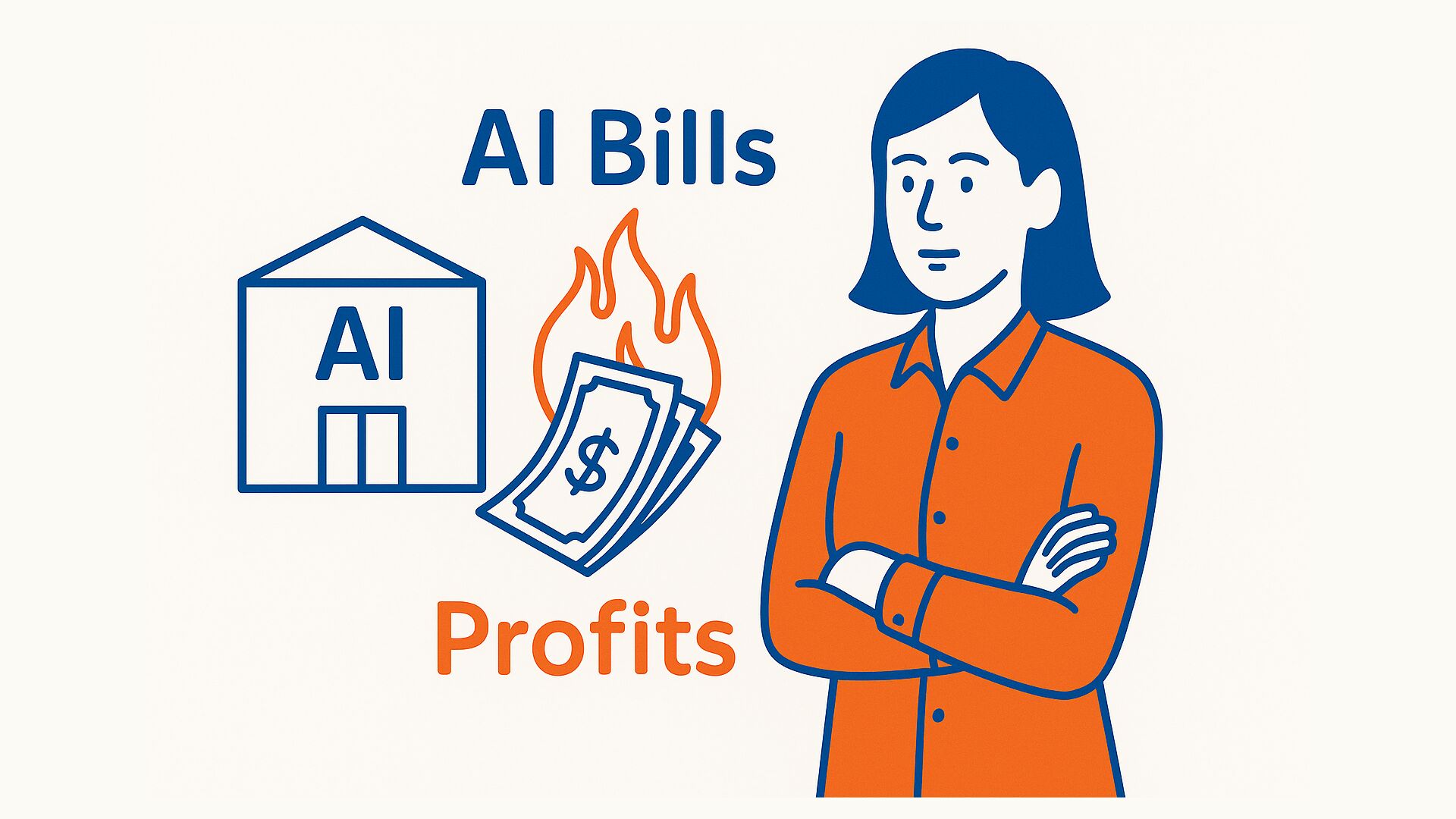
    AI is eating your profits

    Notion’s CEO recently revealed that 10% of their profits now go towards AI bills. That’s a significant shift for a SaaS company—and a warning sign for founders.

    AI was supposed to get cheaper. Instead, it’s becoming a major expense. The latest models are smarter, yes, but they also consume far more tokens. Especially when used for agent workflows, deep research, or coding tasks, the costs can spiral quickly.

    As a founder, you don’t always need the most advanced model. With clever prompts and a bit of experimentation, your team can often achieve great results using smaller or open models. This isn’t just about saving money—it’s about designing solutions that fit your business needs.

    From my book Founder Catalyst, I’ve written about the hidden costs of adopting new technologies. With AI, these include:

    1. Time spent learning new tools and interfaces
    2. Integration challenges across teams
    3. Legal risks from unlicensed datasets
    4. Vendor lock-in and platform dependency

    AI can bring productivity and a competitive advantage. But it must be implemented with clarity and expertise.

    Design before deploy. Profits still matter.

    If you’re a founder or CXO thinking of scaling AI across your organisation, don’t do it blindly. AI is not just another tool—it’s a shift in how your teams think, build, and deliver. But without the right guidance, it can also become a costly distraction.

    As a founder and CEO, with over 30 years in tech and a front-row seat to every major platform shift—from desktop to mobile to cloud—I help leaders cut through the noise. My keynotes and masterclasses are not about hype. They’re about clarity, context, and practical frameworks your team can act on.

    Let’s talk if your team needs:

    • A clear-eyed view of what AI can (and can’t) do
    • Real-world examples of how startups and enterprises are using AI
    • A roadmap to adopt AI responsibly, without burning budgets

    You don’t need more AI tools. You need better AI thinking.

    For keynote inquiries, call Kural through WhatsApp or write to v@thefoundercatalyst.com.

  • How AI can coach Gen Z and Gen A to lead?

    How AI can coach Gen Z and Gen A to lead?

    Every senior leader I speak with shares a common concern: the leadership pipeline is thinning. The first line is solid, but the second line is not so much. Gen Z is stepping up. They are fast and curious, but as digital natives, they learn and train differently. Traditional training and leadership grooming don’t match their pace.

    Enter Artificial Intelligence—not as a replacement for human leadership and mentorship, but as a powerful ally in developing it. AI can serve as their personal coach, offering real-time feedback, personalised learning paths, and scalable mentorship. Empowering your team with AI is how you build a strong second line in 2025.

    Join me on 5th September 2025 from 6 PM at Tagore Film Centre, Chennai, for a 12-minute power talk organised by Kural. No jargon, no hype—just practical plays you can start on Monday. Simple and straightforward. See you there. Register now.

  • What Captain Kirk can teach founder CEOs?

    What Captain Kirk can teach founder CEOs?

    This week’s Star Trek SNW TV Show episode “The Sehlat Who Ate Its Tail” resonated with me in a surprising way. When I began my business nearly three decades ago, straight out of college, there were many moments when I felt like I had been pushed into the deep end without ever learning how to swim. No management book or autobiography really prepares you for the instant when your team turns to you for a critical decision. In this episode, First Officer James Kirk suddenly finds himself in command of the Farragut. With the lives of his ship, the Enterprise crew, and even millions on a pre-warp planet at stake, he could not afford endless consultation. The buck stopped with him, and he had to decide. But he froze. Many founder CEOs fall into the trap of asking for suggestions and confirmation until decision paralysis sets in. But there comes a moment when the role demands clarity and conviction—when you have to throw everything you have into a decision, knowing responsibility rests with you. PS: And a fun detail I enjoyed as an engineer, when wireless communications were jammed, the crew fell back on RJ11 analogue phones and copper wires. Sometimes the simplest, oldest tools can save the day—a reminder worth keeping even in the AI age.
  • AI for Founders: Simple, Strategic, and Safe Adoption

    AI for Founders: Simple, Strategic, and Safe Adoption

    Last week, I had the opportunity to interact with a vibrant group of young founders and CEOs at Corporate Connections Chennai. My talk, “AI for Founders,” was designed to give them not just an overview, but a practical way forward in this fast-moving space.

    We often hear about AI as the next big thing, but for many business leaders, the challenge is knowing where to begin. I shared a simple four-step approach to help organisations adopt AI in a way that’s both realistic and effective. The starting point is understanding what problems you’re trying to solve. Jumping on the AI bandwagon without clarity only leads to confusion. Once the goal is set, the focus shifts to building a core team, choosing the right tools, and keeping the process iterative—learn, adjust, and improve.

    Of course, adopting AI comes with its share of responsibilities. In the second part of my session, we discussed the four key things every founder should keep in mind to use AI safely and responsibly. This means paying attention to data privacy, watching out for built-in biases, not taking AI output at face value, and remembering that the objective is not to build flashy prototypes, but to deliver real, meaningful improvements for users.

    It was a lively session, with plenty of questions and practical discussions. My aim was not to make AI sound mystical or intimidating, but to bring it down to earth and make it something founders can actually use—without losing sleep over the headlines.

    The best part of these sessions is always the back-and-forth—hearing what’s on the minds of founders and what keeps them up at night. As AI continues to change the way we build and run businesses, I hope these simple frameworks help more leaders navigate the path with a bit more confidence—and a little less jargon.

    Venkatarangan presenting his "Unlock AI: Four Steps" framework on screen to a group of founders and CEOs seated at a boardroom table, with an inset photo of the group and the Corporate Connections Chennai meeting signage.
    AI for Founders – Four Steps to unlock AI for your business.
  • Testing Google’s AI Mode with a Real Startup Question

    Testing Google’s AI Mode with a Real Startup Question

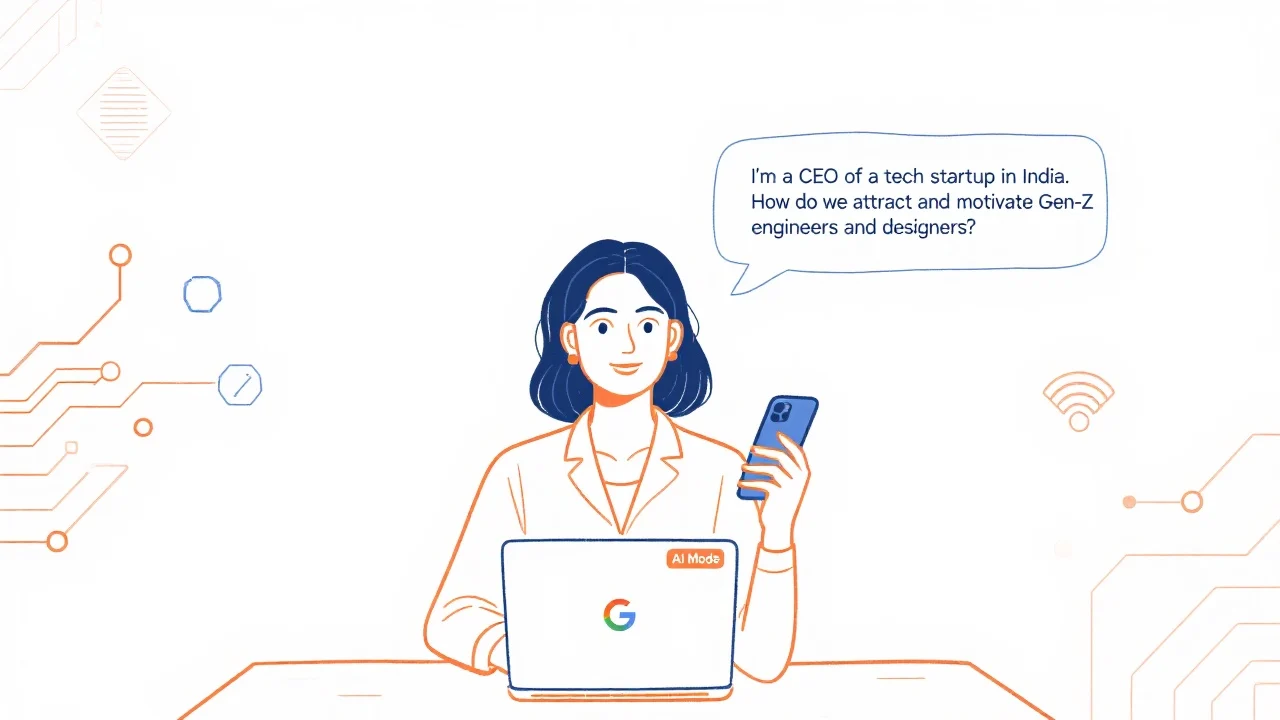
    At this year’s Google I/O, one of the standout announcements was the introduction of “AI Mode” in Search. Until now, Google Search has been about pointing us to websites. With AI Mode, it offers direct, conversational answers, powered by Generative AI. Think of it as Google’s answer to Perplexity, but integrated right into the familiar search box. According to Google, this is a step up from the earlier “AI Overview” we’ve seen over the last few months. More features, like automation and computer agents, are likely coming soon. Curious to see how helpful it really is, I tried asking it a question rooted in our ecosystem:
    “I’m a CEO of a tech startup in India. We’ve just raised seed funding. We’re two co-founders looking to expand. How do we attract and motivate Gen-Z engineers and designers? Any high-level advice from reputed sources?”
    You can watch how Google AI Mode responded in the short video below: The feature is now available in India, too, though it is only in a limited preview. Here is the link for accessing the same.
  • Founders, stop waiting for the perfect talent

    Founders, stop waiting for the perfect talent

    A year ago, when Chris Miller, the author of the acclaimed book “Chip War,” visited India and shared an important observation. He emphasized the urgent necessity for India to build a robust talent pool specifically focused on chip design and manufacturing. Critically, Miller pointed out that India shouldn’t delay or wait for the ideal talent ecosystem to naturally evolve. Instead, it should start making strategic investments and building capabilities immediately.

    There’s a valuable lesson here for startup founders and leaders in any industry. Often, founders get stuck searching for the elusive “perfect” candidate who already possesses all the desired skills. The reality, however, is quite different—such ideal candidates rarely exist.

    The smarter, more practical approach for founders is to hire the best available talent today, even if they’re not perfectly skilled or experienced yet. Once onboard, founders should actively invest in their growth, giving them the freedom and flexibility to learn, experiment, and grow on the job. This strategy ensures continuous momentum, keeping your organisation agile and adaptable.

    Simultaneously, it’s wise to continuously scout for increasingly skilled talent to progressively enhance your team’s capabilities. Particularly in emerging fields like AI and large language models (LLMs), talent with complete skillsets is hard to come by. Hence, developing these skills internally through strategic training and on-the-job experience becomes critical.

    The core message to founders is straightforward: don’t wait for perfection. Hire talent that’s capable, motivated, and eager to learn, and then empower them to grow into the roles you envision. By doing this, you will build a resilient, skilled, and adaptable team poised to tackle future challenges.

    Watch my reel below, where I elaborate further on these essential insights:

  • Why CEOs hear bad news too late?

    Why CEOs hear bad news too late?

    On January 5, 2024, an alarming incident occurred when an Alaska Airlines Boeing 737 MAX 9 experienced a door blowout mid-flight. Investigations highlighted significant communication lapses between the production floor and senior management (source: New York Times, Jan 6, 2024). This incident underscores a universal risk that startup founders also face: blocked flow of critical information.

    Founders, are you often among the last to hear when problems arise? Here are practical steps to help you detect issues early and prevent escalation:

    Firstly, as Bill Gates pointed out in “Business @ the Speed of Thought,” leaders should proactively look for bad news instead of waiting for it to surface naturally. A mindset of vigilance keeps leaders connected to ground realities.

    Secondly, equip your teams to deliver constructive criticism effectively. It’s essential to teach your staff not just to identify issues, but also to communicate them positively. Equally vital is training your management team to accept this feedback openly, without defensiveness.

    Thirdly, lead by example by openly sharing your own challenges during regular team meetings. Demonstrating transparency yourself encourages your team to follow suit, creating a culture of openness.

    Finally, reward transparency explicitly. Recognising and appreciating those who bring issues to your attention strengthens trust and reinforces the behaviour you wish to see consistently within your organisation.

    By adopting these strategies—aligned closely with principles discussed in “Radical Candor” by Kim Scott—you can avoid critical oversights like those experienced in the Boeing incident, ensuring you’re well-informed and responsive at all times.

    Watch my short reel below, where I discuss these insights further:

  • Why Founders Must Balance Local and Global?

    Why Founders Must Balance Local and Global?

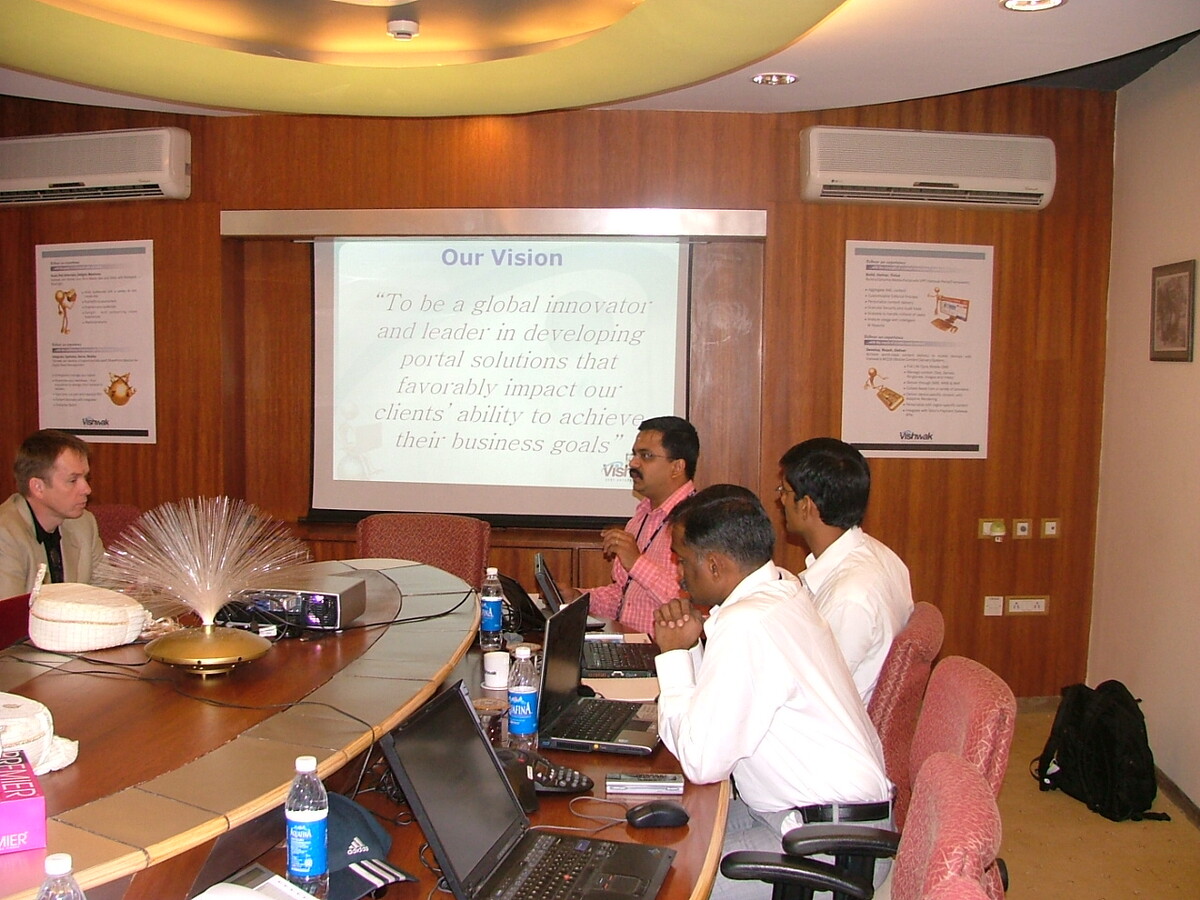
    There’s been renewed debate around the direction of startup ecosystems, especially in India. A recent remark by a senior Indian minister reignited the conversation. The Industry Minister of India, suggested that too many Indian startups rely heavily on consumer sales and e-commerce, without enough focus on deep tech or core innovation—unlike China, he pointed out. That comparison triggered a strong backlash. Founders and veterans from the Indian ecosystem were quick to respond. Many highlighted the real challenges: low ease of doing business, the return of aggressive tax scrutiny, regulatory complexity, and the limited scale of government capital support—especially when compared to what Chinese startups enjoy. As someone who’s been in the trenches for nearly three decades, I can say this: Both sides are right. Yes, patient capital is hard to come by in many regions, especially in emerging markets like India. Long-term bets are rare, and policy shifts can be unpredictable. But we also need to hold the mirror up to ourselves. Many of us founders—whether in India, Southeast Asia, or even parts of Europe—tend to be risk-averse. We chase faster returns. We look for proven templates. And moonshots? We wait for someone else to try first. And yes, navigating the regulatory maze in India often feels like running a marathon in quicksand. Team meeting in a wood-panelled conference room, colleagues seated around a table with laptops reviewing a projector slide titled 'Our Vision' Let me share a story from my own journey. I started my software products and services company back in 1997, largely serving clients in the West. It was a favourable time for Indian tech—liberalisation had opened new doors, and the 1997 “dream budget” by India’s then Finance Minister P. Chidambaram boosted optimism. By 2004, buoyed by the “India Shining” sentiment, I made a pivot. I took profits from my export business and reinvested into the domestic Indian market, convinced that the local economy was on the brink of a tech boom. But reality was more complex. Yes, India grew. But the domestic market didn’t scale as fast as I had bet. Meanwhile, Indian IT services for global clients entered a golden decade. From 2005 to 2015, that wave lifted many ships—but I missed the early part of it, having focused inward. The 2008 global financial crisis made things worse. Ironically, it was by returning to international clients—particularly in the U.S.—that I managed to grow the business faster. So, what’s the takeaway? The India of 2025 is not the India of 2005. And globally, emerging startup markets have matured. The domestic tech scene in countries like India, Indonesia, Brazil, and Nigeria is buzzing—with SaaS, vernacular platforms, and AI-led transformation across sectors. But export markets still matter. Global revenue builds resilience. Founders today—regardless of where you’re building—should balance their bets. Keep one foot rooted in local innovation: climate tech, regional AI, agriculture, logistics, whatever speaks to your context. But plant the other foot in the global economy—where scale, discipline, and dollar revenue still count. Stay alert to policy shifts. Build with compliance in mind. Don’t swing with hype. And don’t panic at the first stumble. Rebalance. Realign. Rebuild. Build patiently. Iterate frugally. Compound not just revenue, but your reputation. The best founders think in decades, not quarters.