Tag: Security

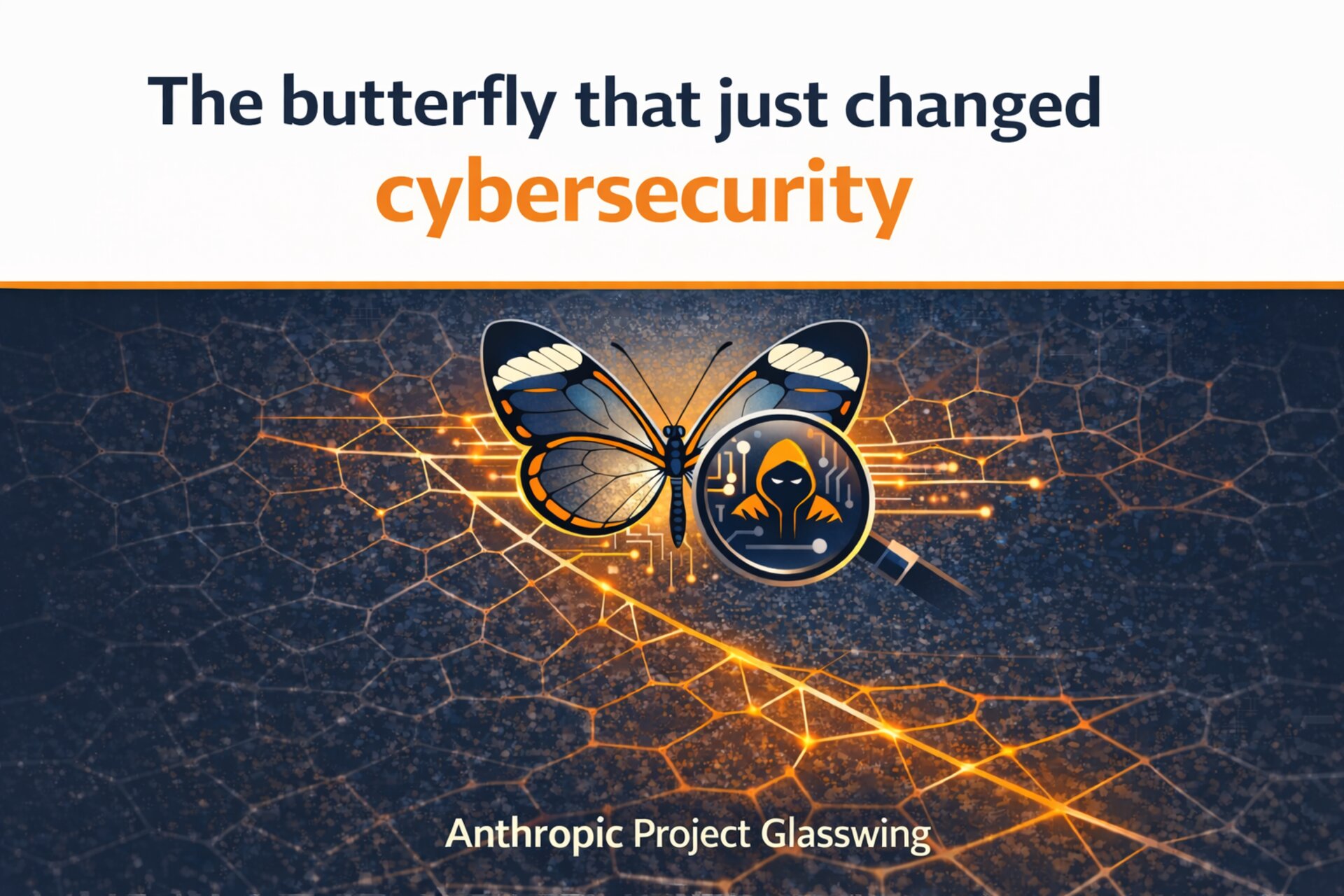
  • The butterfly that just changed cybersecurity.

    The butterfly that just changed cybersecurity.

    A new AI model from Anthropic has just exposed thousands of security flaws hiding inside the world’s most trusted software, some for over two decades. The age of the once a year security audit is over, and every founder needs to know why.

    I read something this morning that made me put my coffee down, and I am not talking about the ceasefire in the Middle East.

    Anthropic, the makers of Claude, has announced Project Glasswing, a joint effort with AWS, Apple, Google, Microsoft, Cisco, JPMorgan Chase, NVIDIA, Broadcom, the Linux Foundation, and 30 others. The name comes from the glasswing butterfly, Greta oto, whose transparent wings let it hide in plain sight. A fitting image, because that is exactly how software vulnerabilities live among us. Quietly. Unnoticed. For years.

    The reason these companies have come together is a new, unreleased model called Claude Mythos Preview. In just a few weeks of testing, it found thousands of previously unknown security flaws across every major operating system and web browser. One vulnerability had been sitting quietly inside OpenBSD for 27 years. Another lived inside FFmpeg for 16 years, in a piece of code that automated tools had tested over five million times without catching it. The model found most of these on its own, without anyone holding its hand.

    I have been around software long enough to know how rare this kind of moment is. It reminded me of an experience I shared in my book, Founder Catalyst. Years ago, during a Cricket World Cup, my team was running one of the largest online marketing campaigns of that era for a client. A small oversight in terms of securing our app during a deployment cost us an entire day of customer data. Thousands of leads gone. We owned the mistake, rebuilt the safeguards, and learned that resilience is something you design for, not something you hope for.

    That memory came rushing back as I read about Project Glasswing. If a careless deployment can do that much damage, imagine what an undiscovered flaw, hidden for two decades, could do in the hands of someone looking for it.

    The hopeful side of this announcement is that defenders finally have a tool that can keep up with the scale of the problem. The worrying side is that the same capability, in the wrong hands, will shrink the gap between a flaw being found and being exploited from months to minutes.

    So here is the real shift I want every founder and business leader to sit with. The era of auditing your enterprise software once a year with a consultant and a checklist is over. Your digital estate is far larger than you think. Old integrations. APIs nobody owns anymore. That internal dashboard, a developer built in 2019 and quietly left behind. A login flow that has not been touched in years. Each of these is now a doorway, and the cost for an attacker to find them has just collapsed.

    It is time to start using AI tools to look at your own software the way attackers soon will. Not someday. This month. Run AI-assisted reviews on your codebase. Map every digital asset you own, including the forgotten ones. Ask your security partners what their AI augmented testing roadmap looks like, and if they do not have a clear answer, that itself is your answer. This is no longer a job for one annual audit. It is a continuous practice, and AI is now both the threat and the shield.

    I wrote about this very angle last week, after the Mexico data breach, in which one person, likely working alone, walked away with data on 195 million people using Claude, ChatGPT, and a thousand prompts. That was the warning shot. Project Glasswing is the confirmation that the ground has shifted permanently. If you missed that earlier post, it is worth a read before this week ends.

    Like the glasswing butterfly, what hides in plain sight is often the greatest risk.

  • Securing Your Business in the Cloud Age: Strategies for Success

    Securing Your Business in the Cloud Age: Strategies for Success

    In today’s technology-driven world, the role of a tech founder extends far beyond innovation. It encompasses the critical responsibility of managing and securing vast amounts of data, often stored in the cloud. This challenge involves not just safeguarding customer data with enterprise-level security, but also protecting the privacy of employee information within the intricate security framework of cloud providers. A startling statistic from the recent Verizon DBIR report underscores this urgency: 43% of all cyberattacks target small businesses, with a staggering 60% of these businesses closing down within six months of an attack. Against this backdrop, a provocative proposal by Barath Raghavan and Bruce Schneier, as detailed in their IEEE Spectrum paper (Nov 2023), offers a new perspective on bolstering online privacy and security in the cloud age. But how can businesses, especially smaller ones, navigate these complex waters and ensure their data remains secure? This article delves into practical, effective strategies to achieve just that.

    Exploring the Concept of Decoupling in Online Security

    The innovative approach proposed by Barath Raghavan and Bruce Schneier involves a groundbreaking idea: separating identities from their associated data and actions. This concept has the potential to transform the way we protect our most crucial digital assets in the online sphere.

    Redefining Data Management Through Decoupling

    At the heart of Raghavan and Schneier’s proposal is a reimagined approach to data management. This involves meticulously separating and managing data across various phases – while it’s being transferred, stored, or actively used – in other words data in motion, data at rest, and data in use. By adopting this method, technology leaders can significantly reduce the likelihood of unauthorized access and data breaches. While this strategy doesn’t completely eradicate the risk of data leaks, it can notably confine the extent of potential damage in such events.

    Cultivating a Privacy-Centric Culture: Beyond Compliance

    Fostering a company culture that values privacy is paramount. This involves not only instructing your team about the importance of data privacy but also developing products that consider the user’s privacy from the outset and integrating privacy considerations into every customer interaction. CISCO’s 2023 Data Privacy Benchmark study reports that Organizations are getting a strong 1.8 times return on their privacy investments, with estimated benefits up significantly in the past year.

    Universal Encryption: The Essential Norm

    In the realm of sensitive data management, the guiding principle should be to minimize exposure while maximizing protection. This calls for a steadfast commitment to encrypt data at all times, regardless of its movement within an organization’s internal systems. From the interactions among microservices and containers to the transmission of information between services, encryption must be standard practice, with plain text being a rare exception. The incremental costs and complexities associated with implementing encryption are a minor trade-off for the substantial security advantages it provides.

    Rethinking Data Lakes: Strategic Data Storage

    While data lakes and warehouses play a vital role in driving business insights and flexibility, the convenience of centralizing data storage comes with inherent risks. It’s imperative for CEOs to scrutinize these decisions thoroughly, insisting on robust justifications for adopting any centralized data storage strategies. Additionally, technology leaders in various roles must be fully informed about the potential risks and trained in the latest security best practices for managing large-scale data.

    Enhancing Cloud Security: A Priority for Tech Leaders

    For technology entrepreneurs, prioritizing the strengthening of cloud security is essential. Embracing the decoupling strategy suggested by Raghavan and Schneier, especially through the application of specialized processor features like trusted execution environments (TEEs) or secure enclaves, can markedly diminish the risks inherent in the centralized aspect of cloud computing. Possessing a thorough knowledge of cloud infrastructure and implementing stringent security measures are key factors in achieving this goal.

    Artificial Intelligence: The Cutting-Edge of Cybersecurity

    Artificial intelligence is revolutionizing the way companies tackle security challenges. It facilitates automated recognition of threats and swift countermeasures, substantially elevating overall security protocols even in cloud environments. A study by Capgemini underscores this impact, noting that a considerable number of firms have observed a marked enhancement in their cybersecurity following the adoption of AI technologies.

    Leveraging Decoupling for Market Distinction

    Lastly, Decoupling is more than a security strategy; it’s a potential market differentiator. In a privacy-conscious market, showcasing your commitment to decoupling can attract customers and set your company apart. Thus, for technology leaders, embracing decoupling is not just a security measure; it’s a strategic move towards securing a formidable stance in the market.